On another stunning day, we started our exploration of Wesley Heights. We were back off the main streets and into one of the most beautiful neighborhoods that we have seen so far.
First, we walked by Horace Mann Elementary School. Mann is a highly ranked DC public school with just under 400 students. It is named for Horace Mann, an American educational reformer and politician who lived from 1796 to 1859. He was a primary force behind the United States adoption of a universal public education system. Like virtually every other DC public school we have passed, Mann has recently been modernized.
Old MannNew Mann
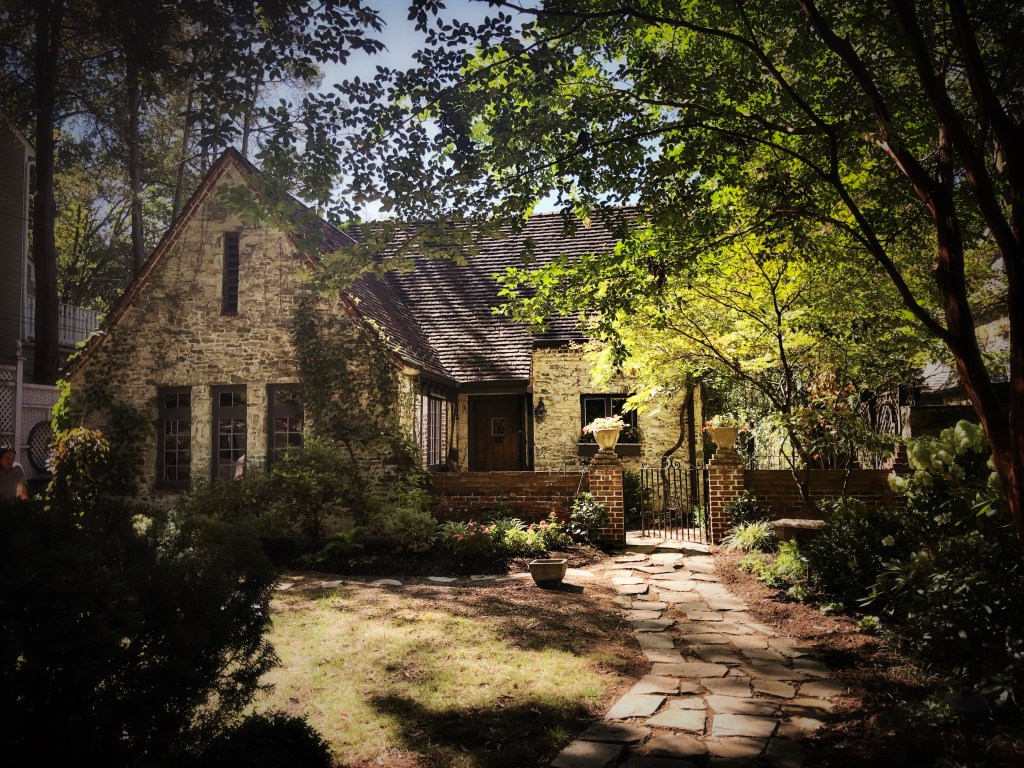
We then walked into the quiet neighborhood streets where we passed some exquisite houses. We particularly loved this stone cottage.
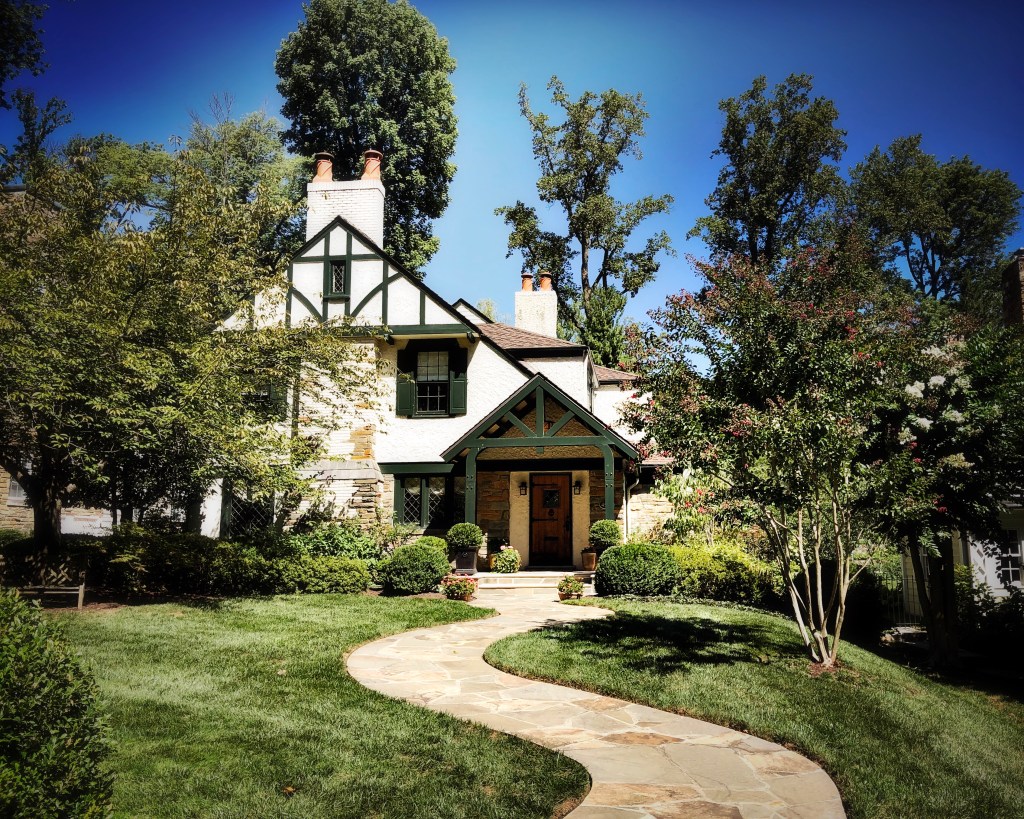
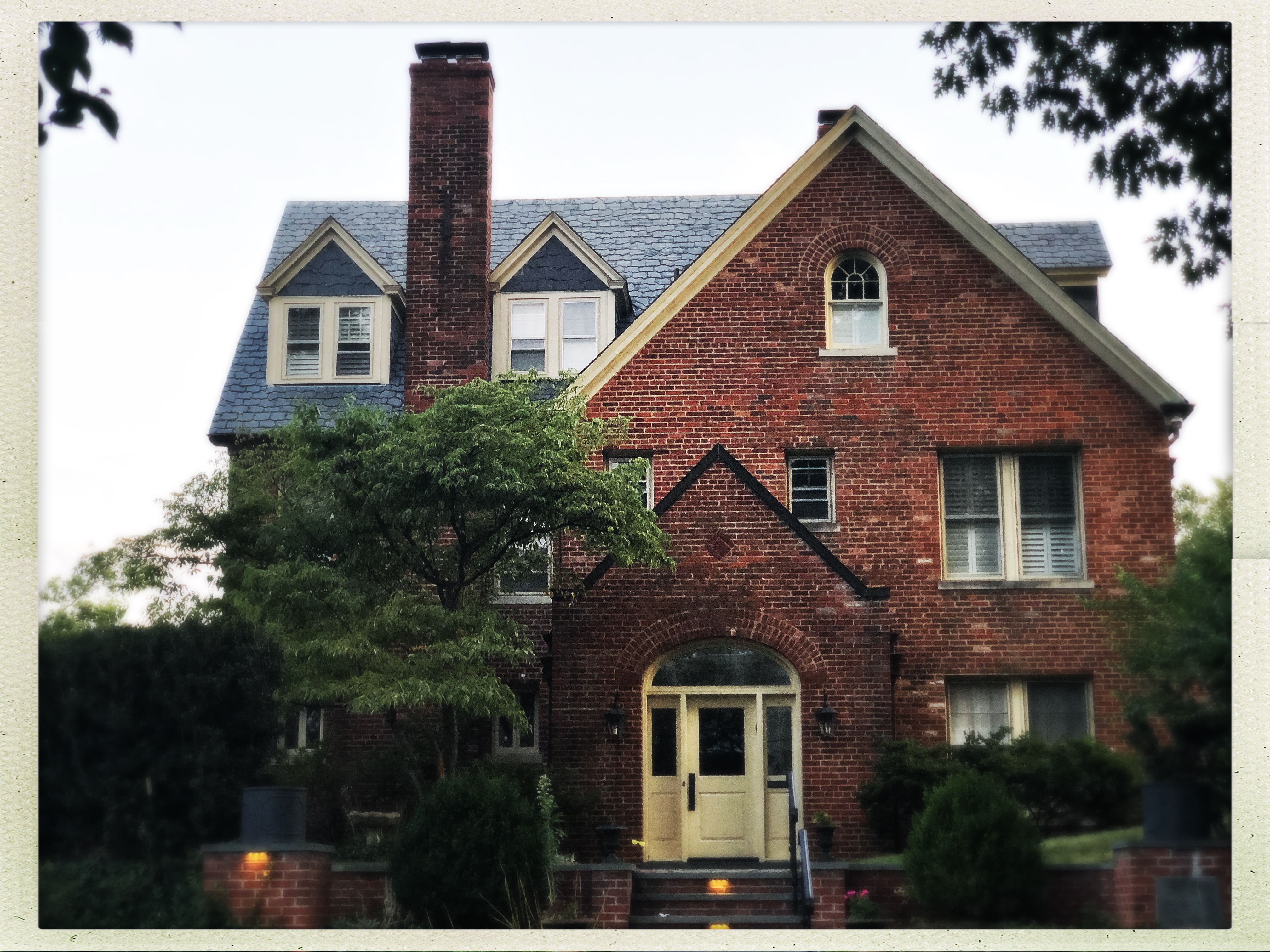
But there were more than enough beautiful houses to go around.
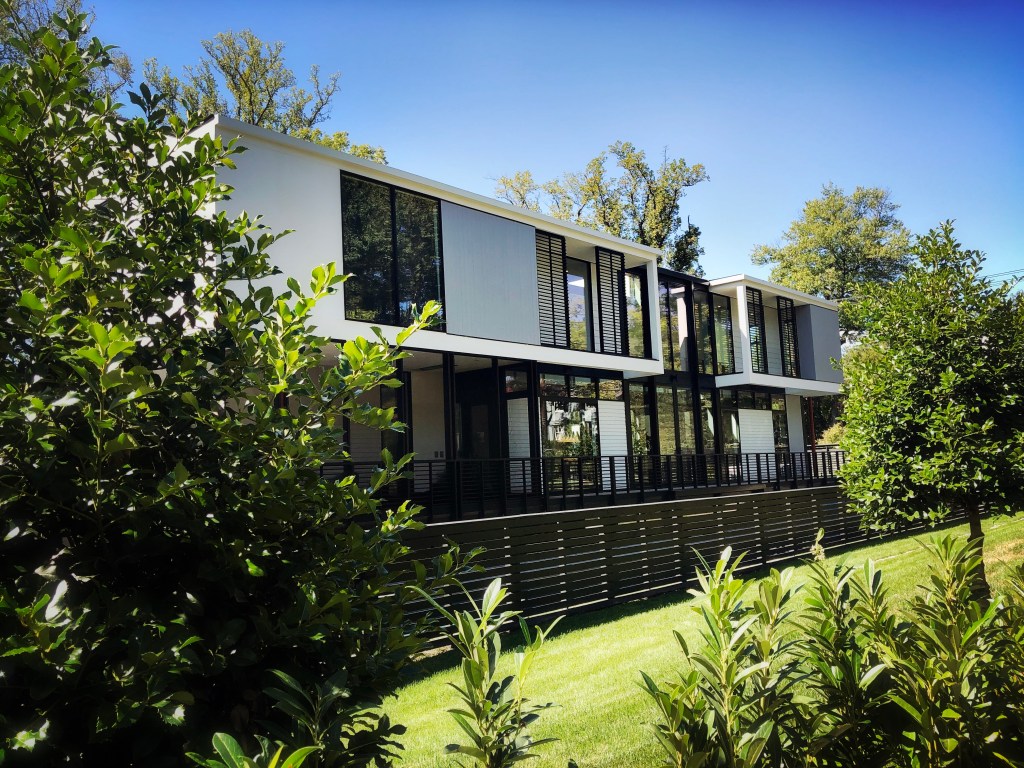
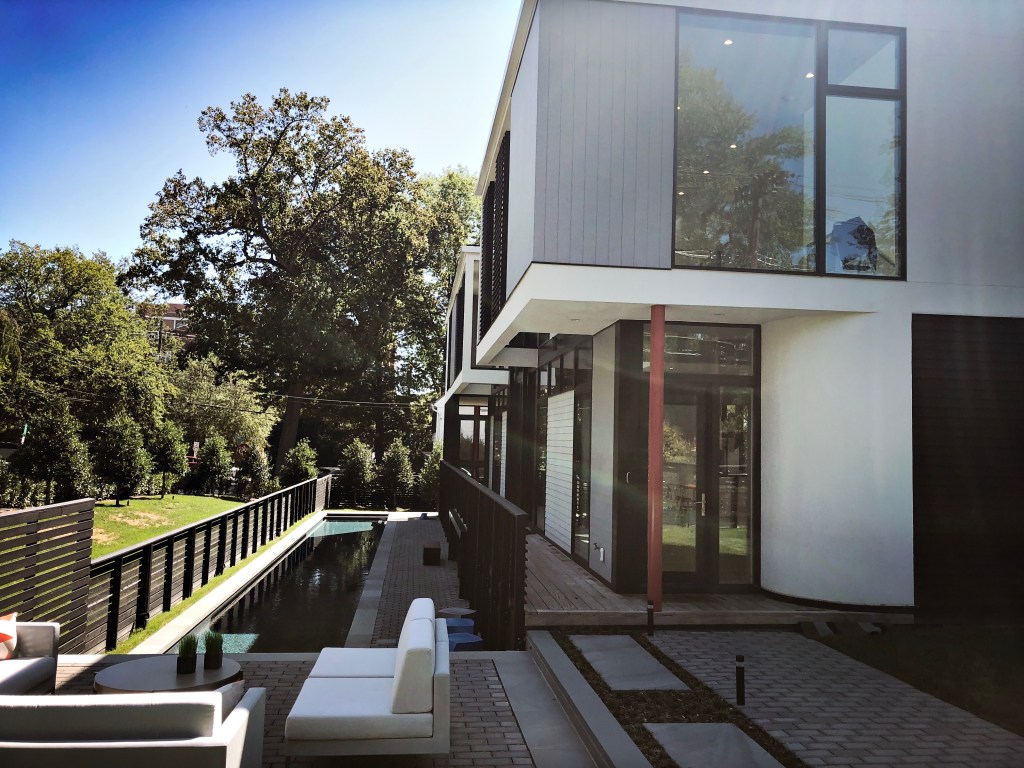
We agreed that this was the modern house we have liked most of those we have seen on our walks.
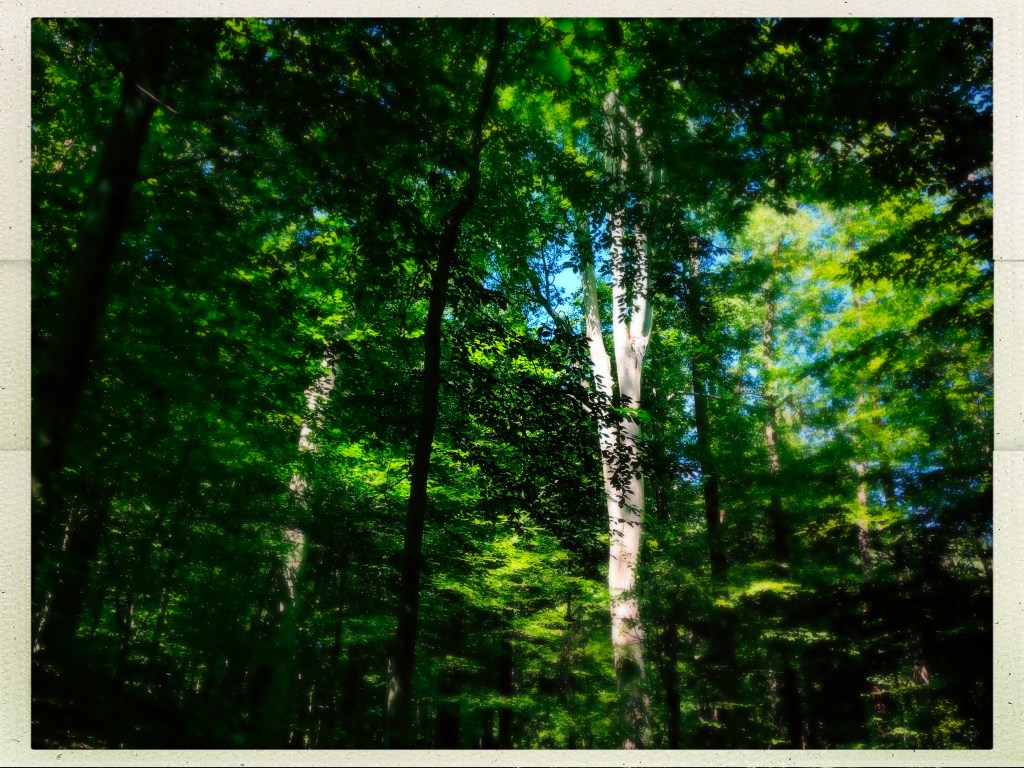
One of the things that we have commented upon previously is how easy it is to get off the streets and into the woods. Wesley Heights was no exception.
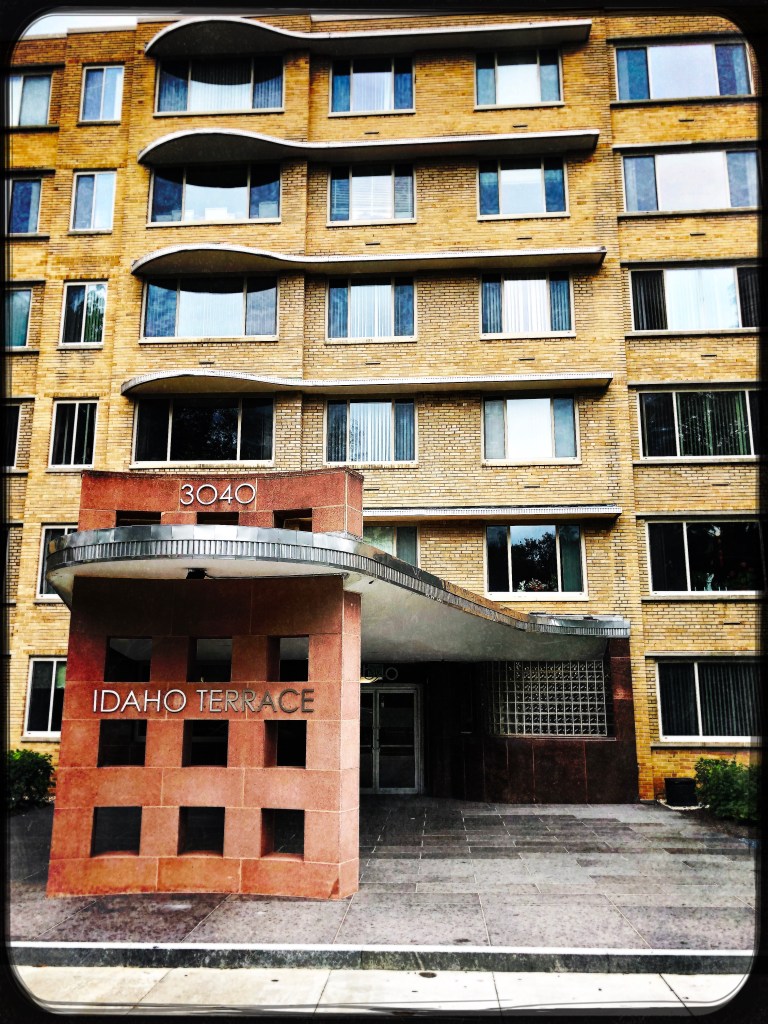
On an absolutely stunning day, with heat and humidity finally in retreat, we returned once again to Glover Park. We passed down some streets lined with town houses but primarily walked the main avenues, lined with apartment buildings.
Apparently, another Mal had been in the area before me.
Back in Glover Park we walked by what looked to be the biggest community garden yet. The 2.7 acre garden started as a Victory Garden during World War II to address food shortages.
Glover Park Community Garden
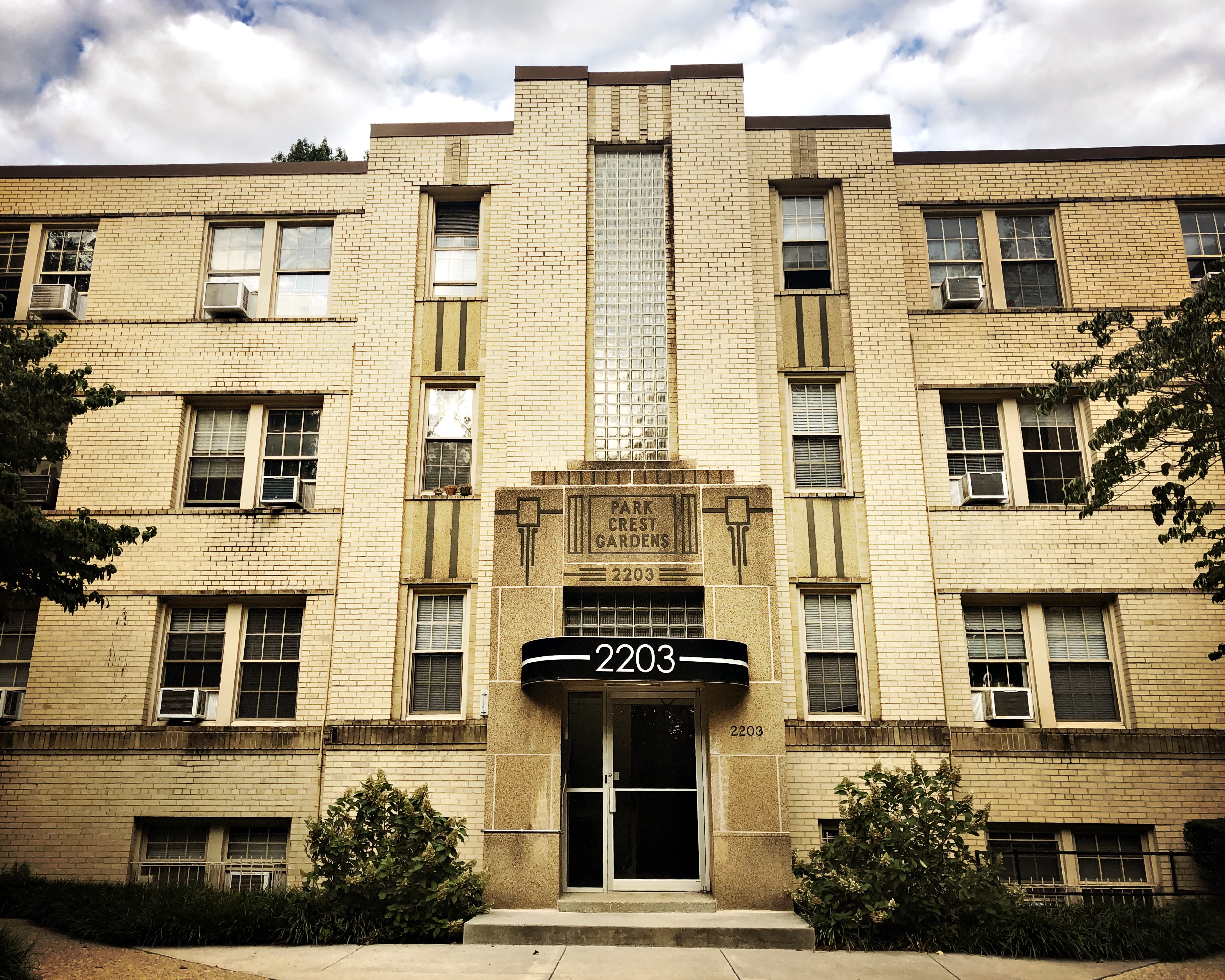
Across from the garden are the Park Crest Gardens apartment complex. We loved the deco style of the buildings, which were built in 1941 and designed by G.T. Santmyers.
Glover Park consists primarily of row houses and apartment buildings. In fact, the two houses in the following photos may be the only single family homes we encountered during the evening’s walk.
Today we headed into Glover Park, named after Charles Carroll Glover (1846-1936).
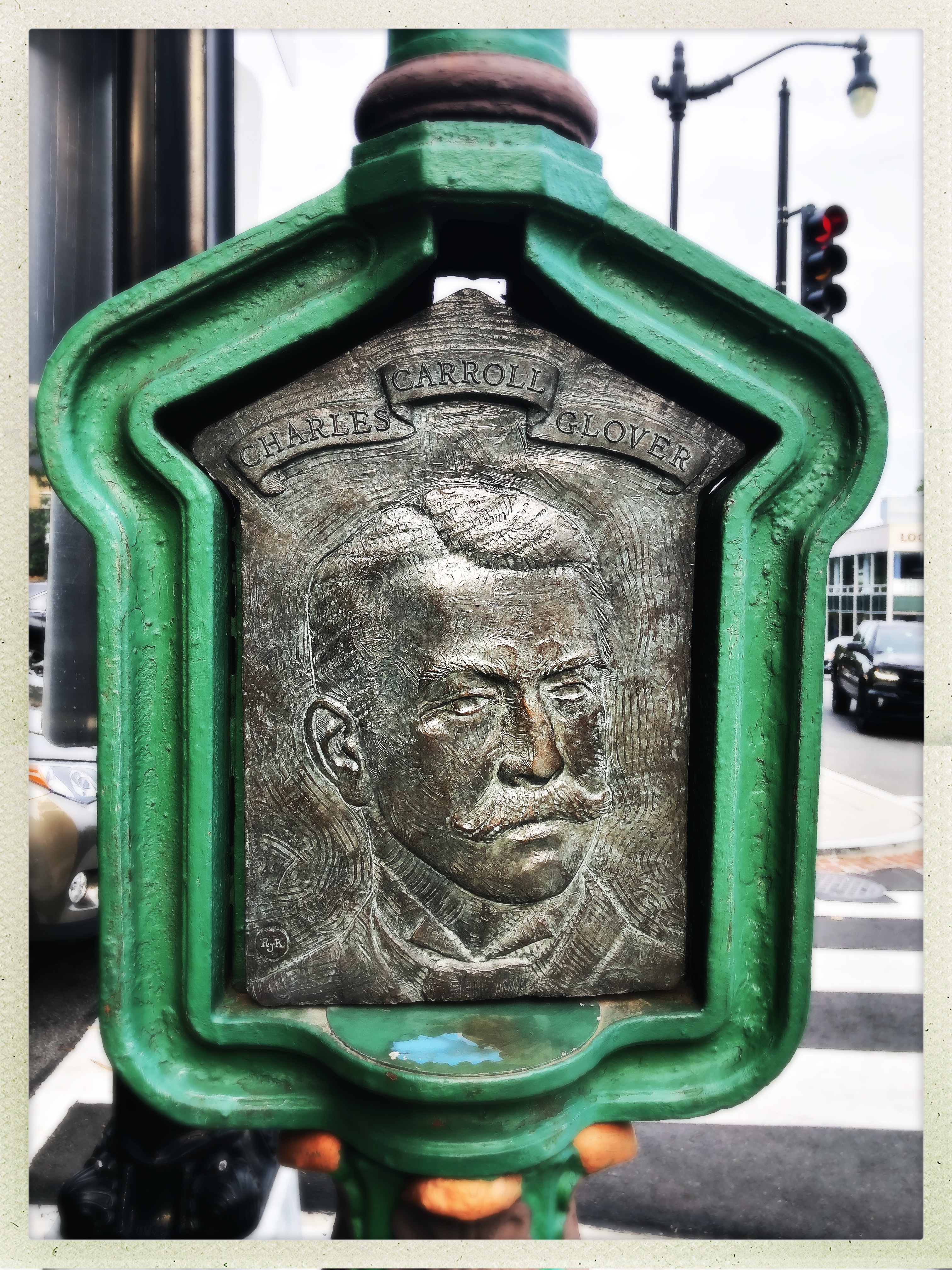
Charles Glover created by Ray Kaskey.
According to the description on the back of this call box, Glover is considered the father of Rock Creek Park, the massive park that extends up through the middle of the District. A wealthy banker and philanthropist, Glover also gave the District 77 acres, which, with an additional 28 acres donated by Anne Archbold, has become Glover Archibold Park.
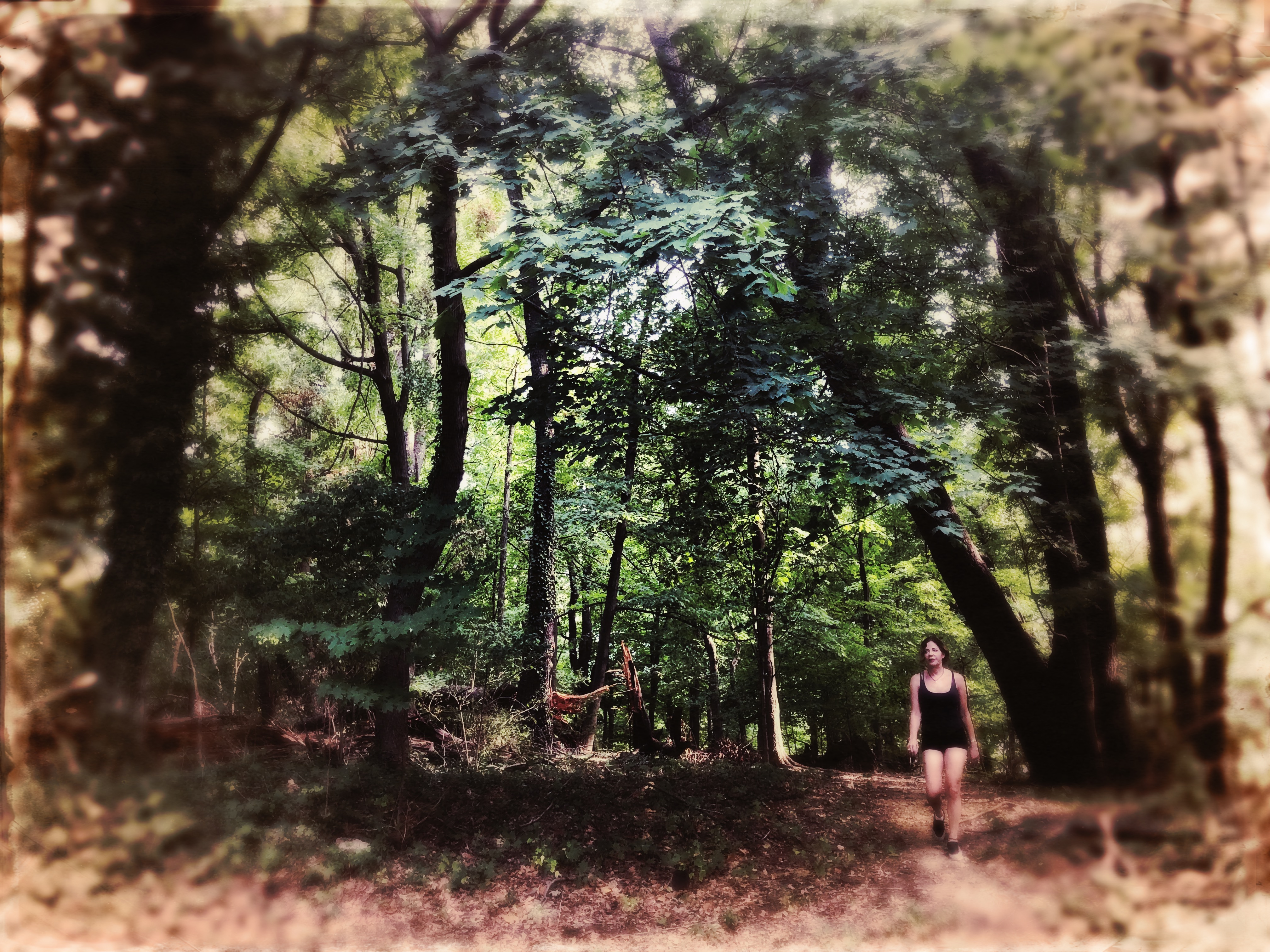
Walking through Glover Archibold Park
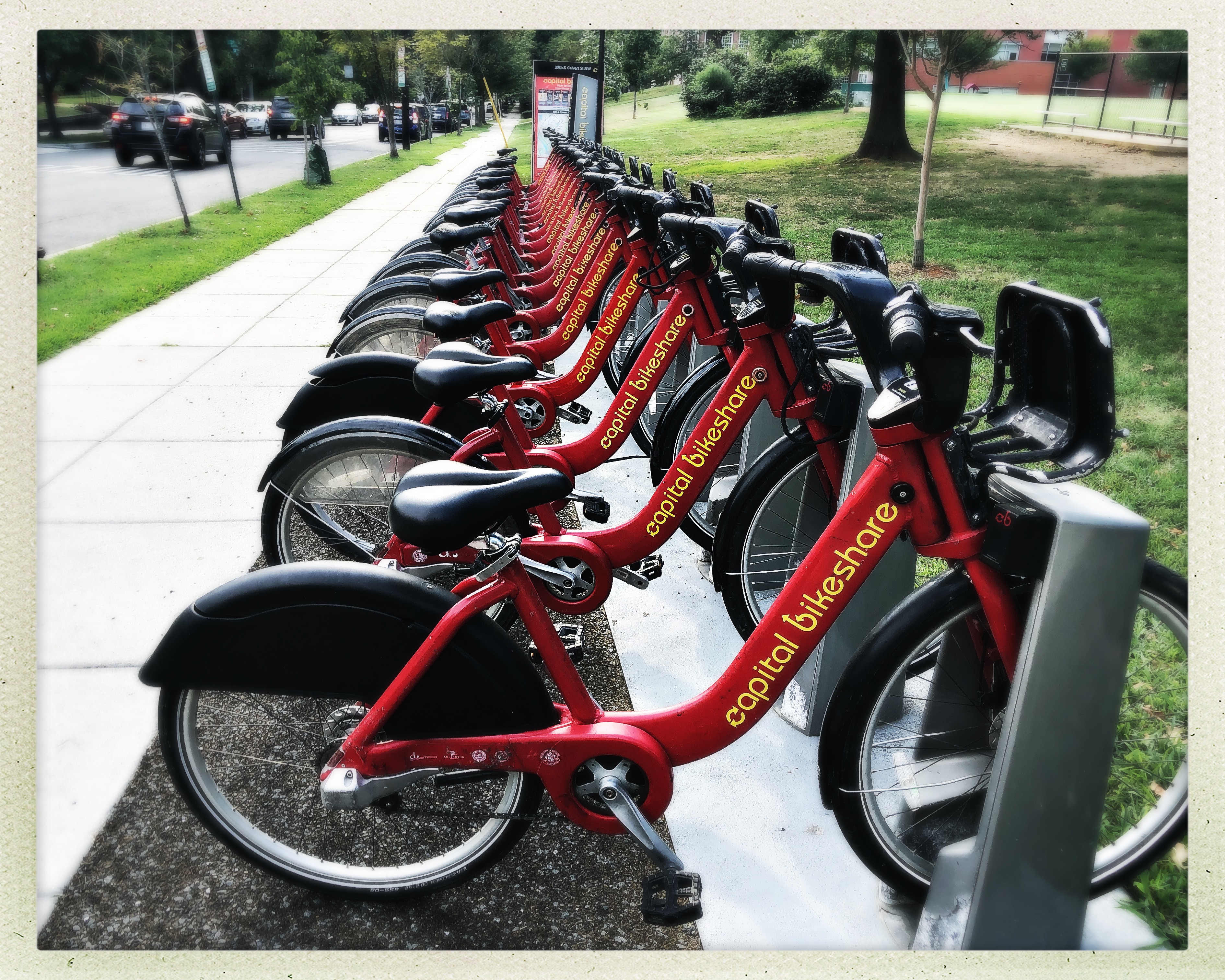
We walked by this fully-loaded Capital Bikeshare stand. Starting in 2008, Capital Bikeshare now has over 4,300 bikes and 500 bike stations. The big red bikes have become a common feature in the District and surrounding areas, having (so far) successfully fended off challenges from other transport share options, such as scooters and electric bikes.
Capital Bikeshare
We walked by Stoddert Elementary which serves Glover Park’s residents. It is named after Benjamin Stoddert, who was the first U.S. Secretary of the Navy. The school has, approximately, 435 students from pre-K through 5th grade. It is a very diverse school with students representing more than 36 different countries and languages. The school is most widely known for the Stoddert soccer league that originated at the school but now has over 5,000 players throughout the District. We spent many happy hours watching our own two sons playing on Saturdays. Go Striking Lightning!
Stoddert Elementary
This is the smallest house we have seen so far on the walks.
Back on Wisconsin Avenue we passed by the Russian Embassy.
Russian Embassy
Built at the height of the Cold War, the embassy was designed by celebrated Soviet architect, Michael Posokhin. The embassy sits in a large compound that includes a school, kindergarten, sports grounds and an apartment building. In the late 1980s, the FBI and NSA built a tunnel under the compound for espionage purposes. However, it was never exploited due to FBI agent and Soviet spy, Robert Hanssen, disclosing information about the operation to the KGB. Hanssen is now serving 15 consecutive life sentences at a supermax prison in Colorado.
Across Wisconsin Avenue from the Embassy is the Kimpton Glover Park Hotel. It has a large mural on its side facing the Avenue that, apparently, depicts Rock Creek Park.
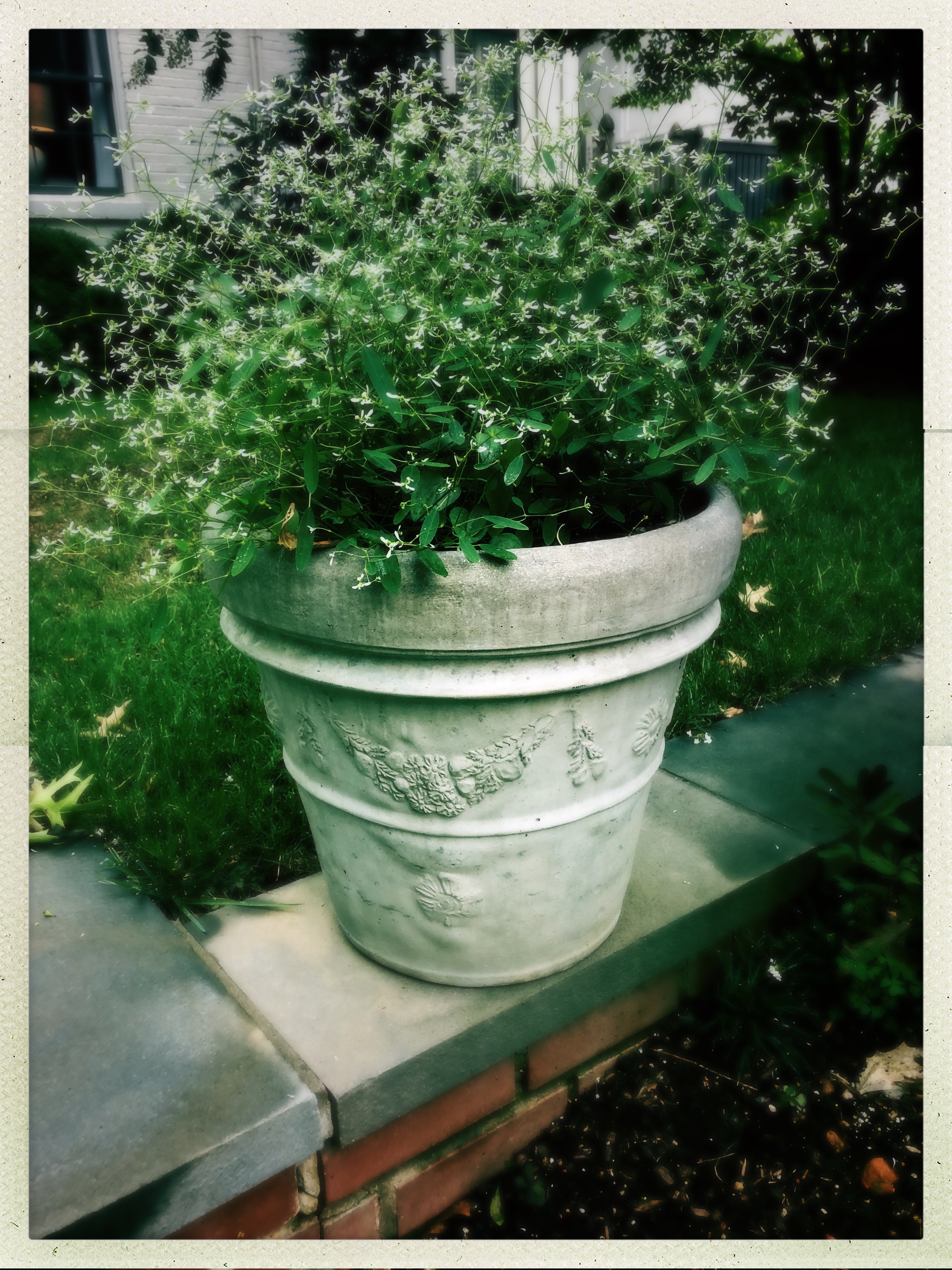
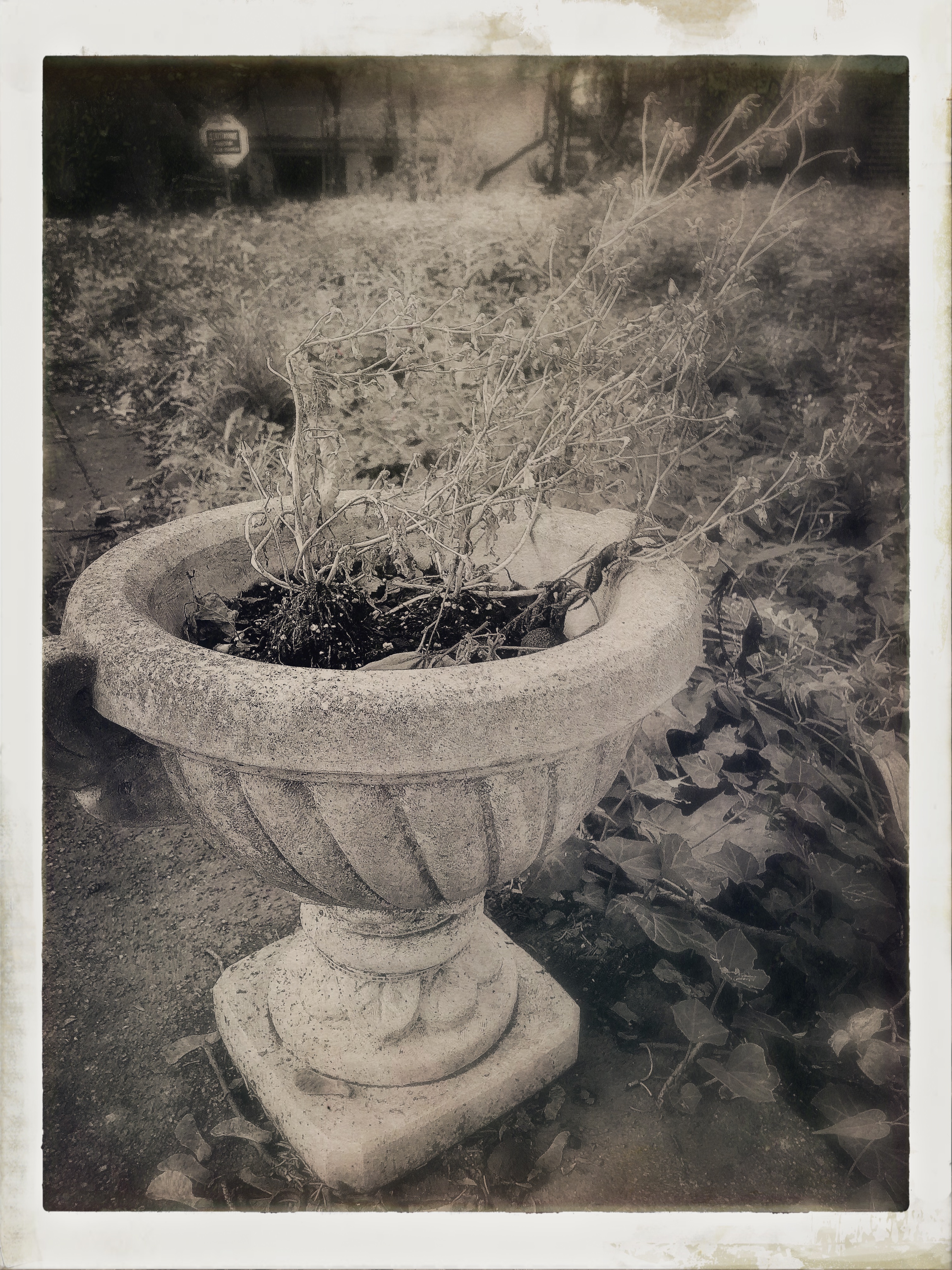
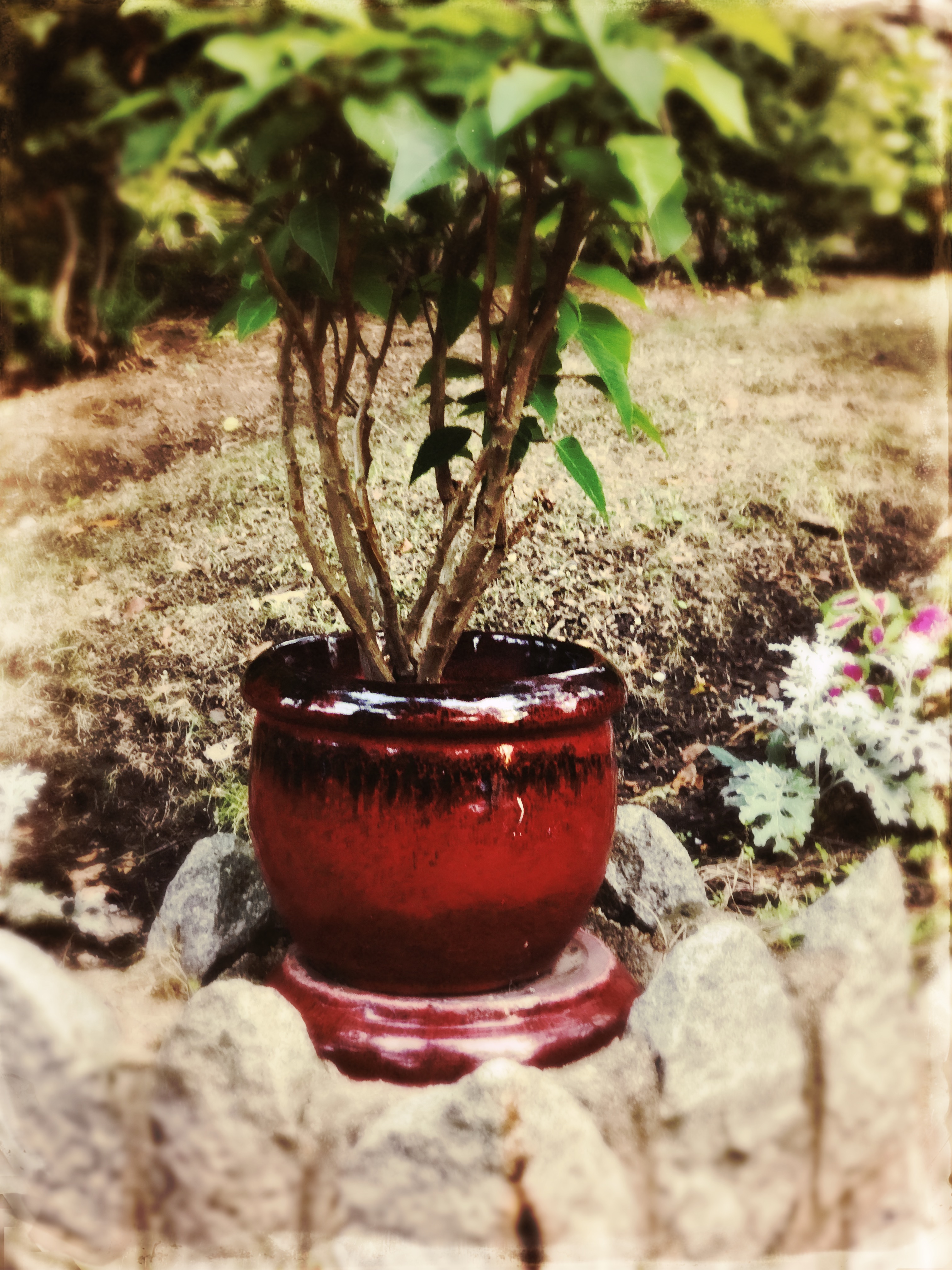
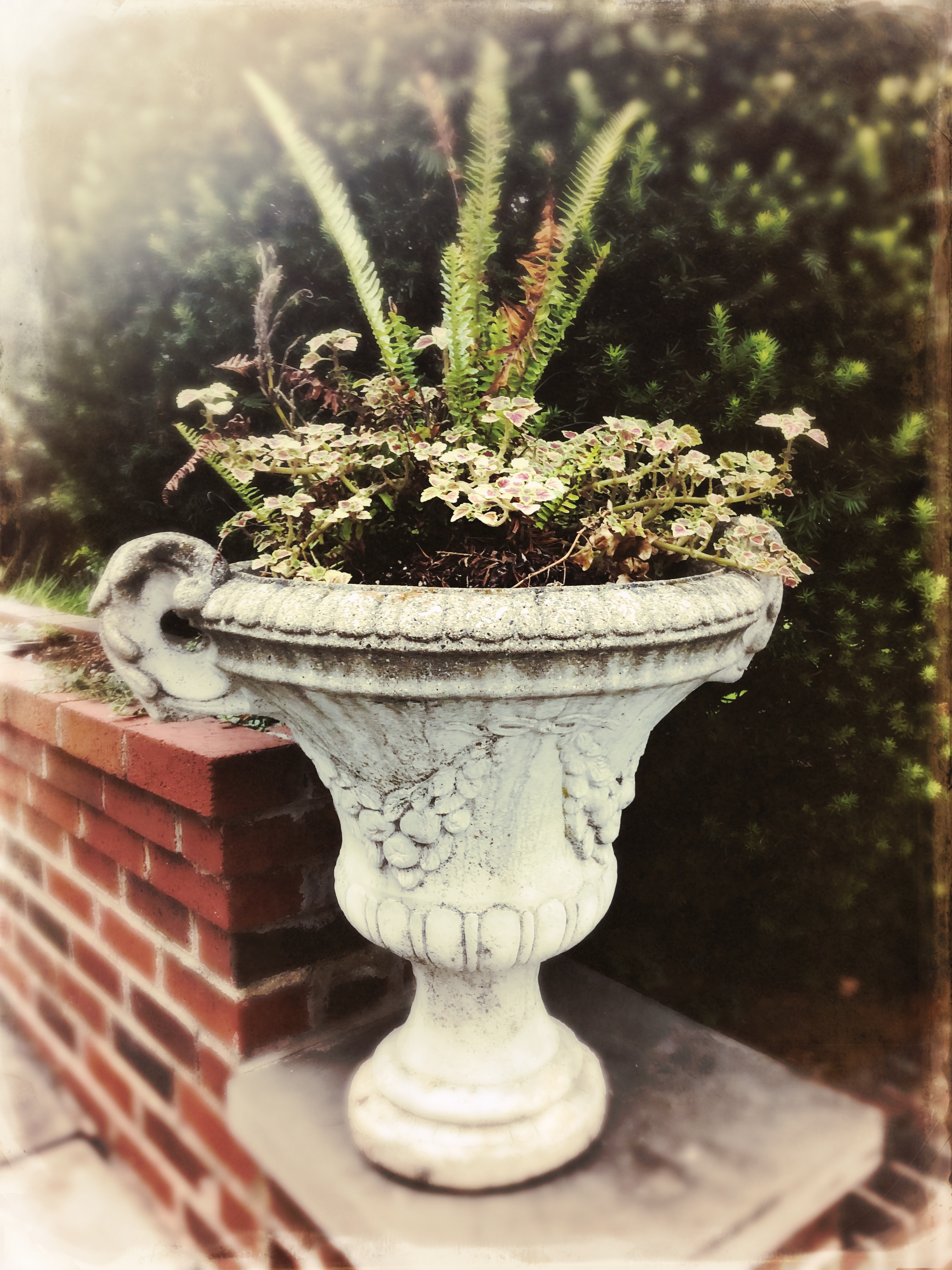
Occasionally, Lauren will suggest a theme for the day to add a little more interest to our walk. A couple of weeks ago, we were looking for blue front doors. A couple of days ago, we were looking for quirky artistic flourishes. This evening we were looking for garden pots and urns. We have to admit that we have rarely noticed them but it turns out they were probably always there, hiding in plain view. When we took the trouble to look, it seemed that virtually every house had at least one, and more often two, pots or urns lining up along side front doors or pathways.
We also like this guy. Not a pot, but he did have a pot belly. And not just any pot belly but one painted with the United States Capitol.
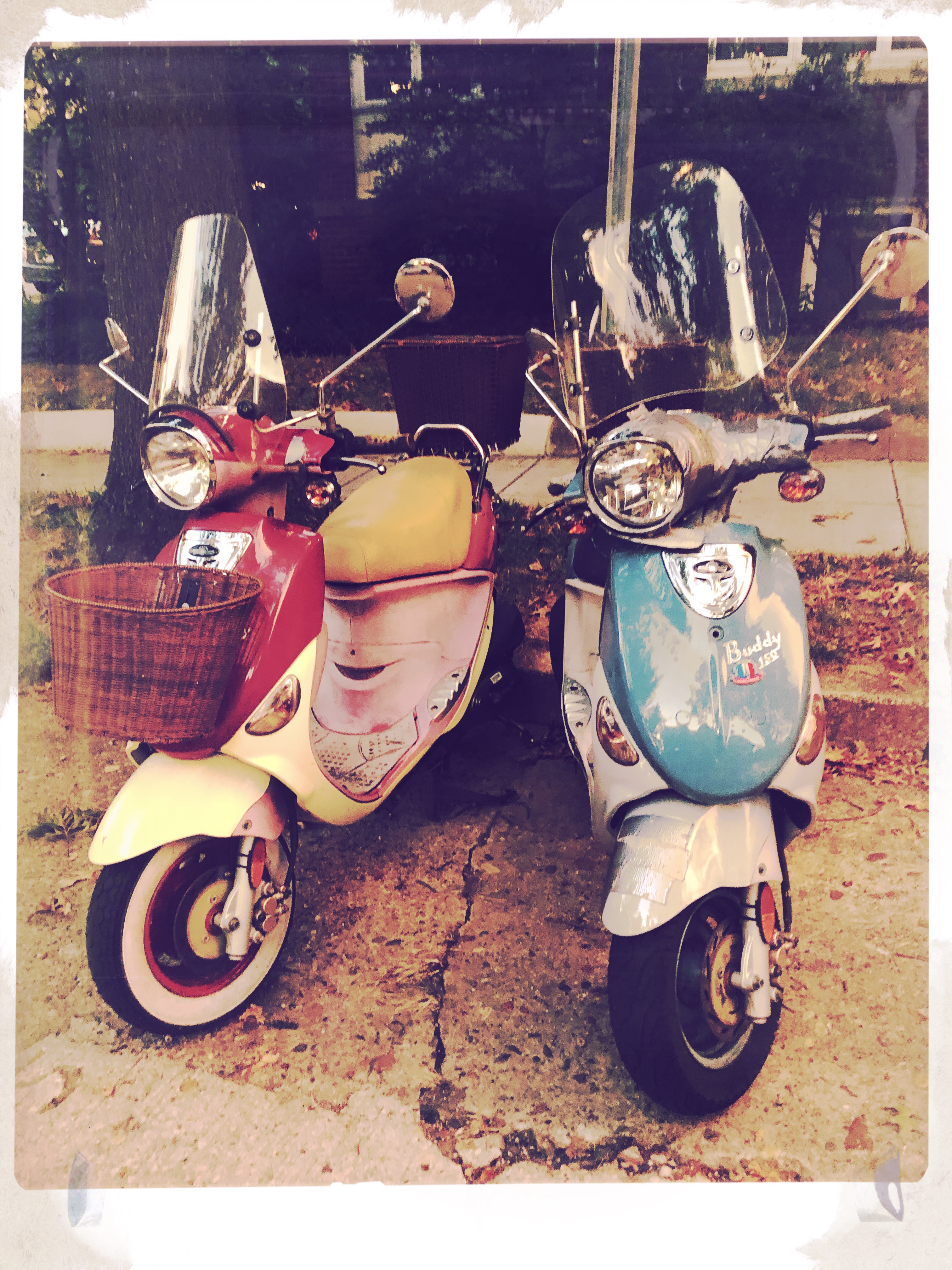
We also took a shine to these his and hers motor scooters. They looked as though they had shared a few adventures together.
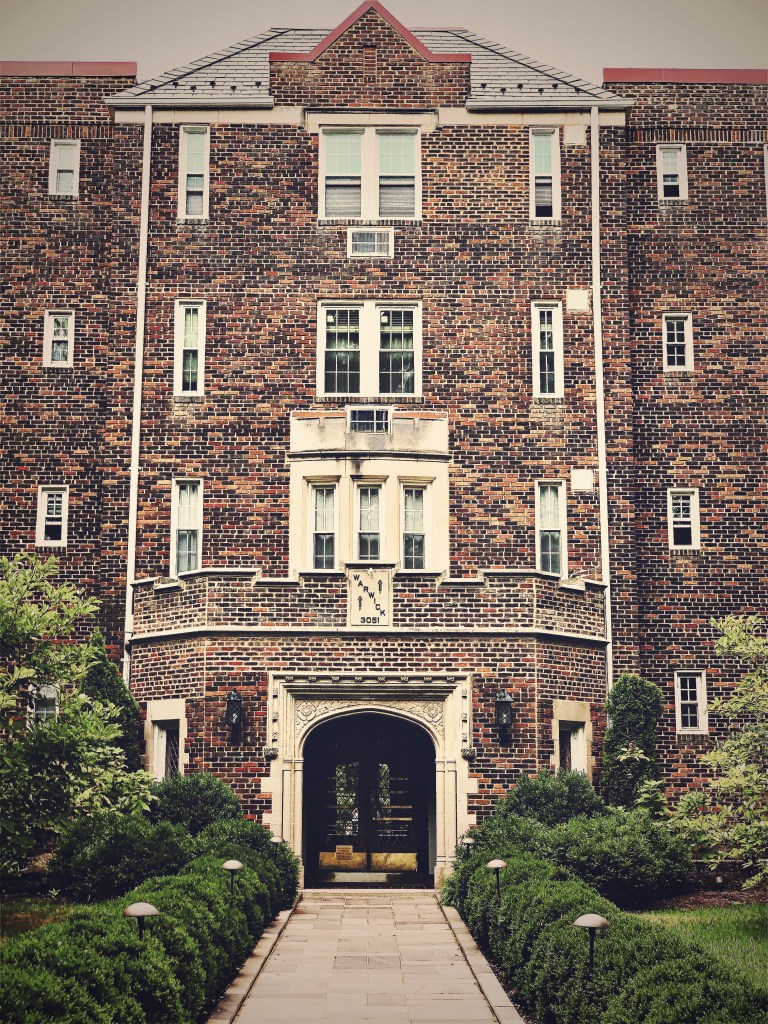
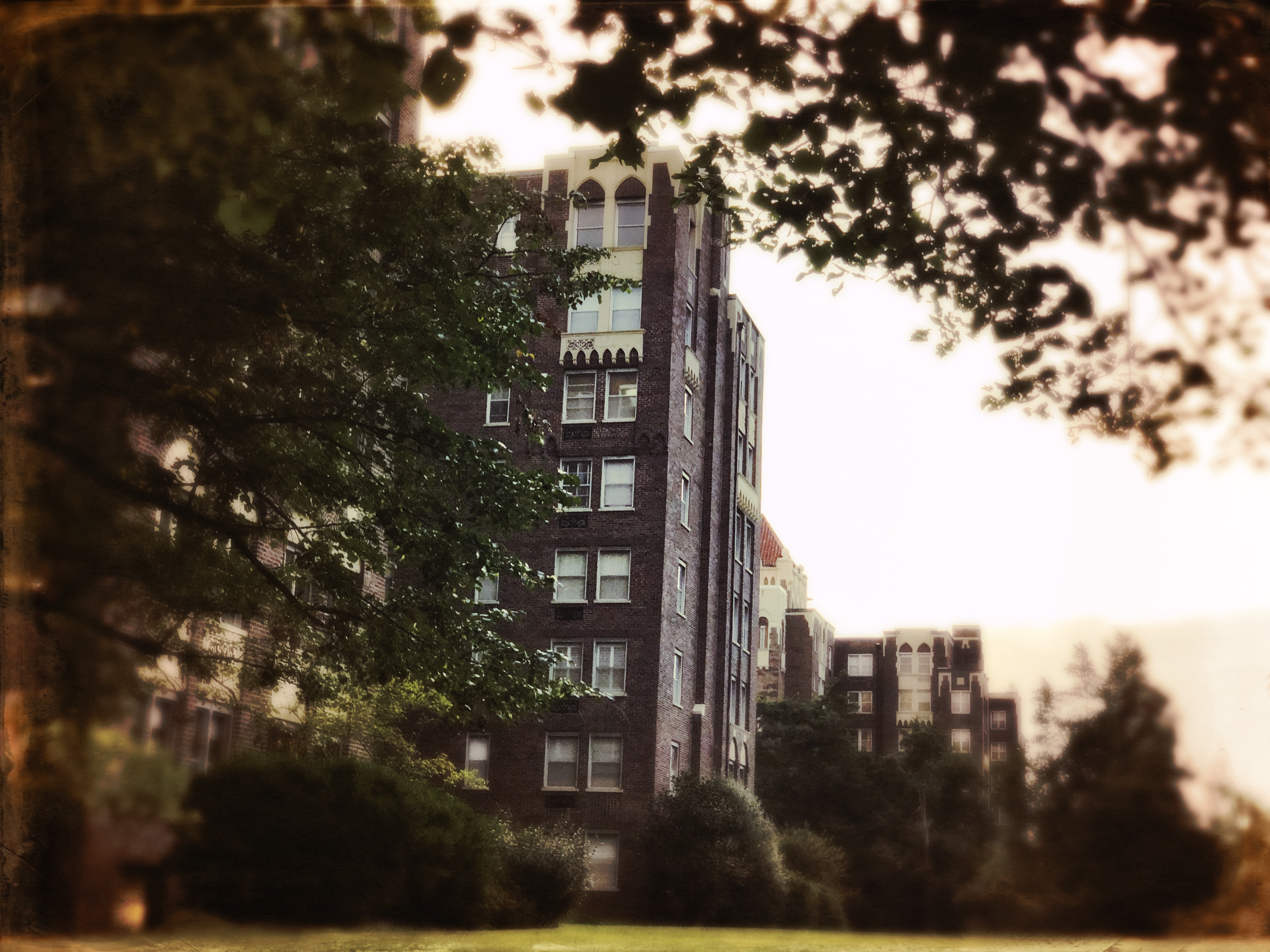
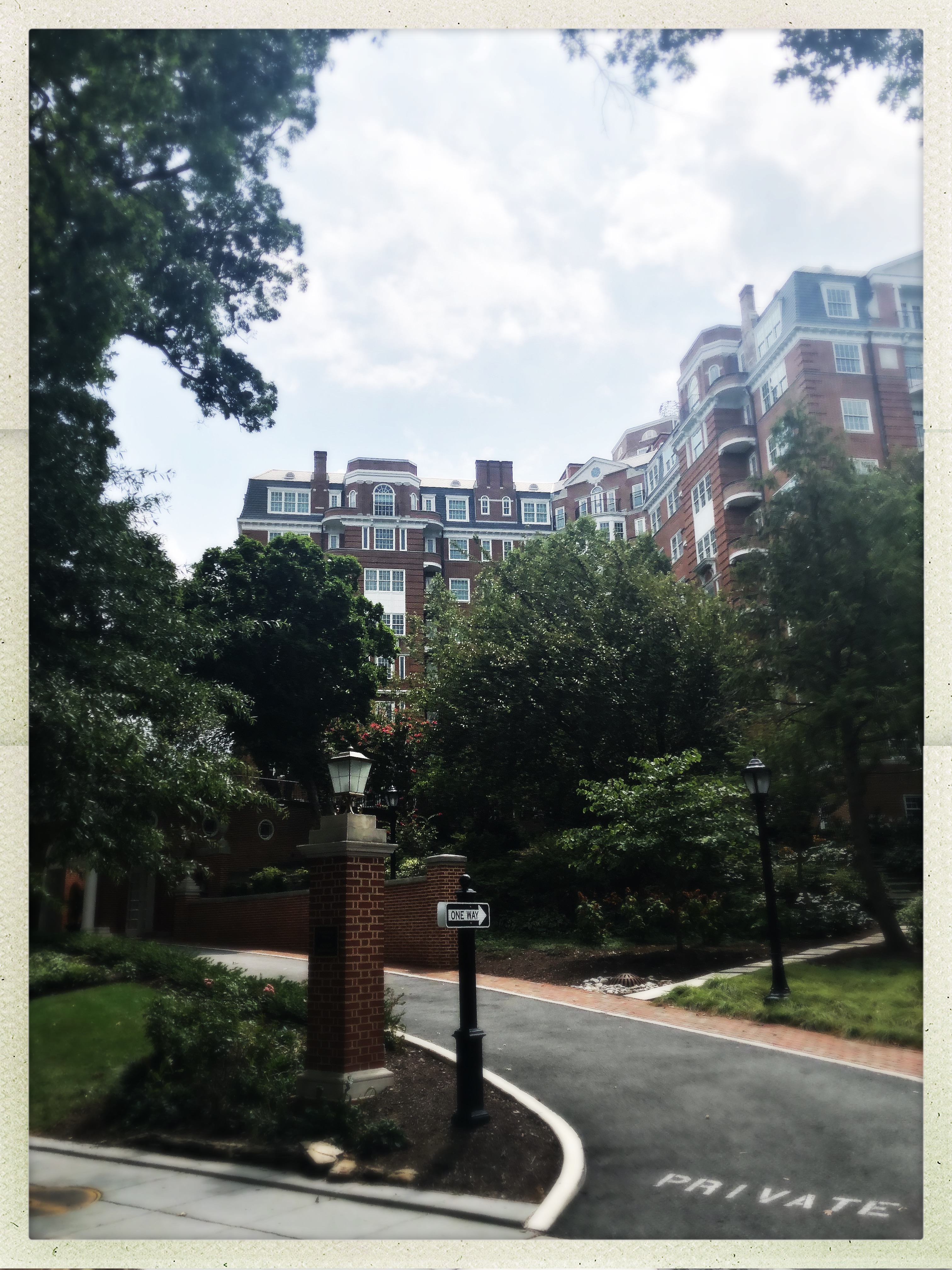
We passed by these apartment buildings and once again found ourselves thinking of Europe.
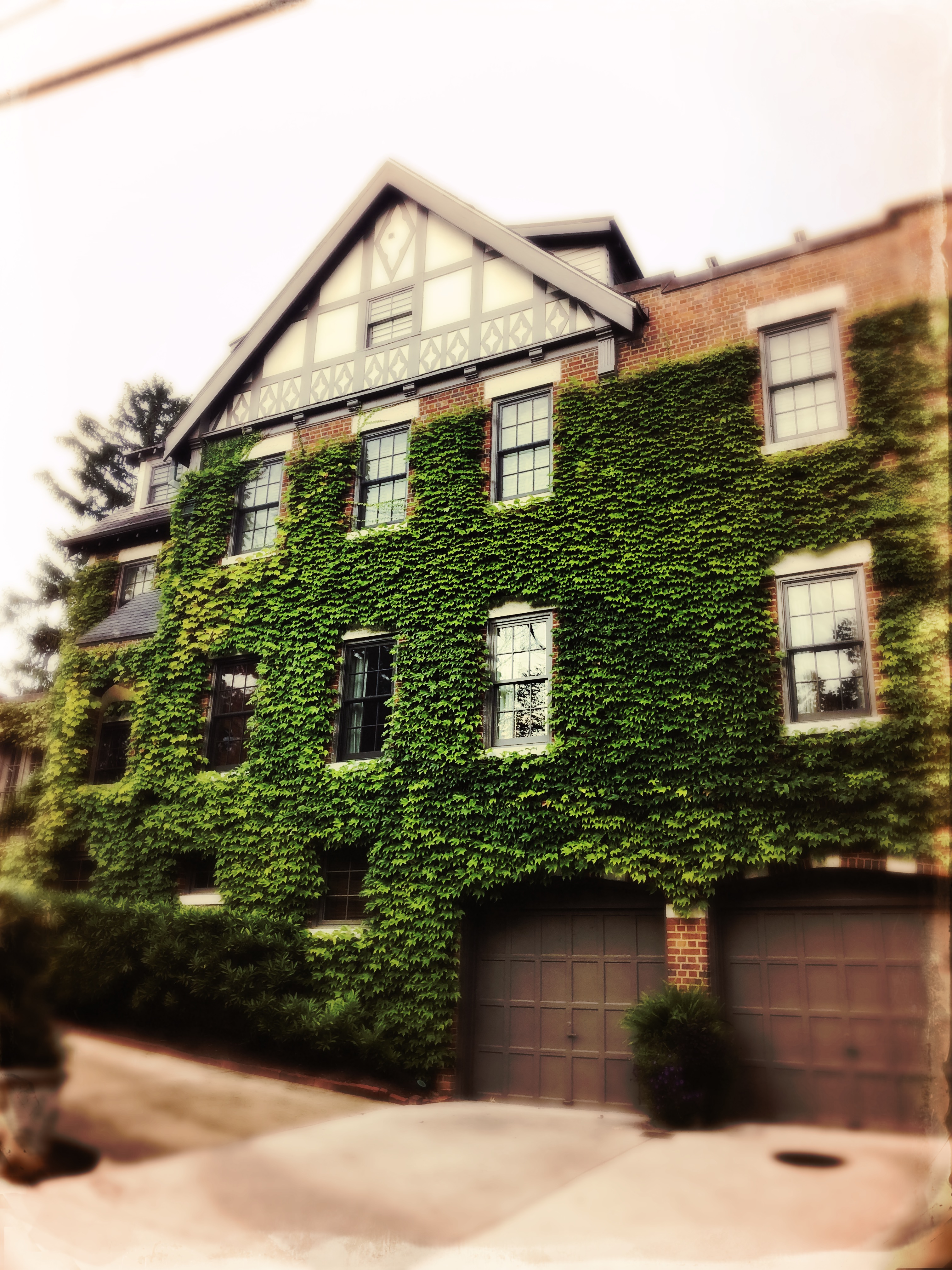
We have not seen many ivy clad houses during our walks. This is a rare and beautiful exception.
It also had a beautiful urn.
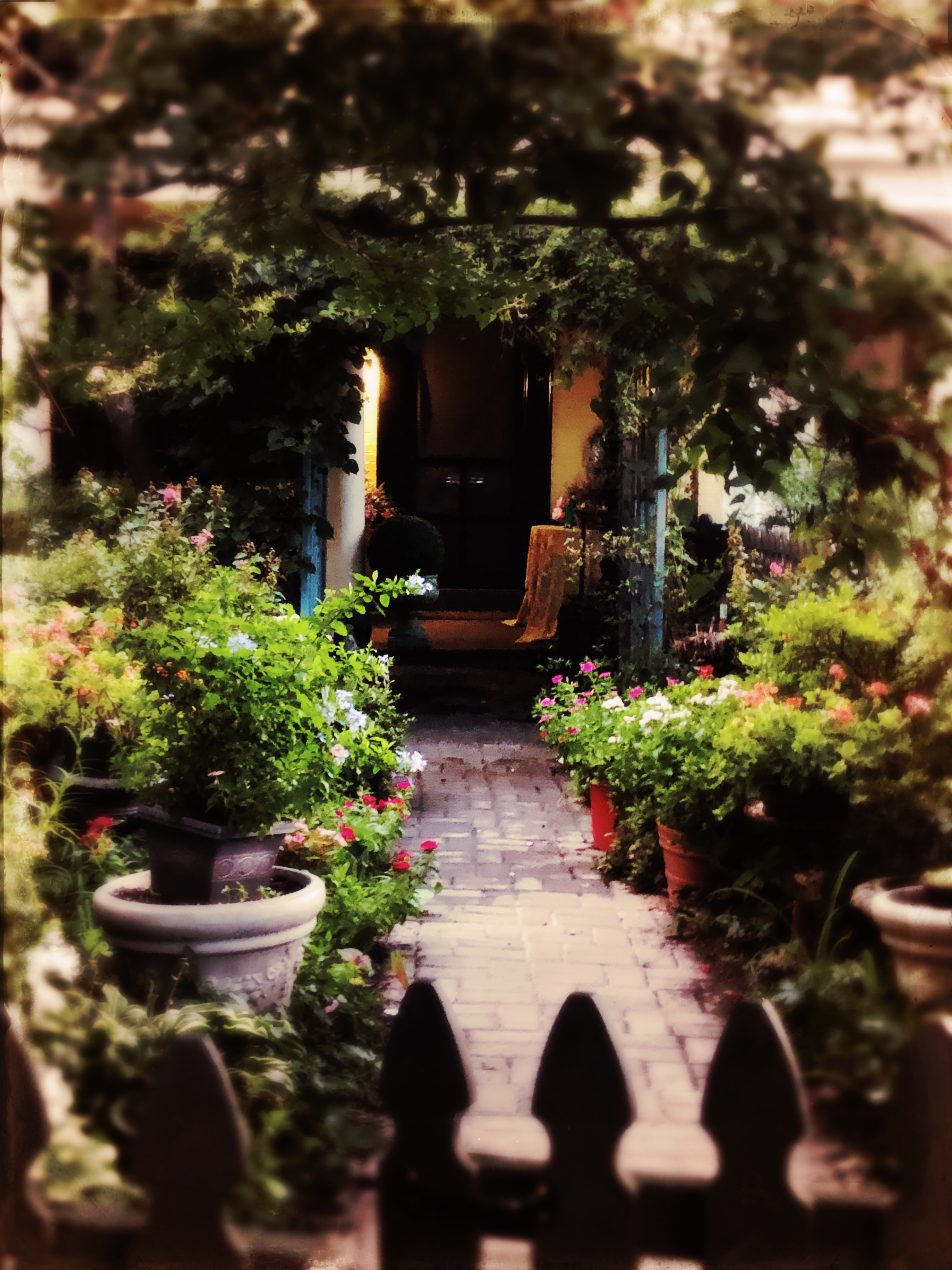
We also loved the entrance way to this row house.
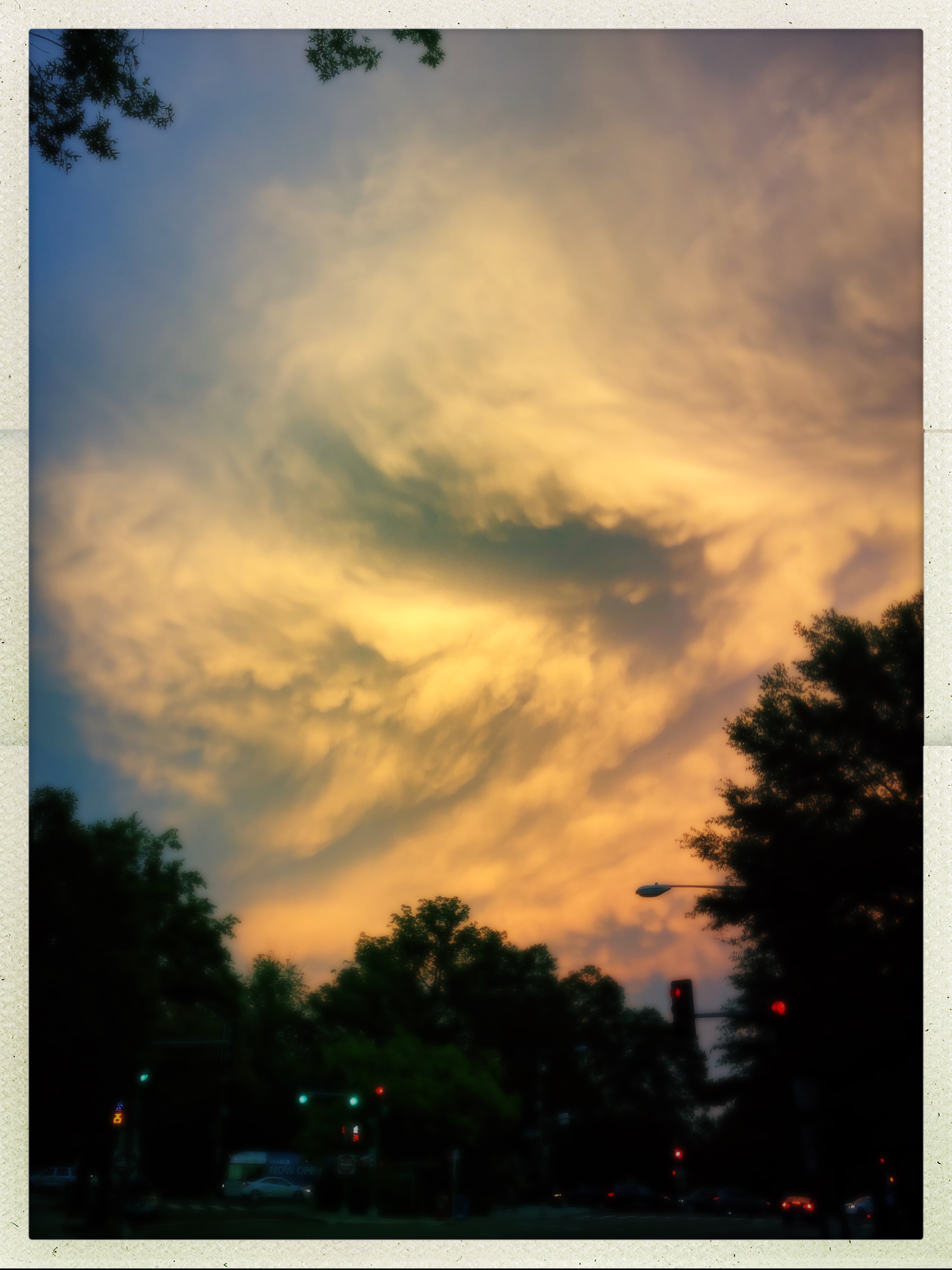
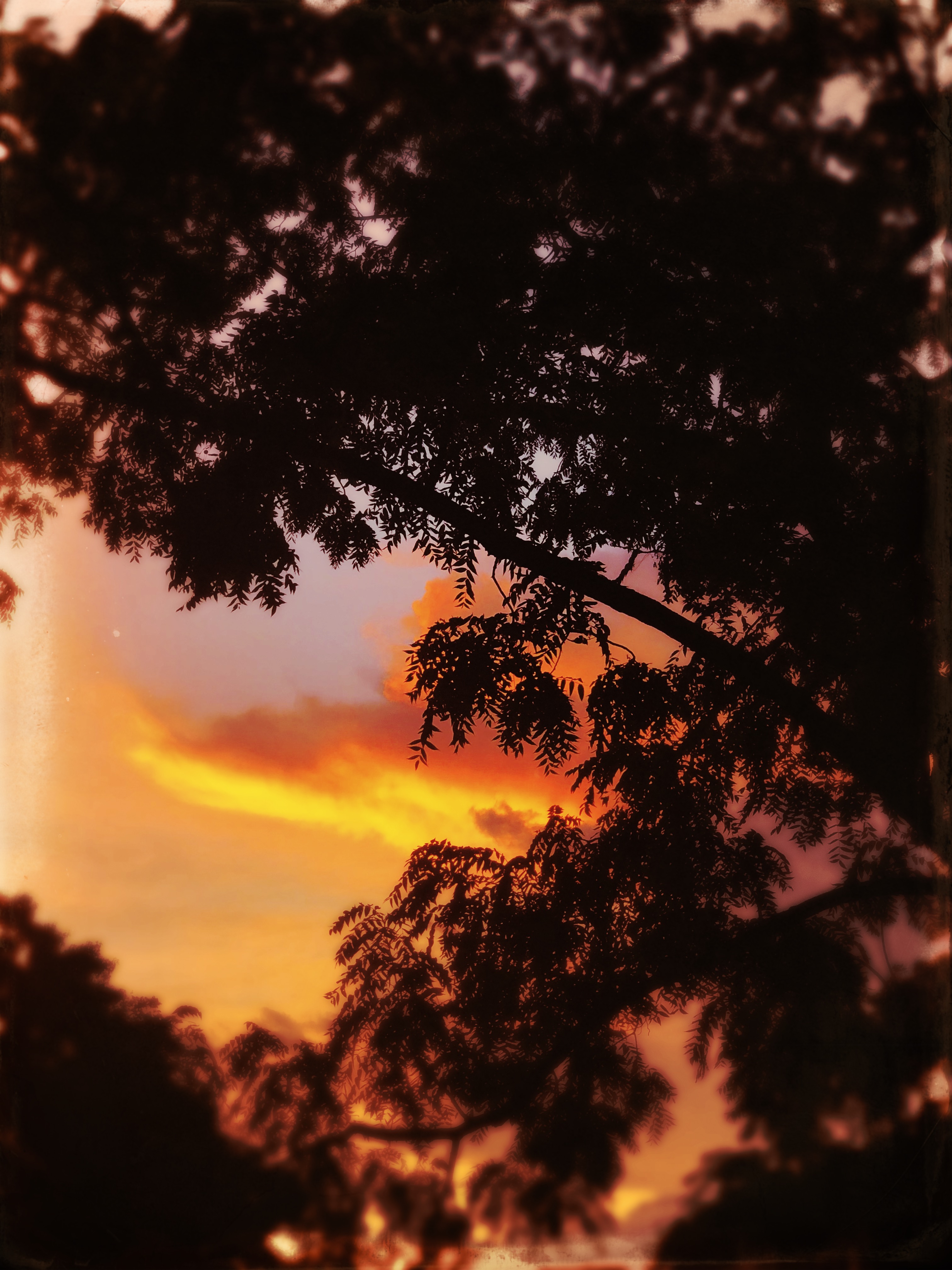
As we finished our walk we were treated to a very beautiful sunset.
We started the evening’s walk on the section of Massachusetts Avenue commonly known as Embassy Row, because of the large number of embassies lining both of its sides.
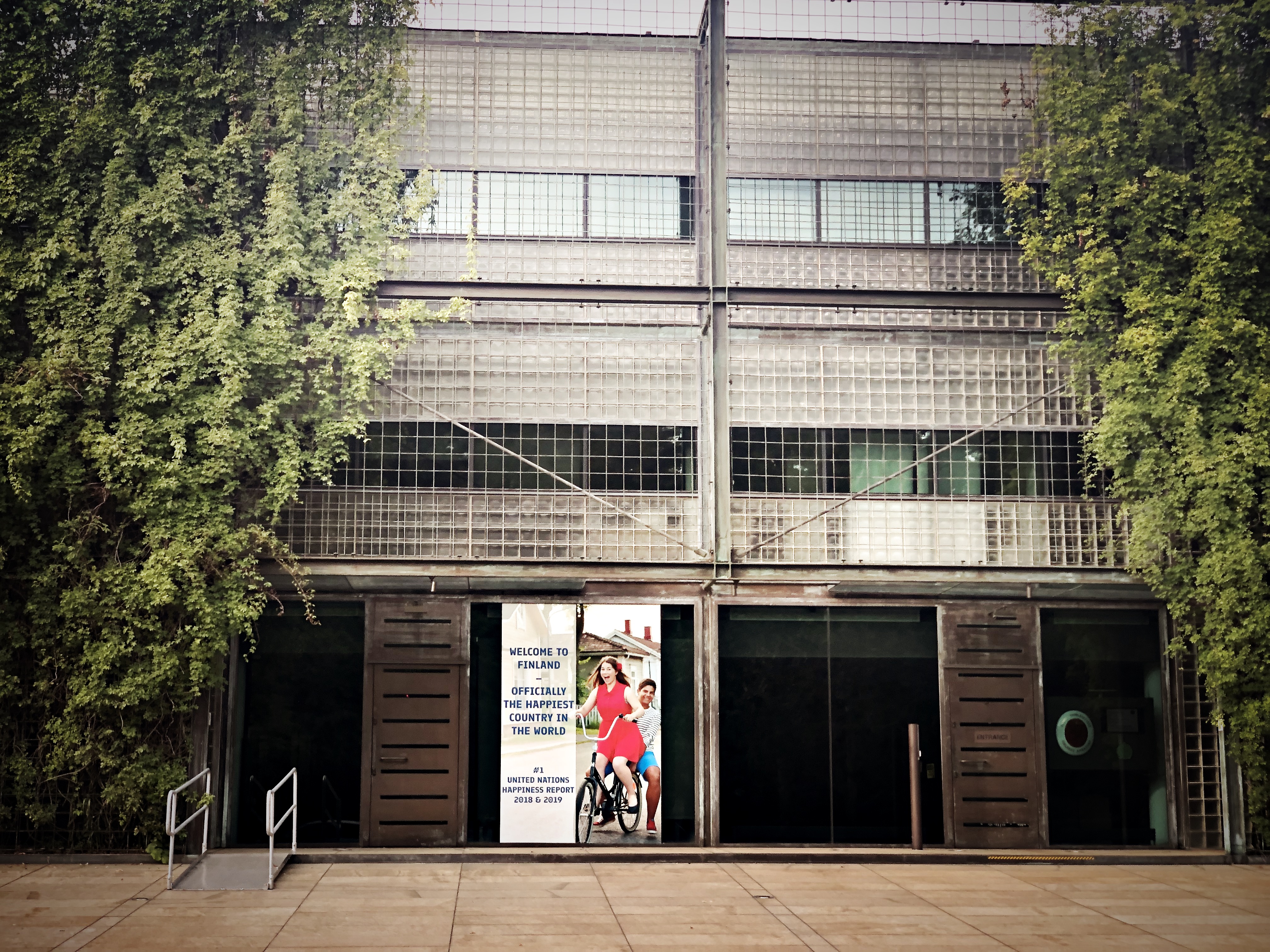
Finland is not only officially the happiest country on earth, it also has one of the coolest embassies in DC.
Finnish Embassy
Next up, we stopped by the New Zealand embassy where Lauren and our son Ben did an impromptu haka.
Haka at the New Zealand Embassy
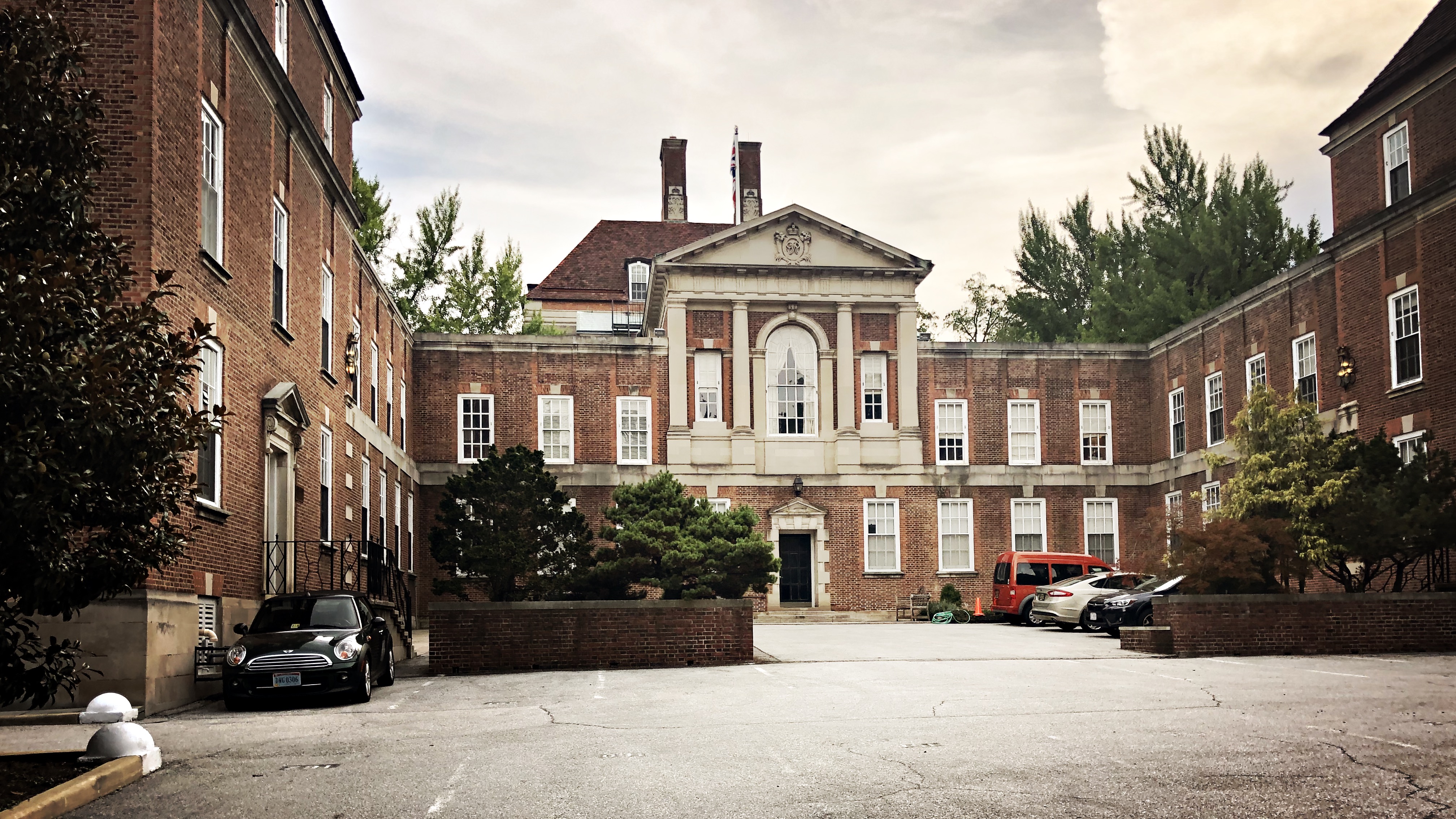
The British Ambassador’s residence was designed by iconic British architect Sir Edwin Lutyens in 1928. It is the only building he designed in America.
British Ambassador’s Residence
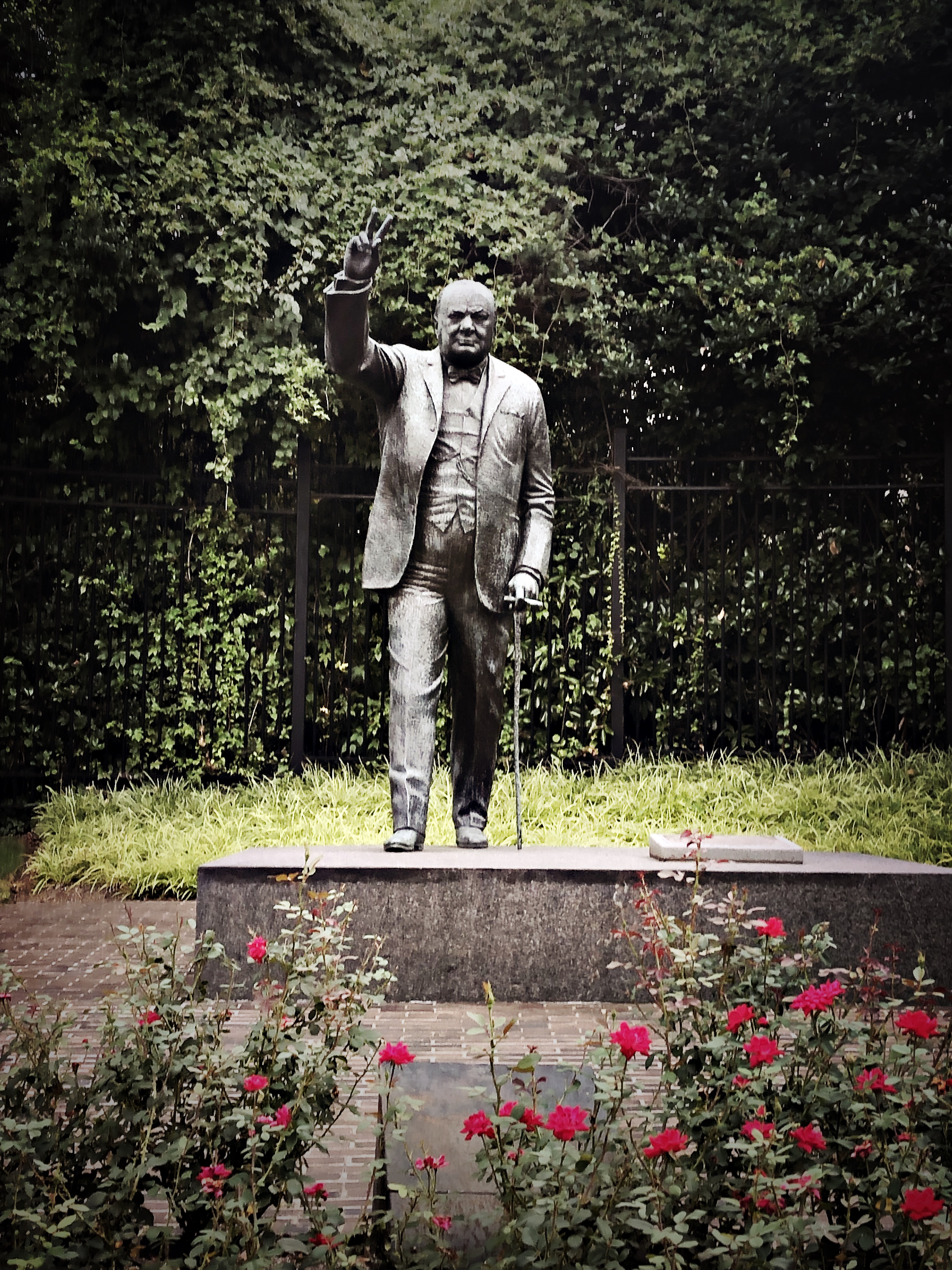
A statue of Sir Winston Churchill stands outside the residence.
Directly across from Sir Winston, stands a statue of Nelson Mandela, outside the South African embassy. We like the idea of these two great men of resistance, acknowledging each other. Churchill flashing a victory sign and Mandela holding up a closed fist of strength and defiance.
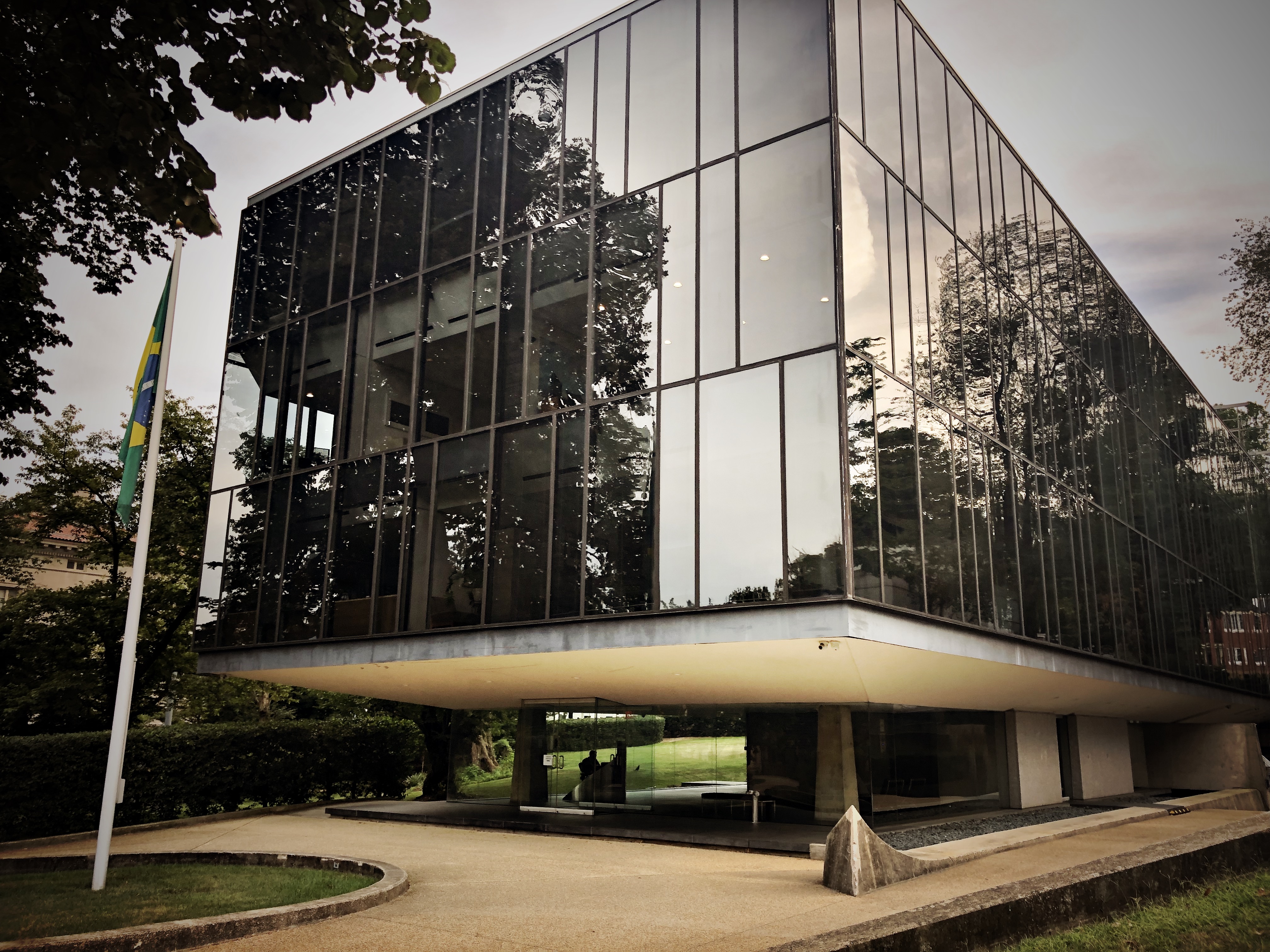
Down a little from the British Ambassador’s Residence stands the Brazilian Embassy with its entirely different architectural style.
Brazilian Embassy
Around the corner from the Brazilian Embassy is another beautiful modern building, housing the Italian Embassy
Italian Embassy
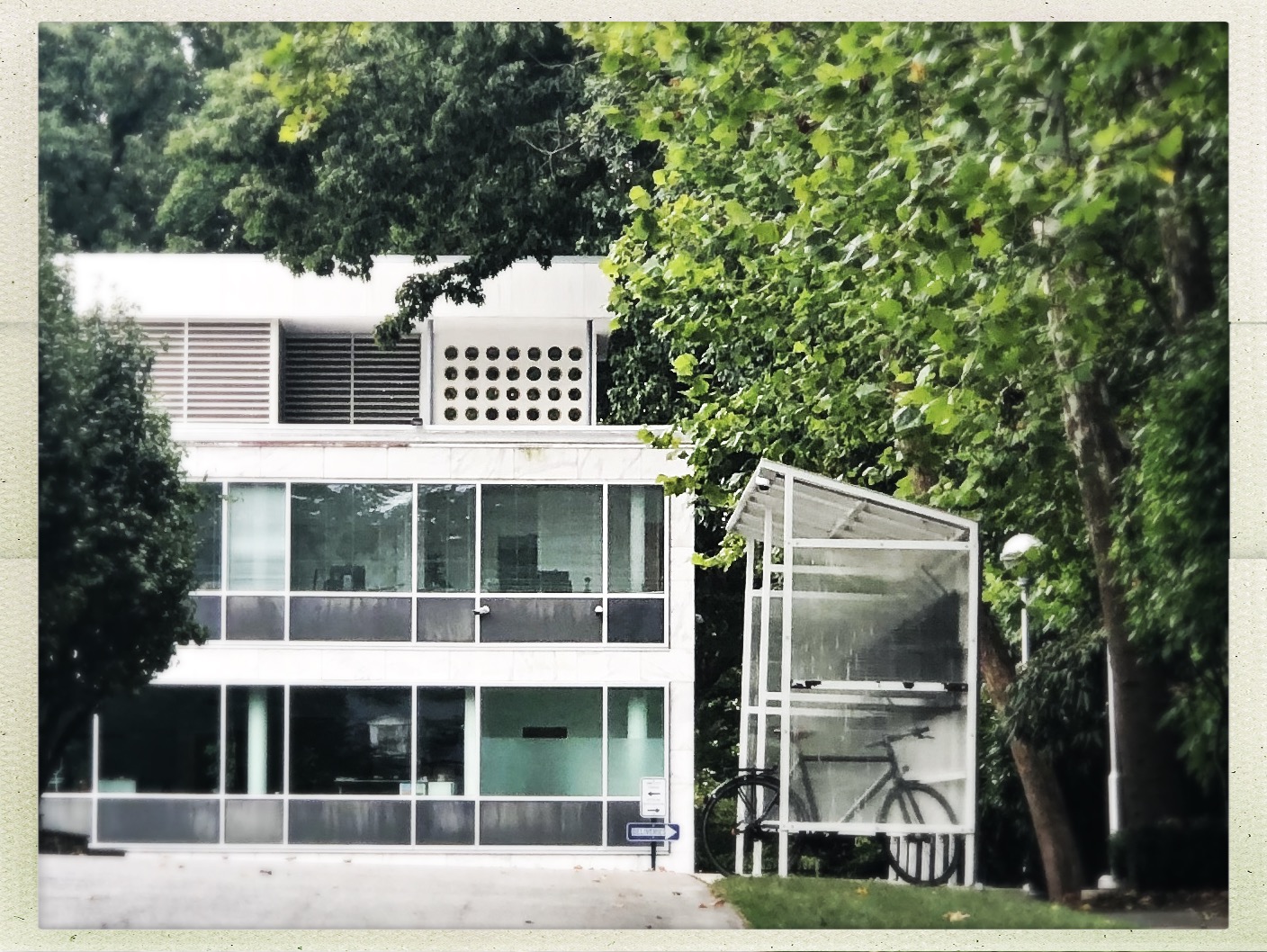
We weren’t surprised to find a stylish bike shed in front of the Danish Embassy
Danish Embassy
Next to the Danish Embassy is the Center for Hellenic Studies. The Center is a research institute for classics and is affiliated with Harvard University. It offers fellowships each year to Classics scholars and researchers and provides housing for a number of residential fellows.
Center for Hellenic Studies
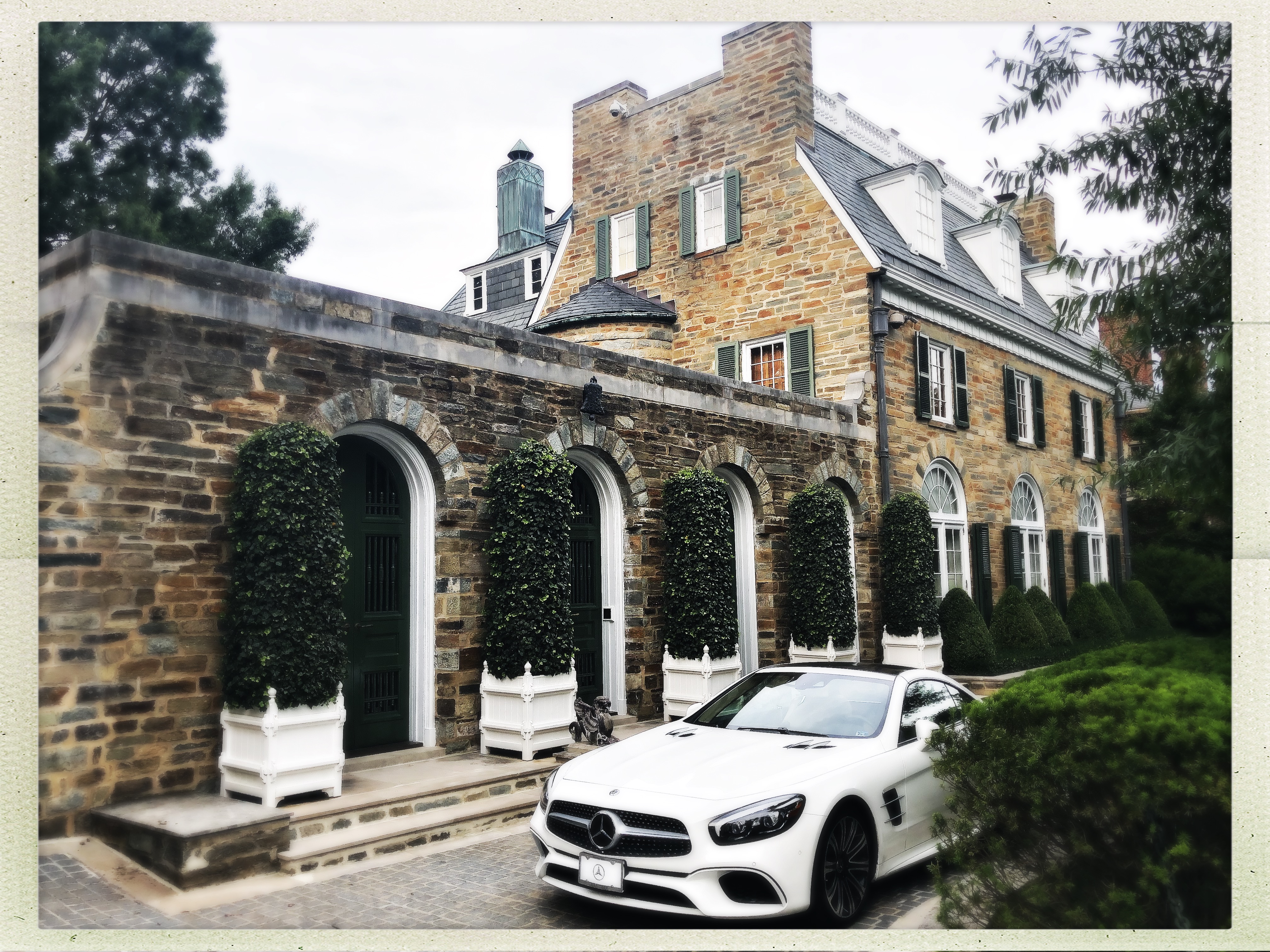
We passed by this stately house with car to match.
And greatly admired this Spanish style residence
Walking along quiet Normanstone Terrace . . .
. . . we came across this leaf. Hanging from an invisible spider thread, it danced magically in mid air.
The saying goes that only mad dogs and english men go out in the mid-day sun, so what’s our excuse? We headed back to Woodley Park with temperatures hovering around 100 degrees. Needless, to say it wasn’t one of our longer walks.
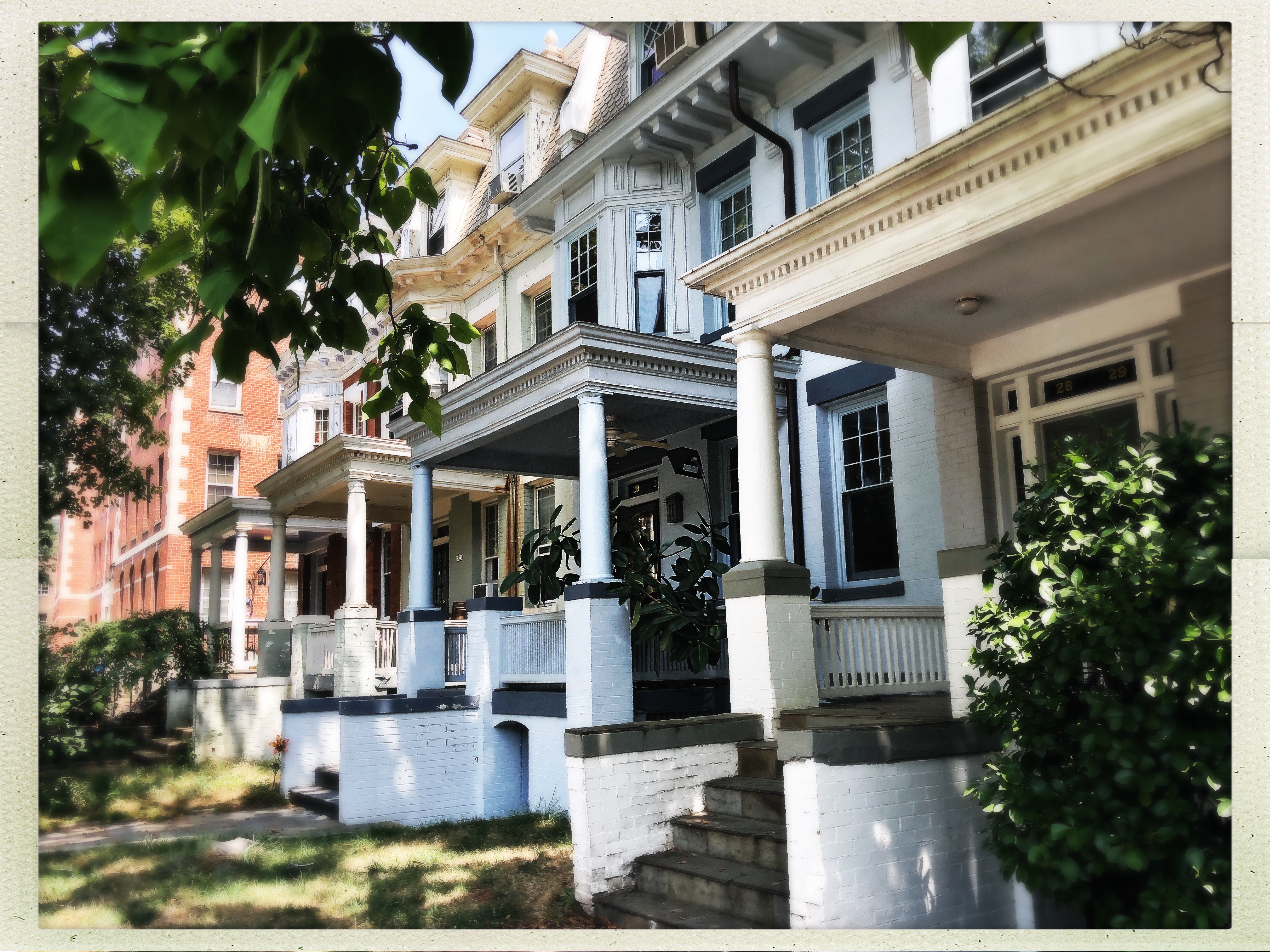
We walked down some beautiful treelined streets of stately row houses.
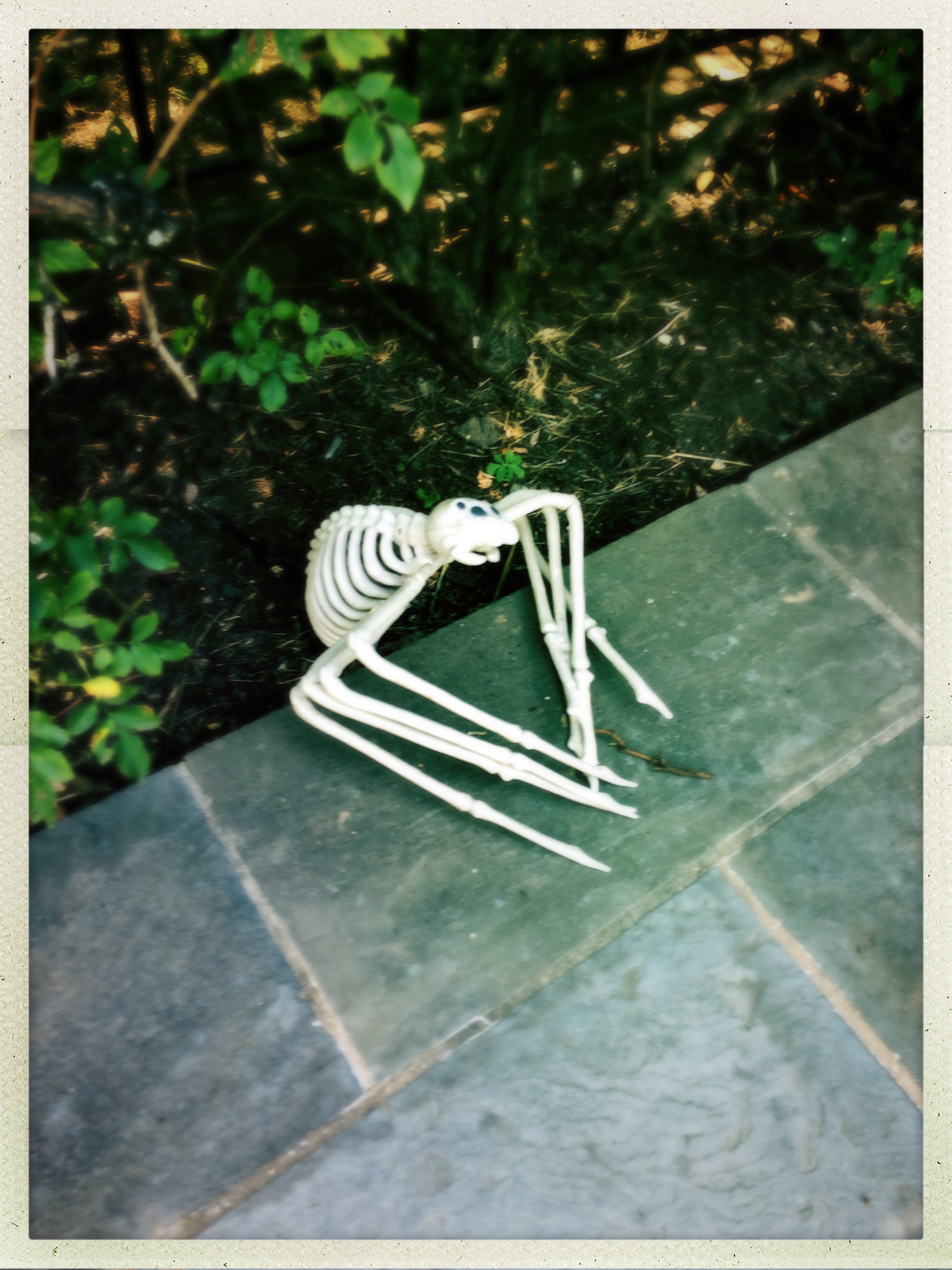
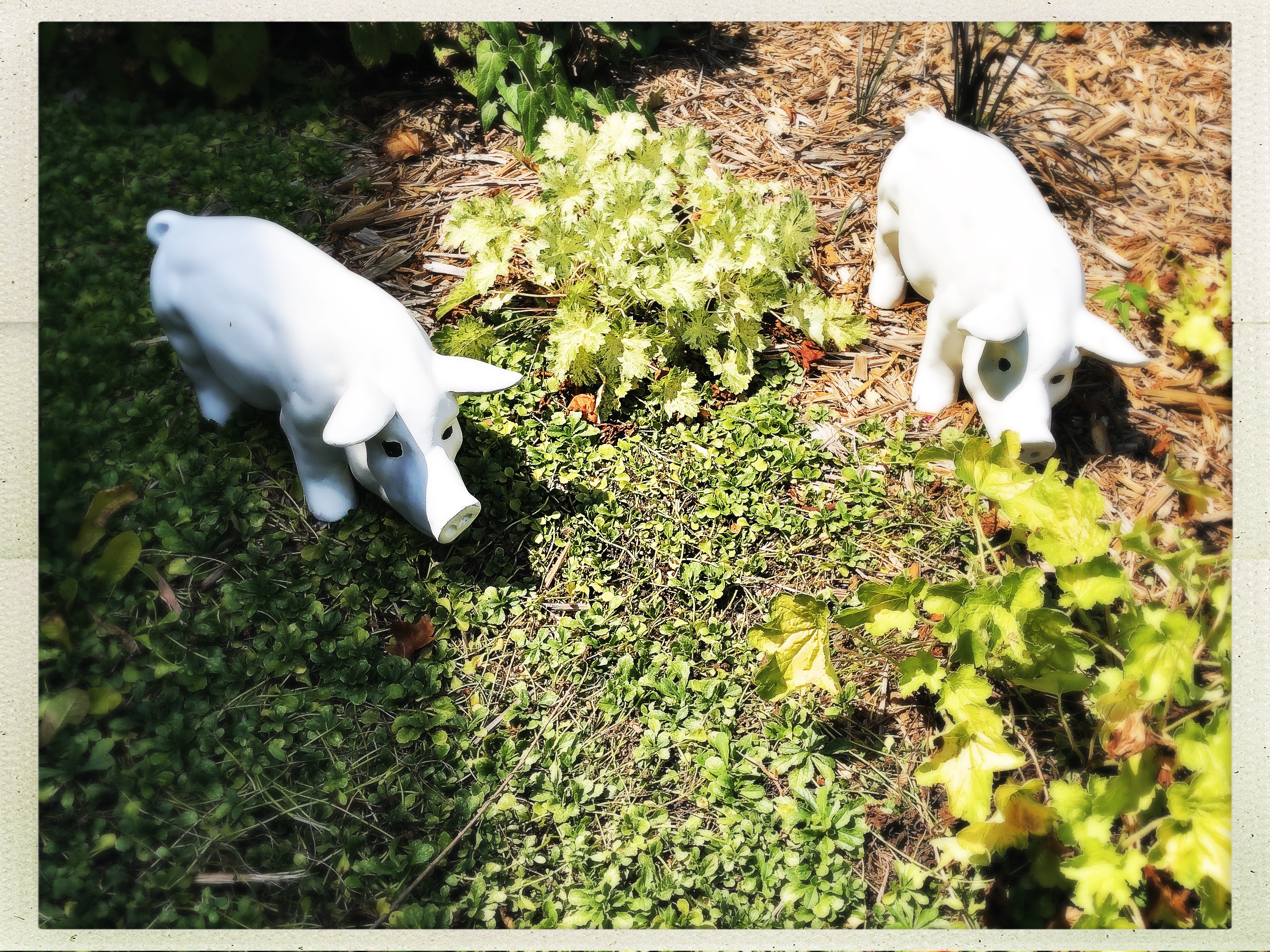
A number had quirky artistic flourishes.
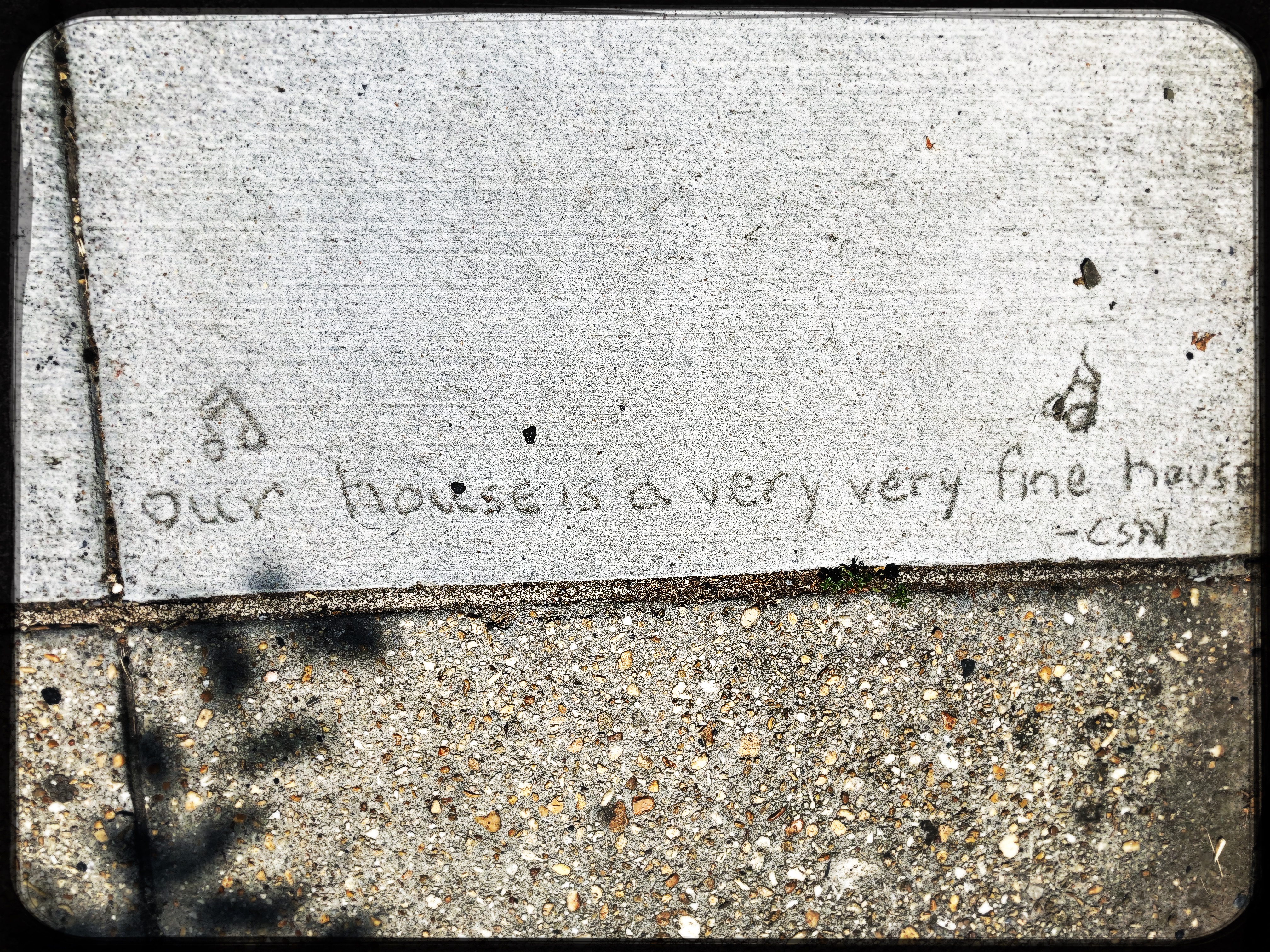
We noticed this Crosby Stills and Nash lyric etched into the concrete path outside what was indeed a very very fine house. Unfortunately, there weren’t two cats in the yard. We guess that would have been asking too much.
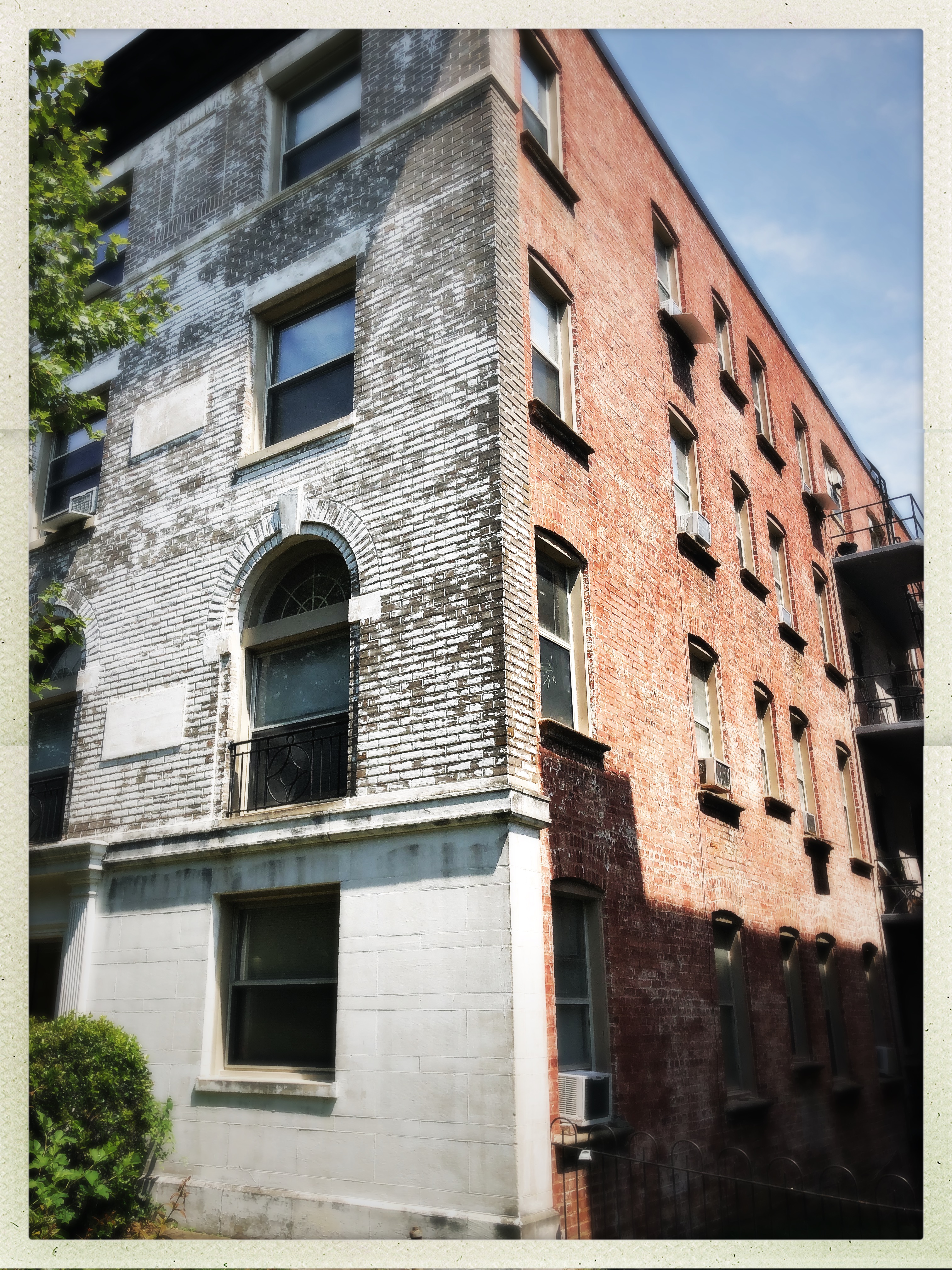
We walked by a row of apartment buildings that interestingly had white bricks along the street front and red bricks on the side.
We loved this sign. It’s so sad that this is where we have come to.
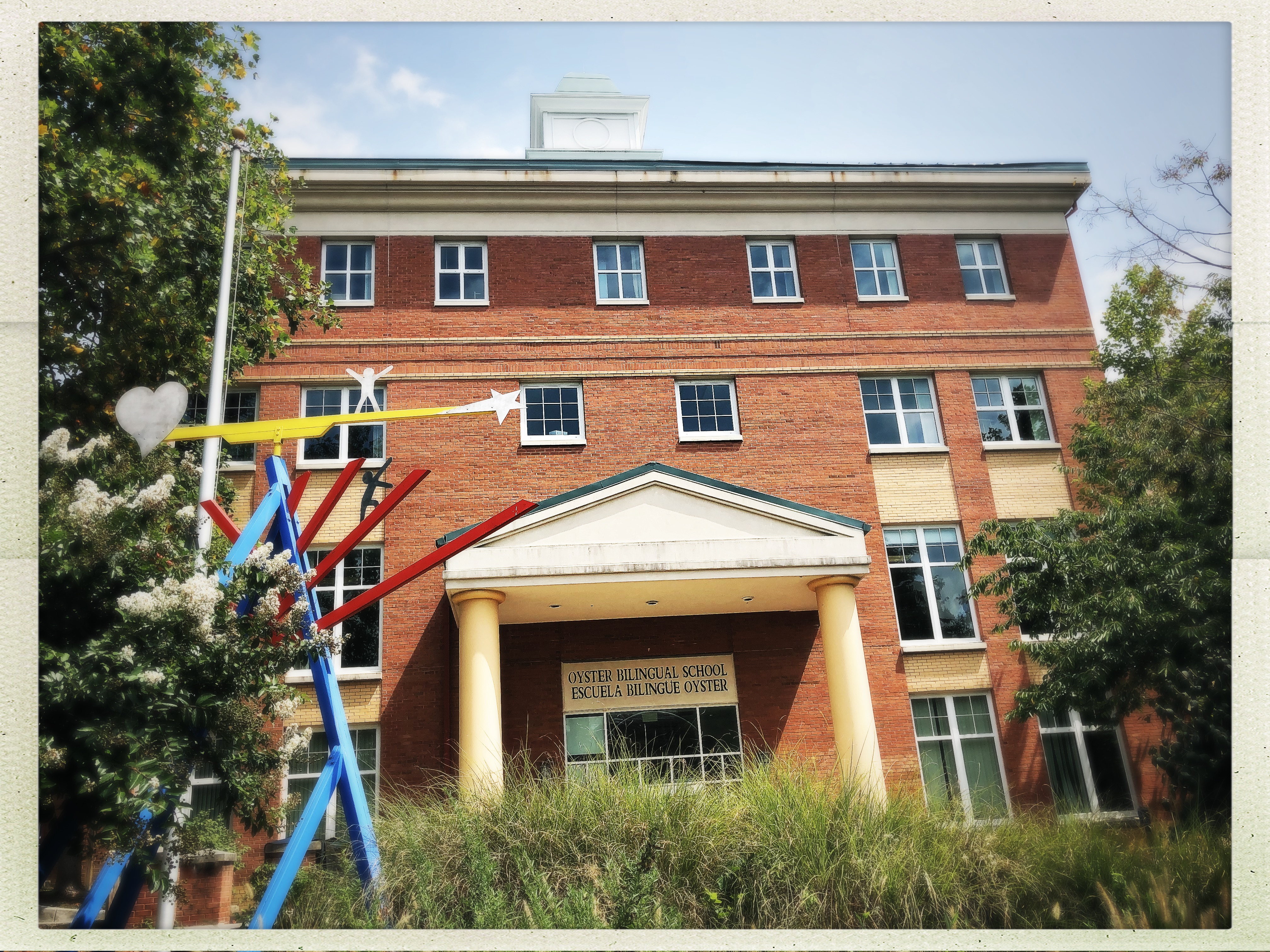
We were back down in Woodley Park in the midday heat. We started off next to the Oyster-Adams Bilingual school. Oyster is a public school where students from pre-K through grade eight do all of their classes in both English and Spanish. The school was slated to be shut down in the early 1990s but a group of parents put together a plan under which part of the school grounds were given to a developer to build apartments. In return, the developer built a new school. The school is named after James Oyster, a former District school superintendent and Henry Adams, an American author and historian.
Oyster Bilingual School
Further down Calvert Street, we passed by the Omni Shoreham hotel.
Omni Shoreham Hotel
The Shoreham is a very large convention hotel that also includes apartments. It was built in 1930 and has been the site of every presidential inaugural ball from the days of Franklin D. Roosevelt. A couple of fun facts about the hotel. First, the Beatles booked the entire seventh floor of the hotel while they were in Washington DC, playing their first concert of their first American concert in 1964. Second, the hotel has a haunted room. A maid died in an apartment in the hotel a few months after the family she worked for had moved in. Shortly after a daughter of the family also died in the apartment and the family moved out. The apartment was converted into a hotel suite. Suite 870 is now known as the Ghost Suite and guests and hotel staff tell stories of faint voices, cold breezes, doors slamming shut and opening of their own accord, and televisions and lights turning on and off on their own. Guests in adjoining suites have also complained about noises coming from the closed and empty Suite.
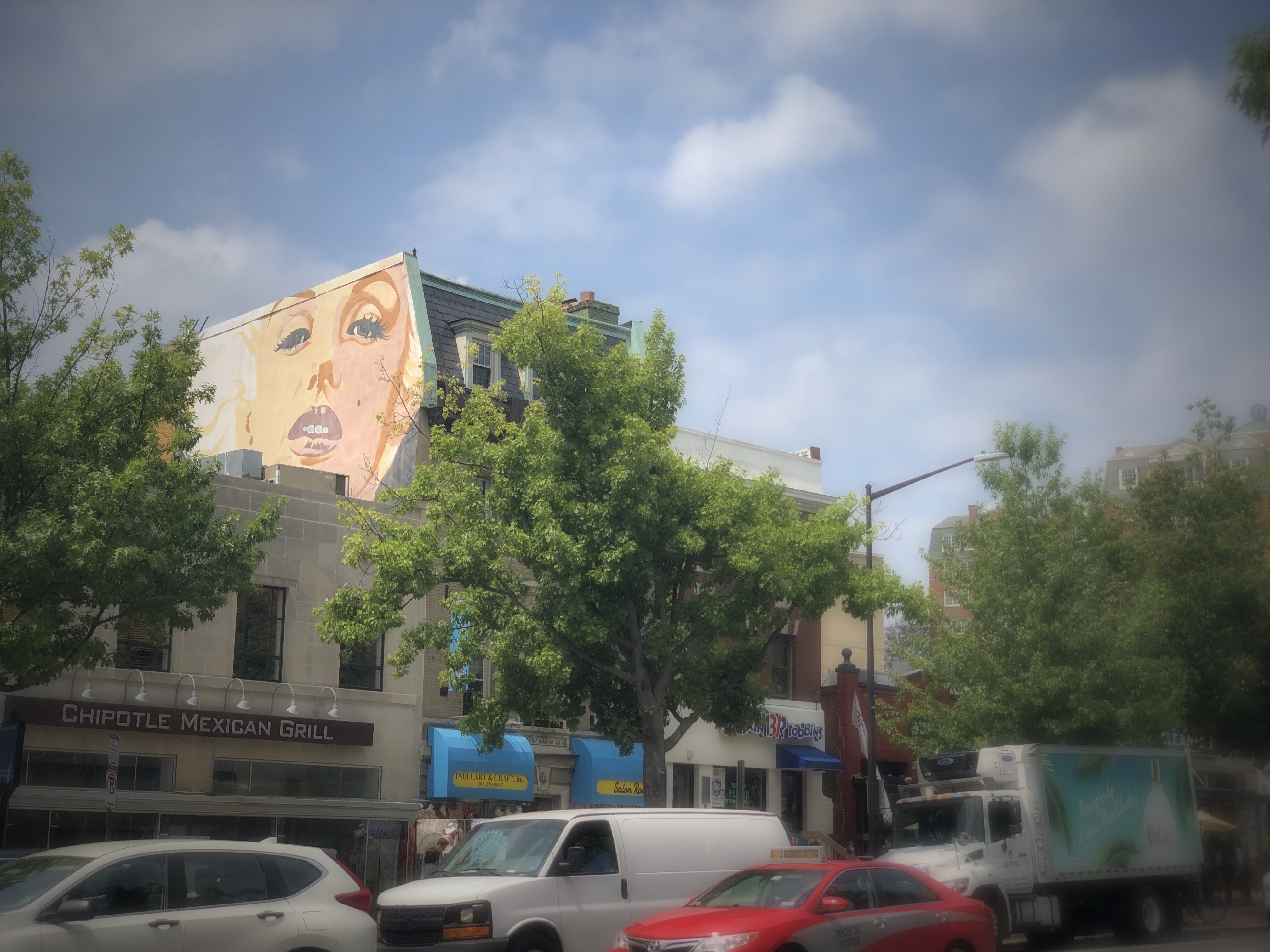
This Marilyn Monroe mural, painted in 1981 by John Bailey looks down over the shops and restaurants of Woodley Park. It has become a District landmark.
We walked down into Rock Creek Park briefly for a view of the Taft Bridge. The bridge was built between 1897 and 1907 and is 1341 feet long and 128 feet high. It spans Rock Creek gorge at Connecticut Avenue.
The Taft Bridge
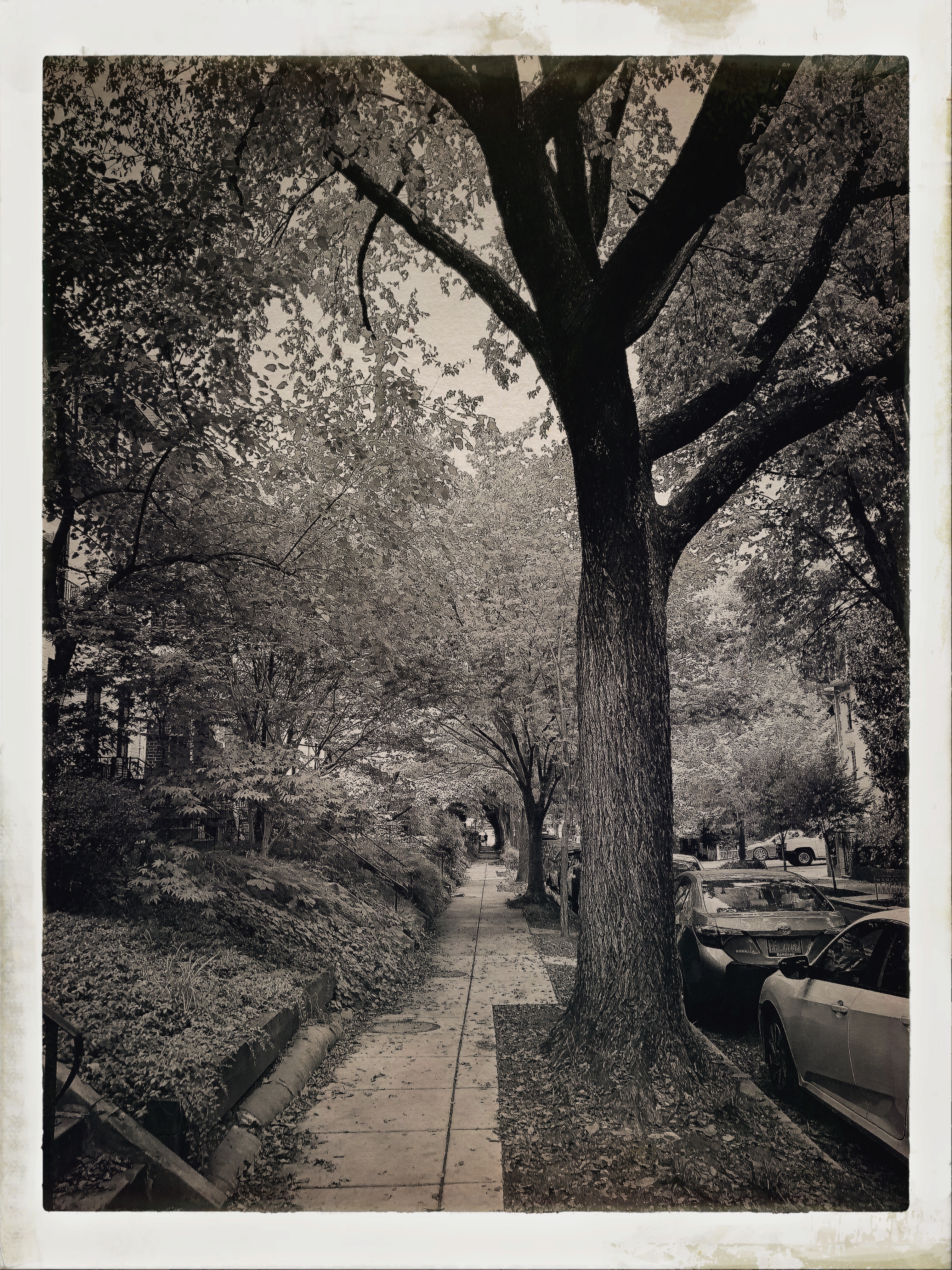
There are some beautiful tree lined streets in Woodley Park.
Finishing up the walk we passed by the Wardman Park Annex. The Annex is another of Washington’s classic apartment buildings. Built in 1928, it has had more than its share of prominent residents, including Presidents Lyndon B. Johnson, Dwight D. Eisenhower and Herbert Hoover and actress Marlene Dietrich.
On our thirtieth day walking Ward 3, we headed into the beautiful valley nestled in between Massachusetts and Cleveland Avenues, known as Woodland – Normanstone Terrace. This neighborhood of stately houses counts numerous ambassadors among its residents.
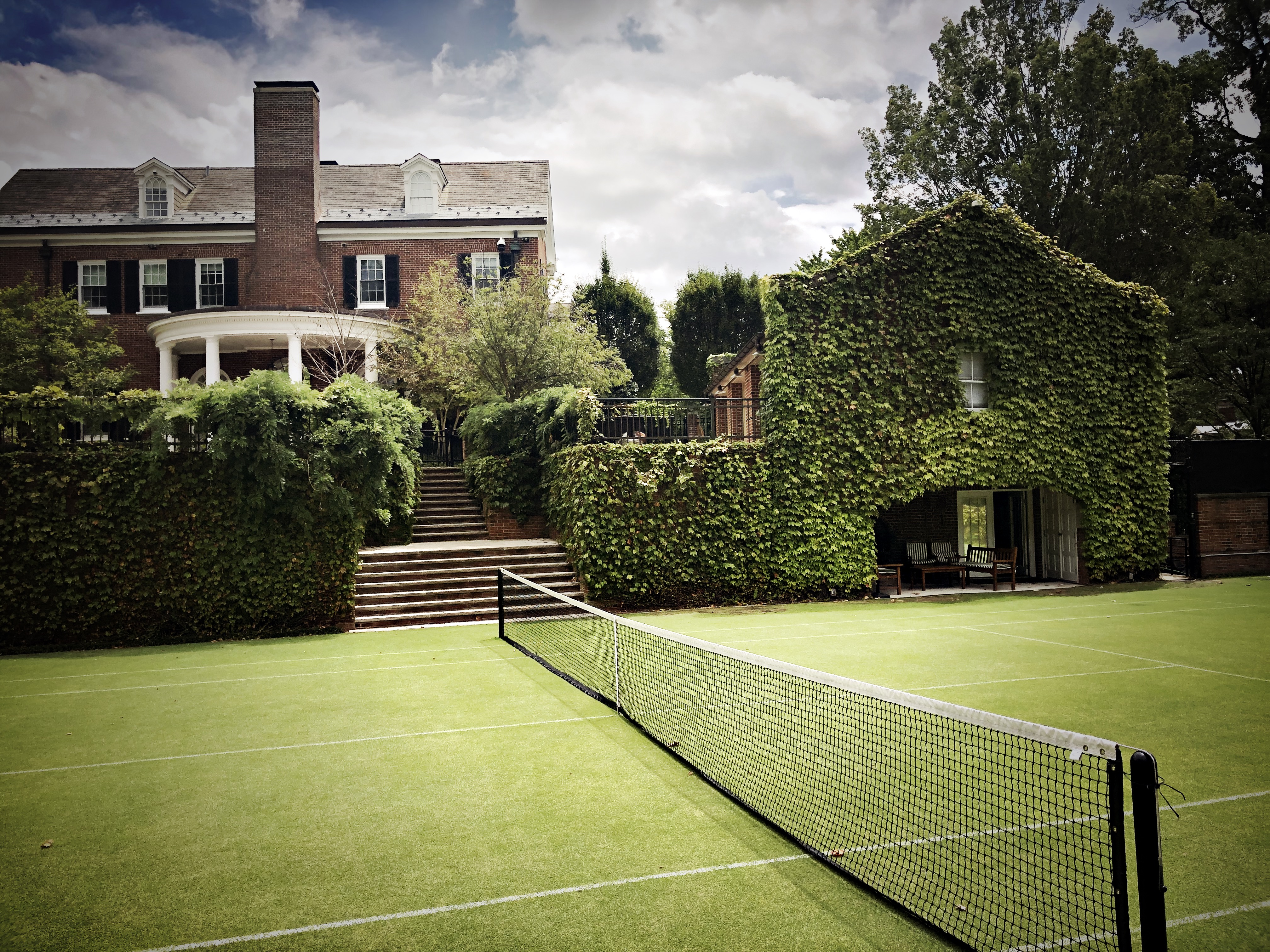
The Australian ambassador has either, the most realistic looking artificial tennis court, or the best groomed grass court, that we have ever seen. Wish we could play a few sets, to see which it is. The ivy covered tennis pavilion adds a nice touch.
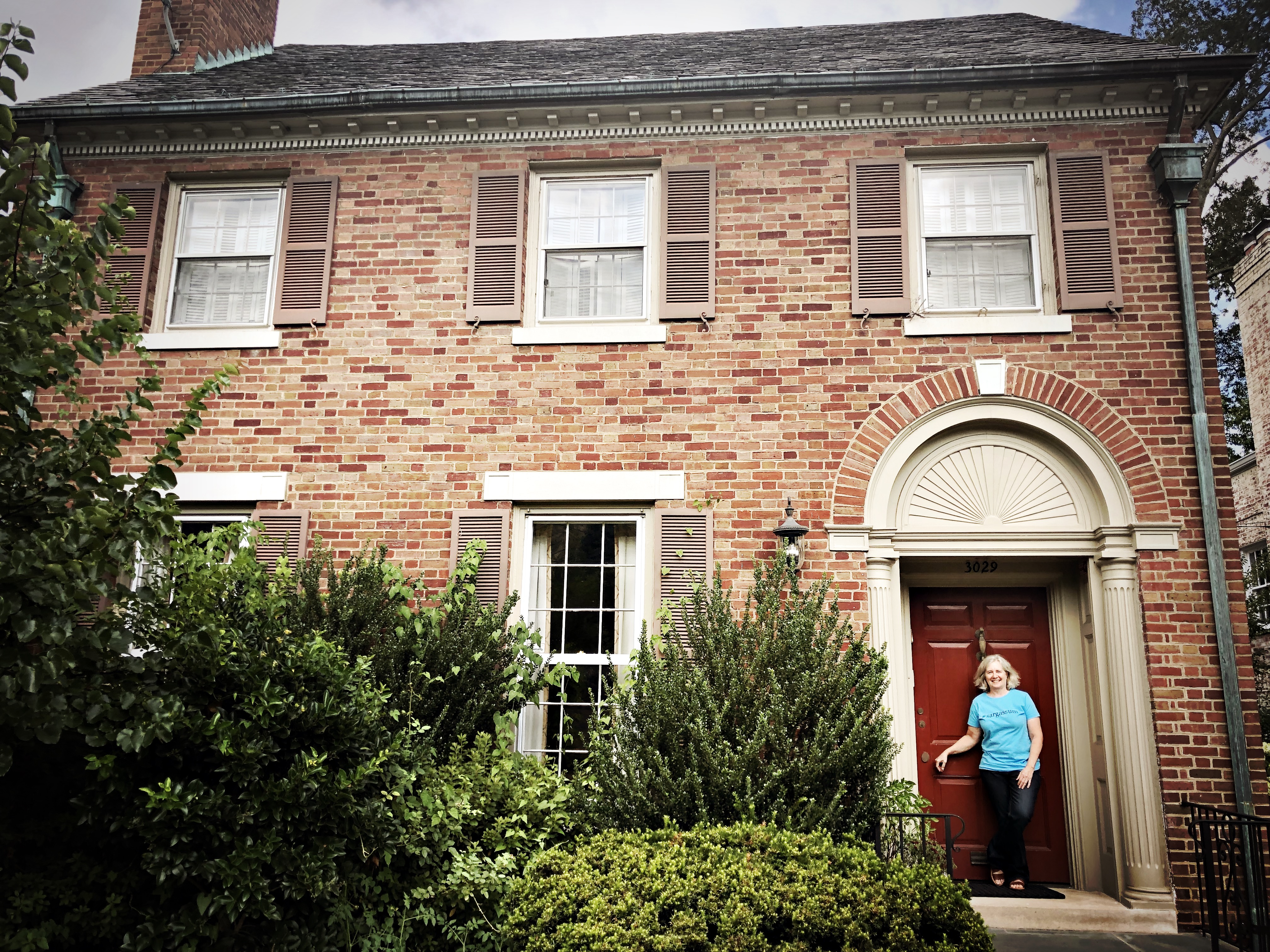
It’s always an extra treat when we can drop in on friends, whose houses we pass by during our walks. This time, our friend, Alyson, graciously let us in to her beautiful home for some lime aid and stimulating conversation.
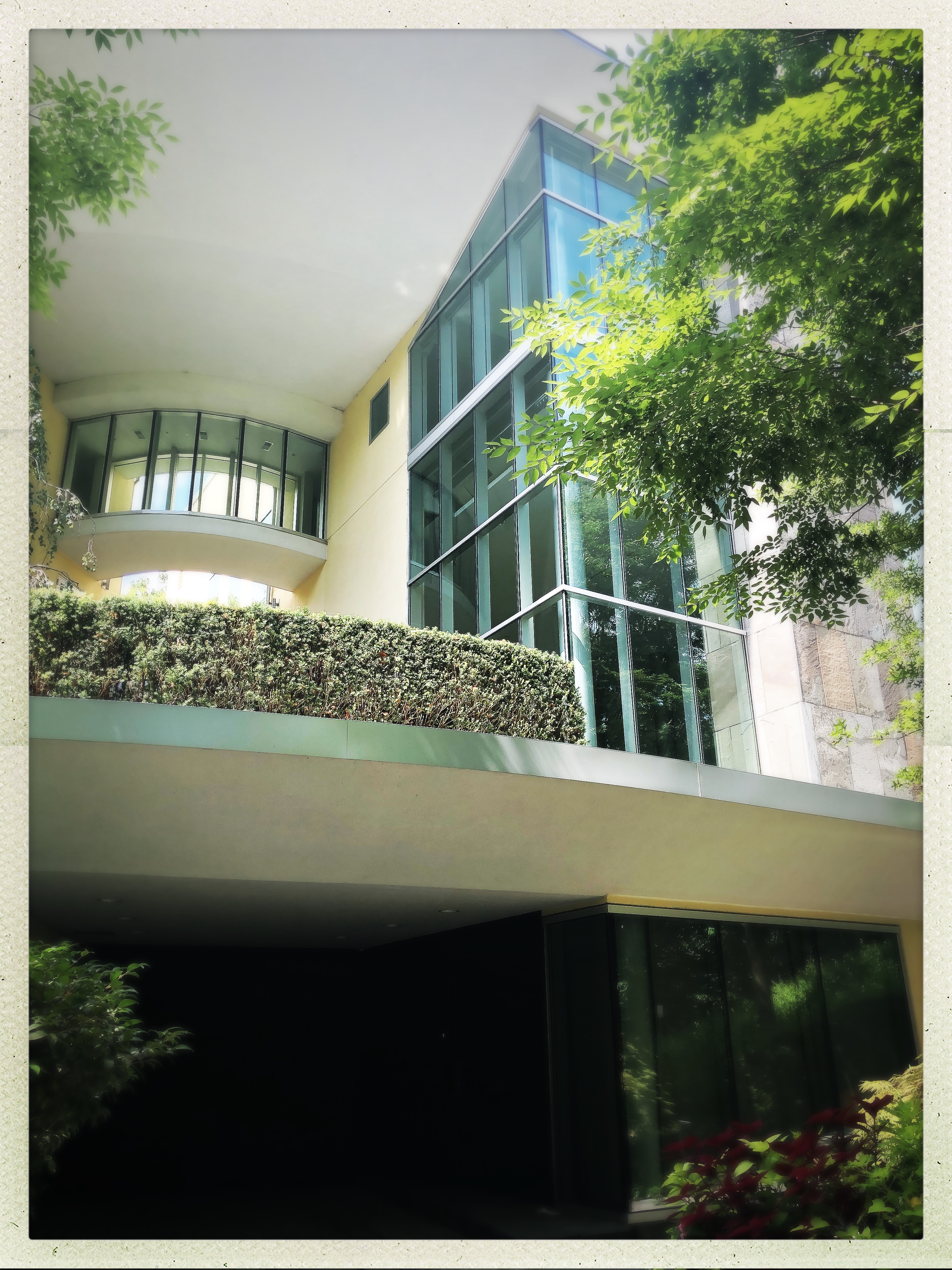
We weren’t sure whether this modern building tucked into the neighborhood was a private residence, embassy or office building.
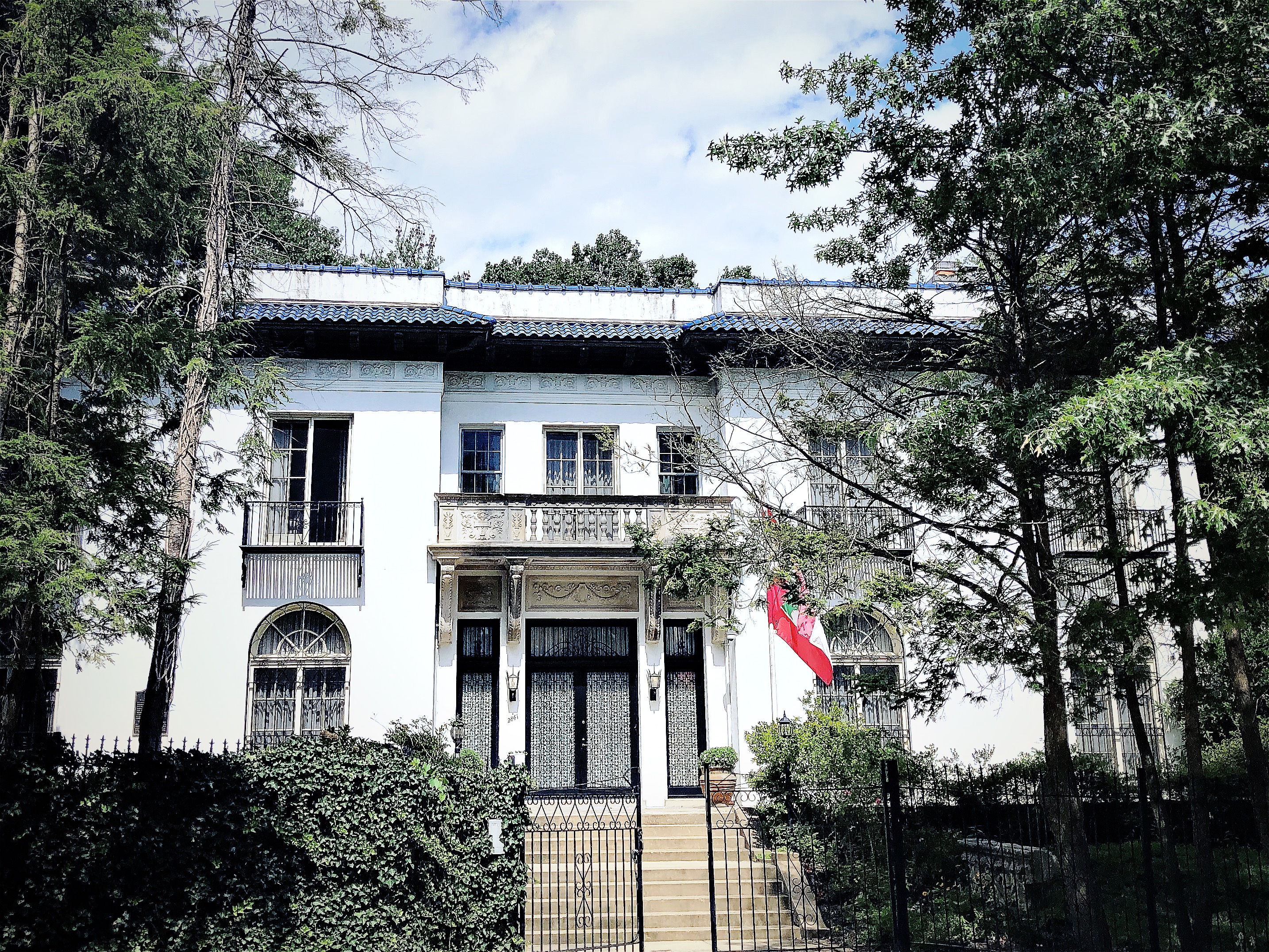
We loved this house, owned by the Lebanese Embassy. The blue tiles on the roof were particularly beautiful and unusual.
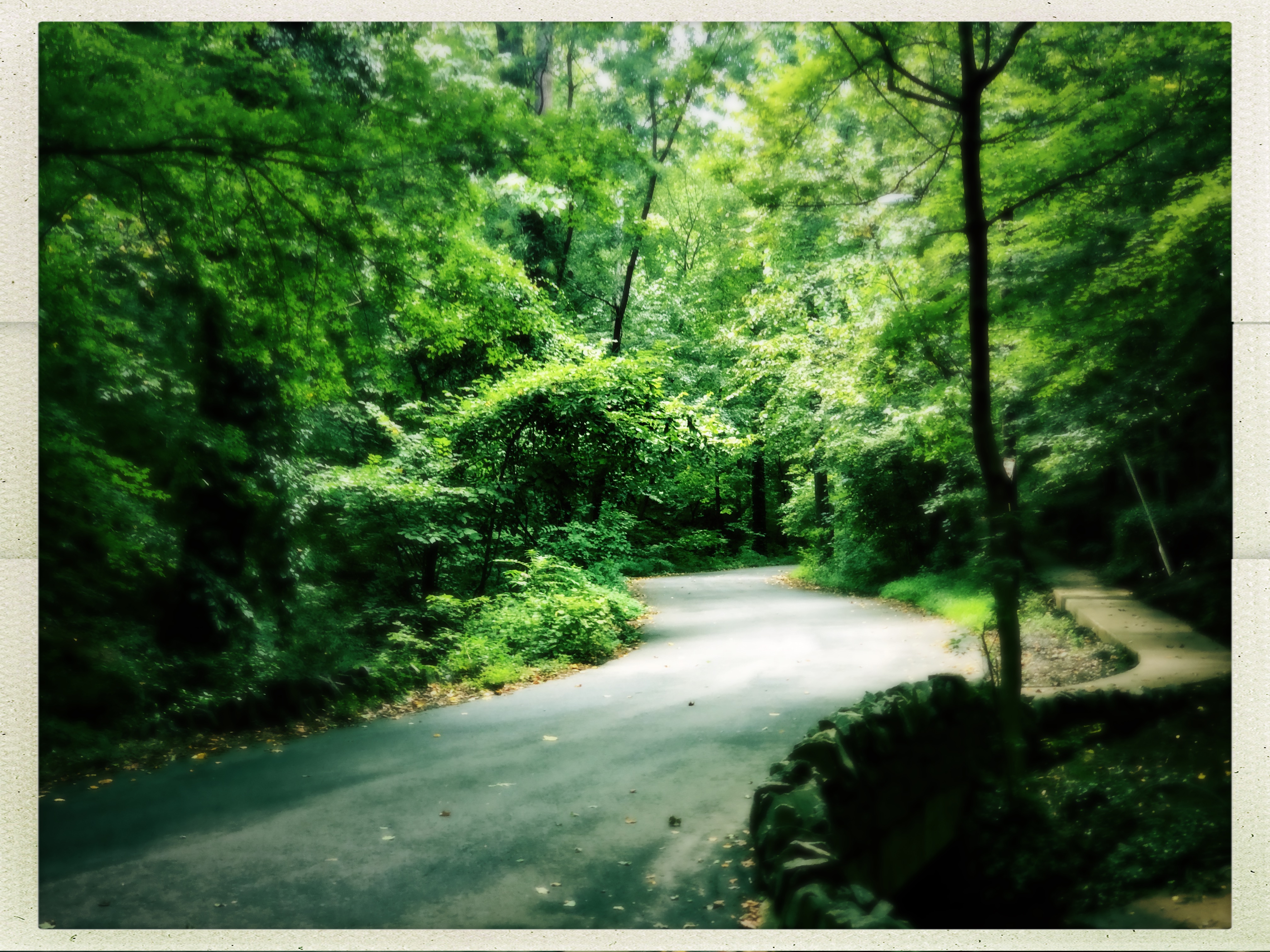
Down at the bottom of the valley and running alongside Woodland-Normanstone Terrace Park is Normanstone Drive. Once again, we easily imagined that we were on some country lane and not in the center of Washington DC.
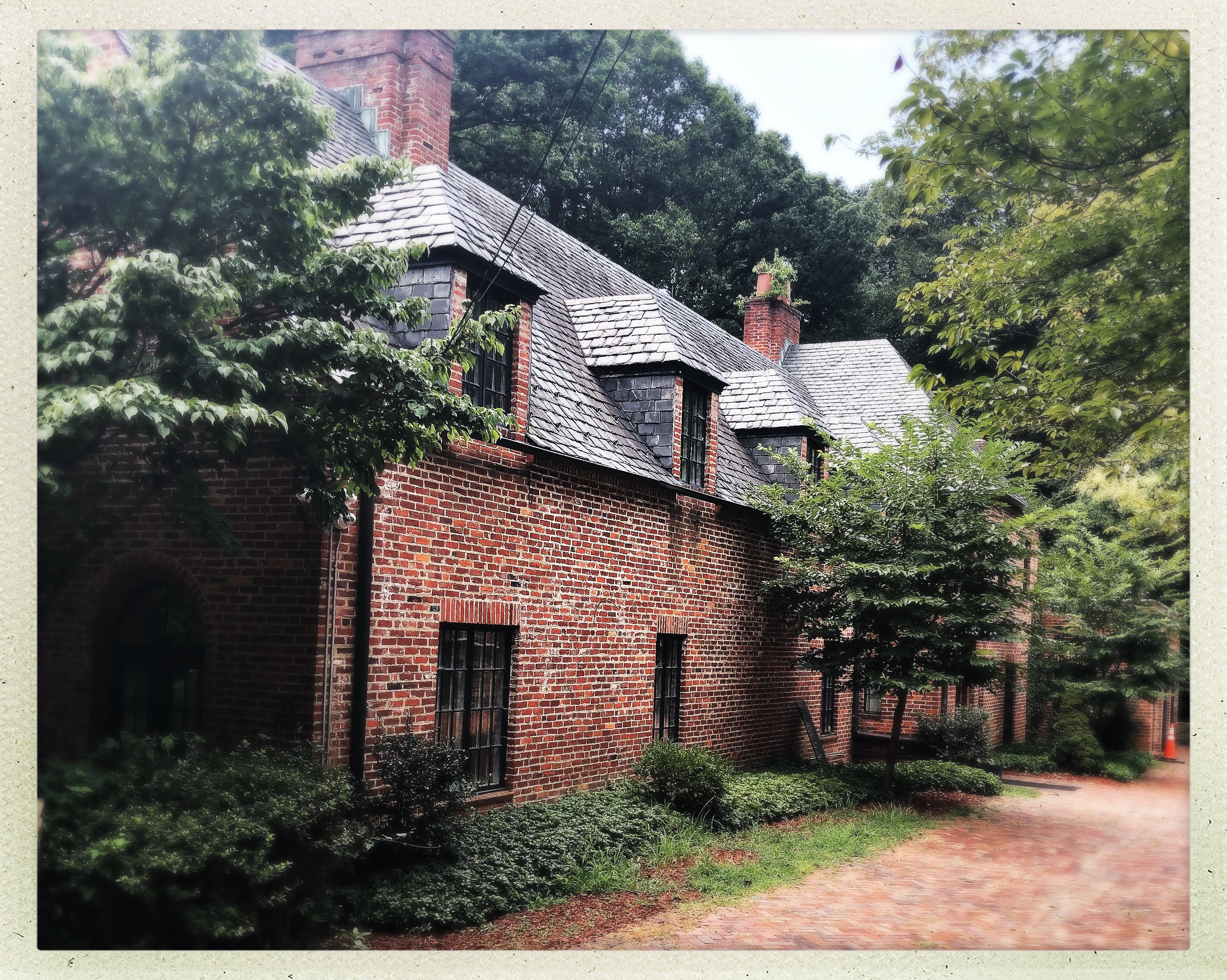
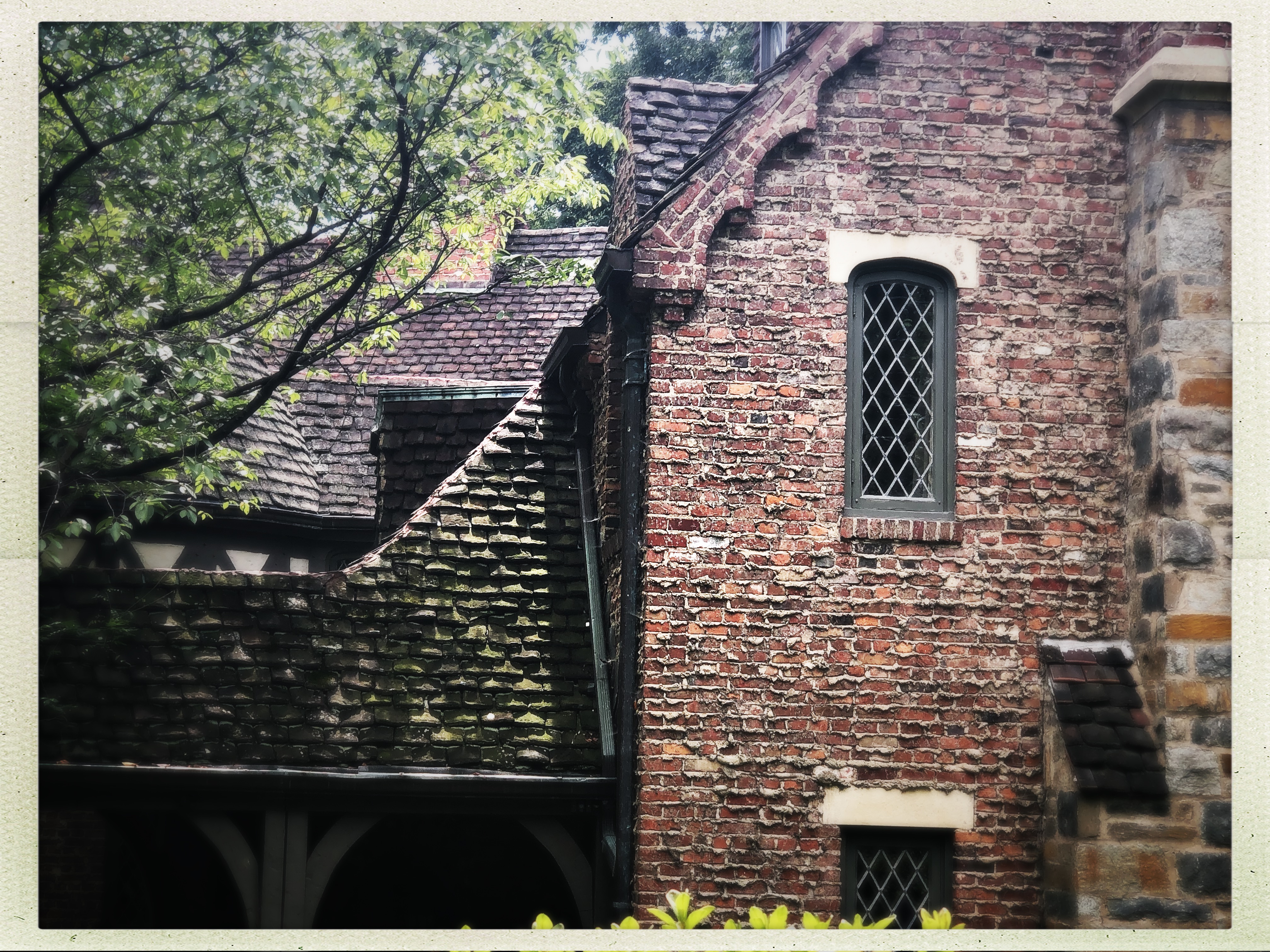
Climbing up out of the valley, we passed by some houses that transported us directly to Europe.

































 Walking The District