We spent much of today’s walk going up and down the hilly streets of Kent. This definitely has more of a suburban feel with well kept single family homes on quiet winding streets and cul de sacs.
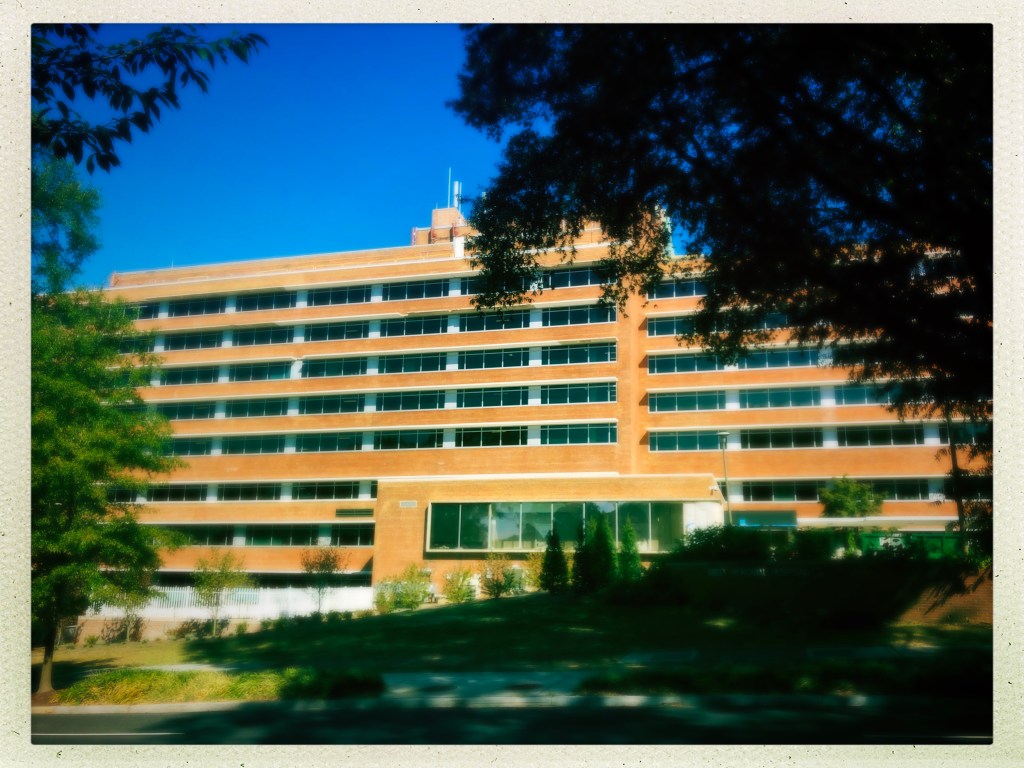
At the edge of the neighborhood we passed by Sibley Hospital, the only acute care hospital in Ward 3.
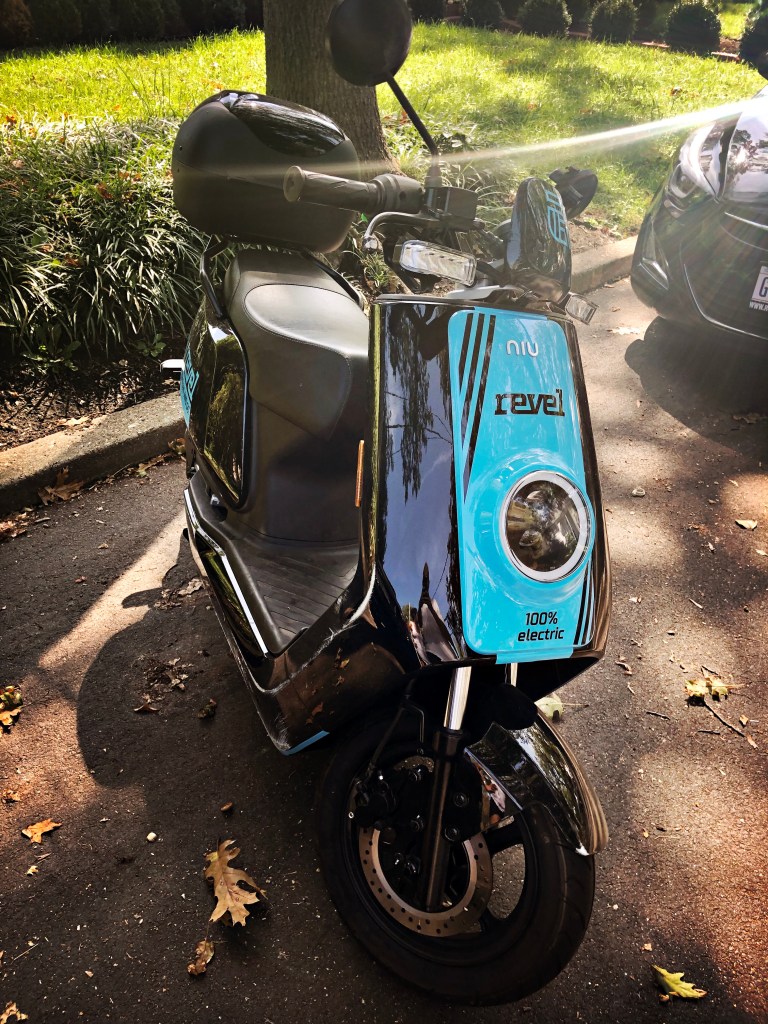
We also spotted this revel moped. These electric mopeds are the latest addition to the growing list of available ride share options in the District.
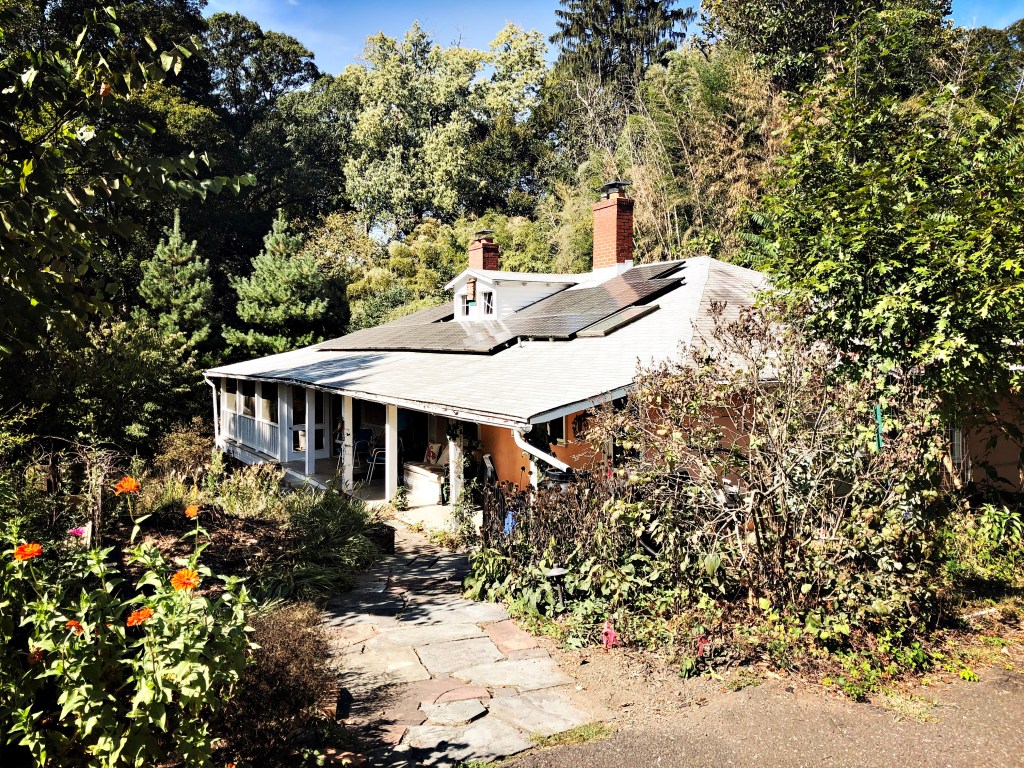
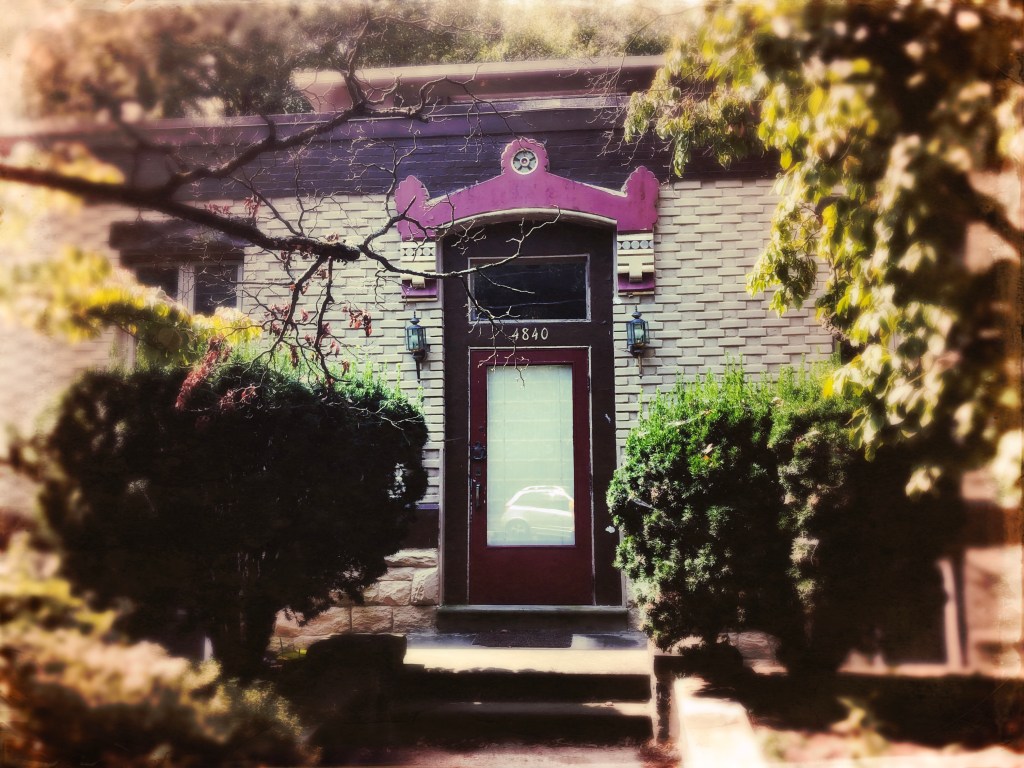
Back down in the Palisades, we came across this house which reminded us of a house from the Australian Outback with its low, sloping roof and wide verandahs. We spoke to the owner of the house who provided us with some of its history. Apparently, it started out as a dance hall in the early 1900s when it was a stop for the trolley line that went out to Glen Echo Park, an amusement park in nearby Maryland. At that time, the building had no walls. In the 1920s, the structure was walled in and according to local lore became a “cathouse”, to use the common term at the time for a brothel.
The Palisades was a very welcoming neighborhood on this beautiful Autumn evening. This is rapidly becoming one of our favorite neighborhoods with its diverse variety of houses and friendly residents. Everyone we passed seemed to have a friendly greeting. Heaven on earth perhaps?
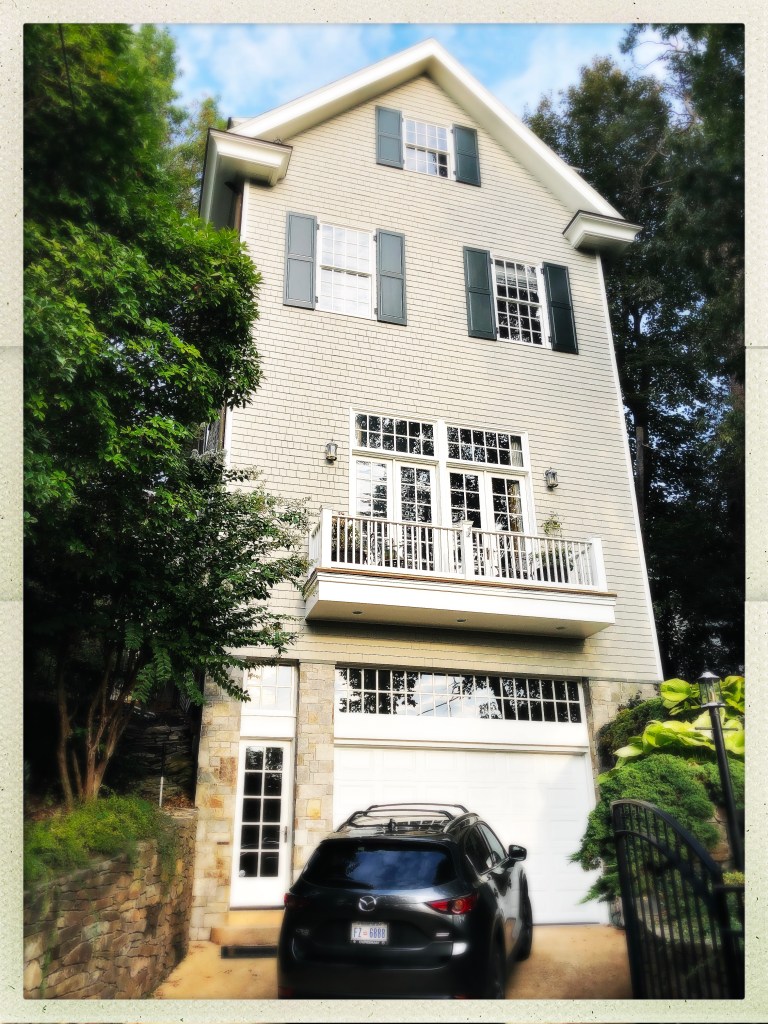
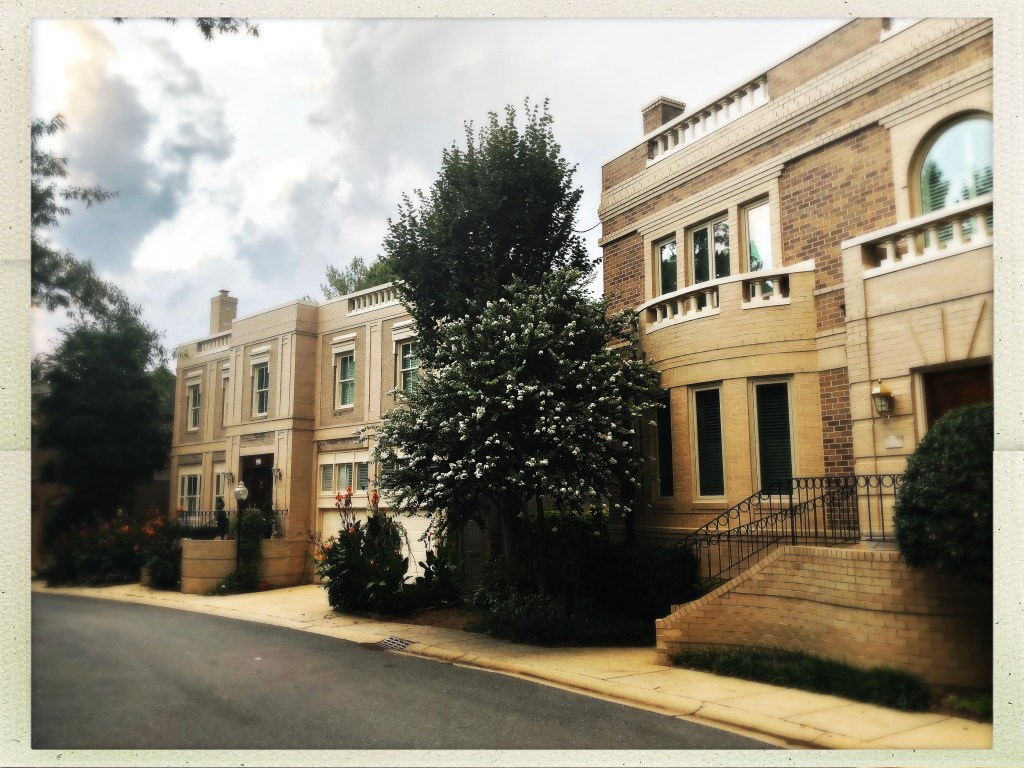
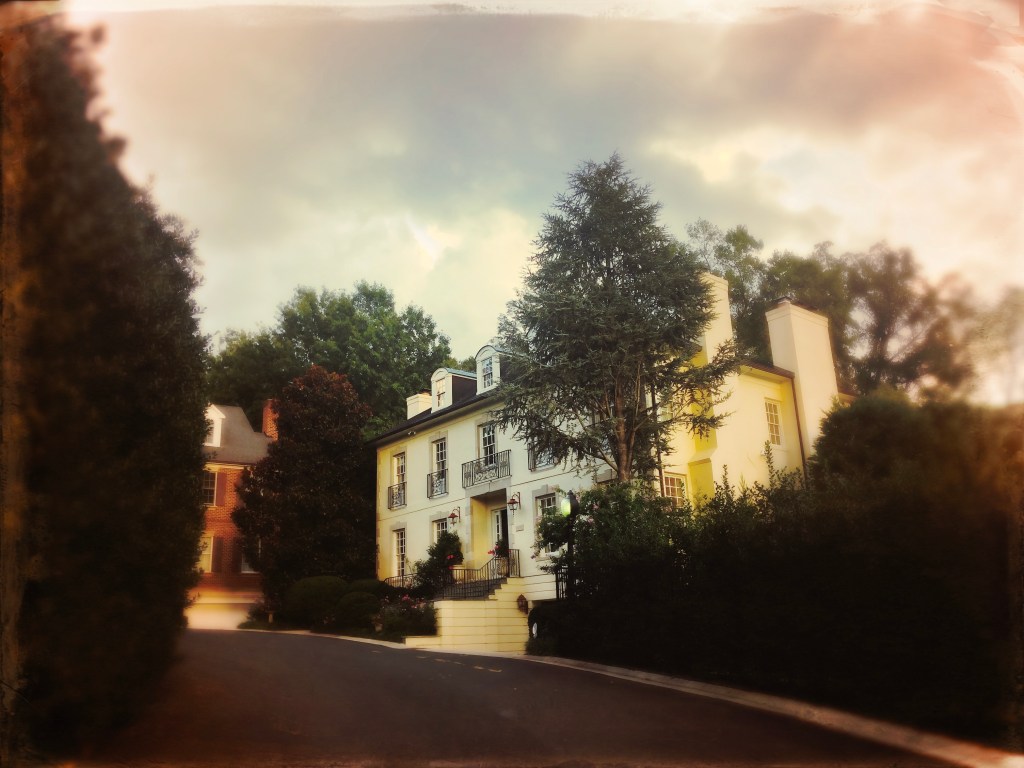
Here are some examples of the diverse housing stock in the neighborhood.
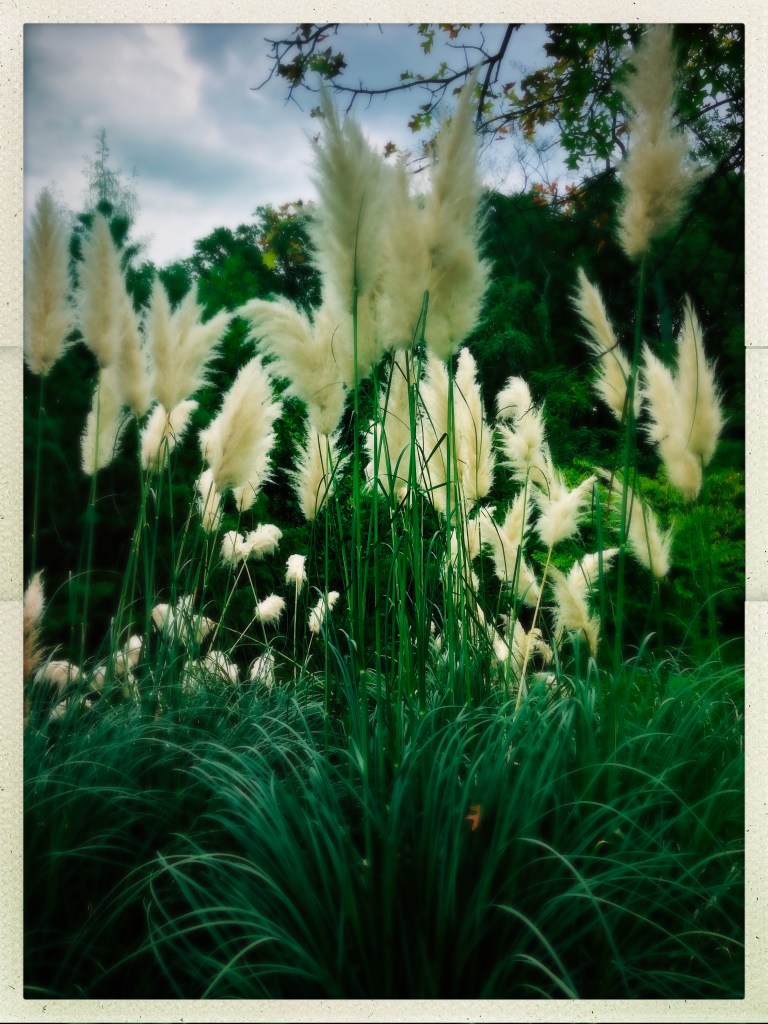
We came across a stand of bamboo, something you don’t find very often in Ward 3.
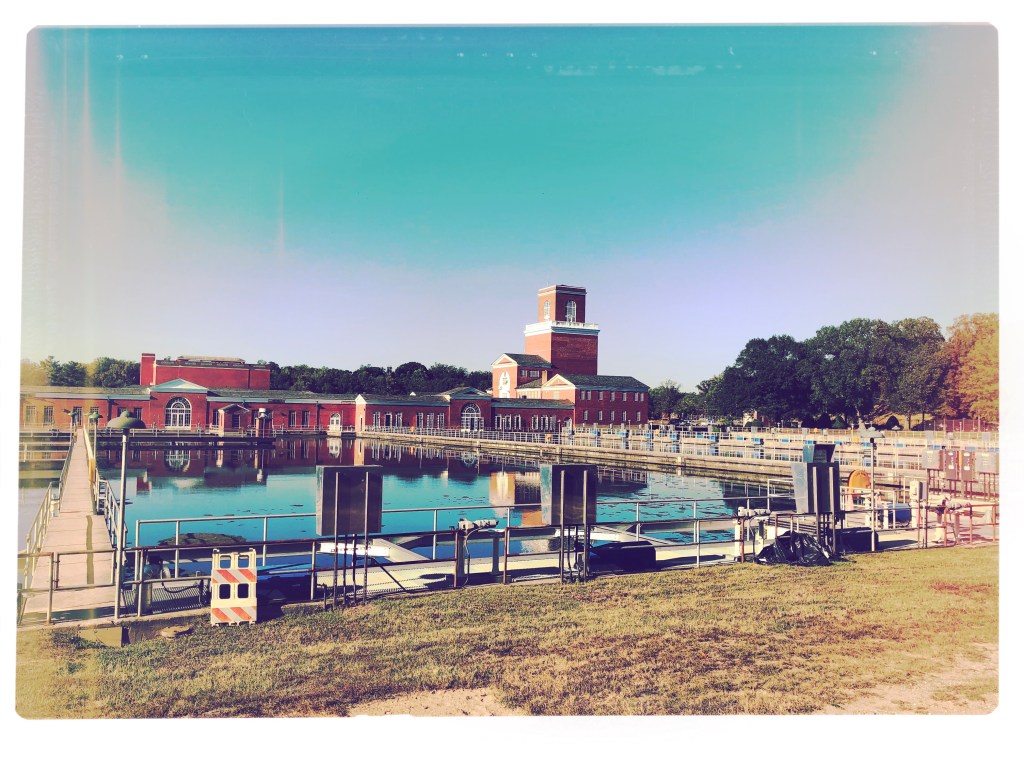
We also passed by the Dalecarlia Water Treatment Plant. The Plant was completed in 1926 to accommodate the increasing populations of the District and Virginia.
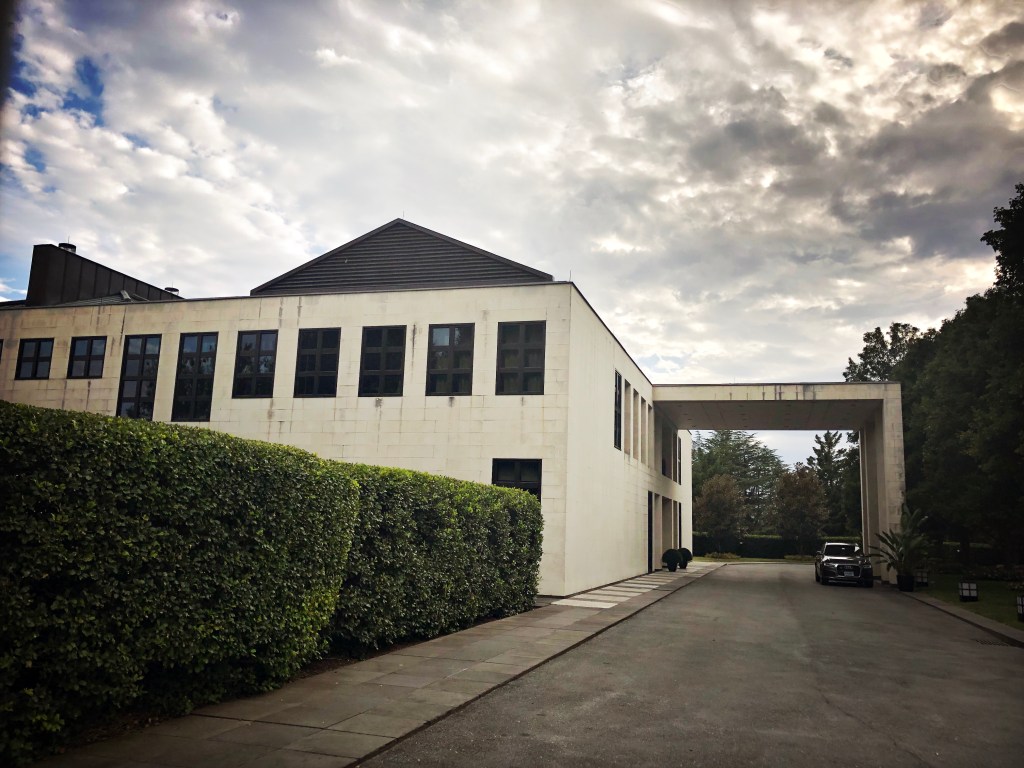
Once again we found ourselves going by the extensive German Embassy compound. This time we passed the Ambassador’s residence on Foxhall Road.
The residence, designed by German architect, O.M. Ungers, was built in 1994. The Washington Post has described it as “a Bauhaus-inspired take on classical Washington” which seems about right.
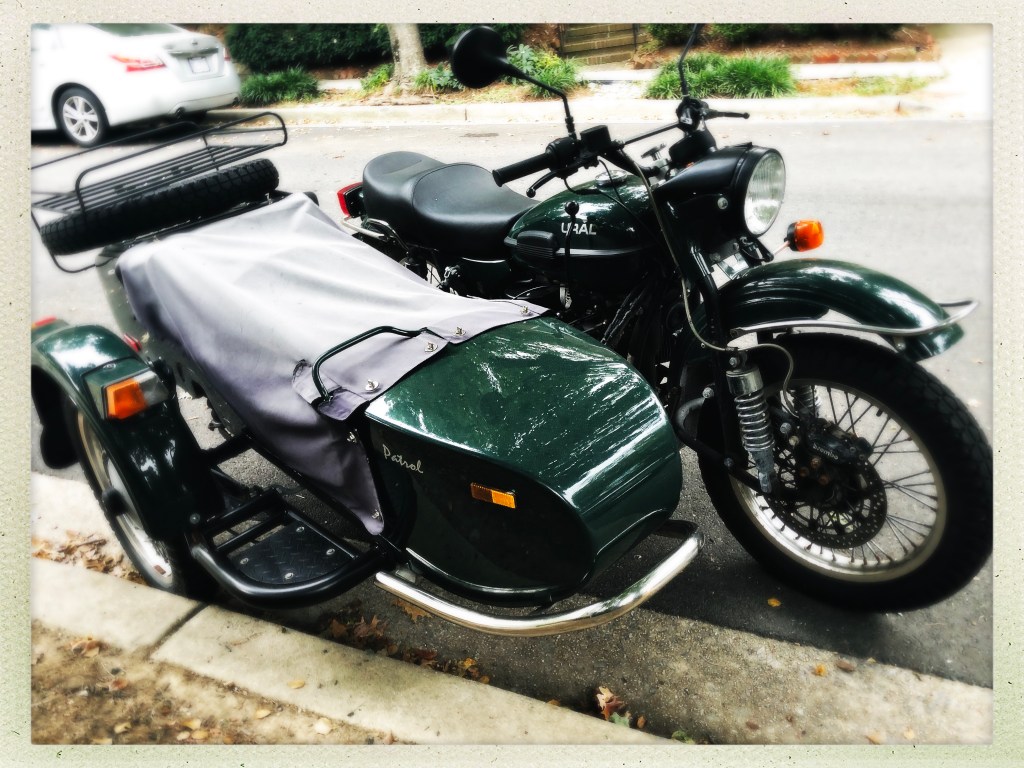
We passed by this Russian Ural sidecar motorcycle. The Urals go back to World War II. The Soviets, in preparation for possible conflict with the Nazis, designed the Ural as a motorcycle that would be suitable for the Red Army, modeling it after a BMW sidecar bike.
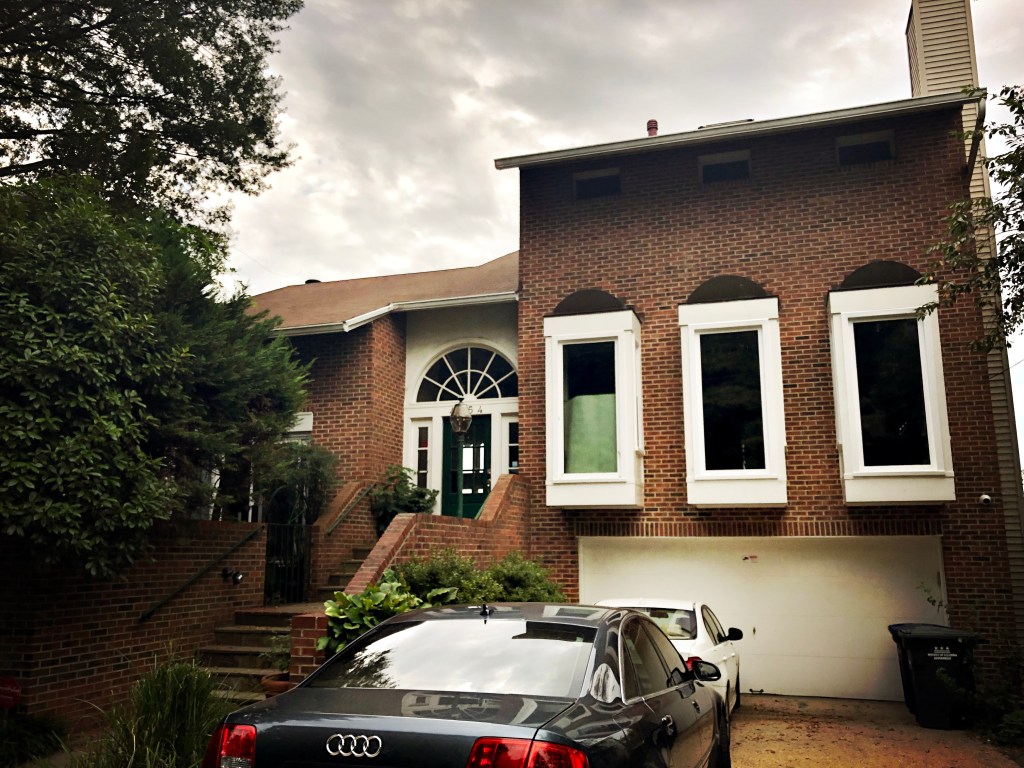
As we have mentioned in earlier posts, occasionally, we come across neighboring houses that appear to have started life looking the same but have evolved differently. Here is another example.
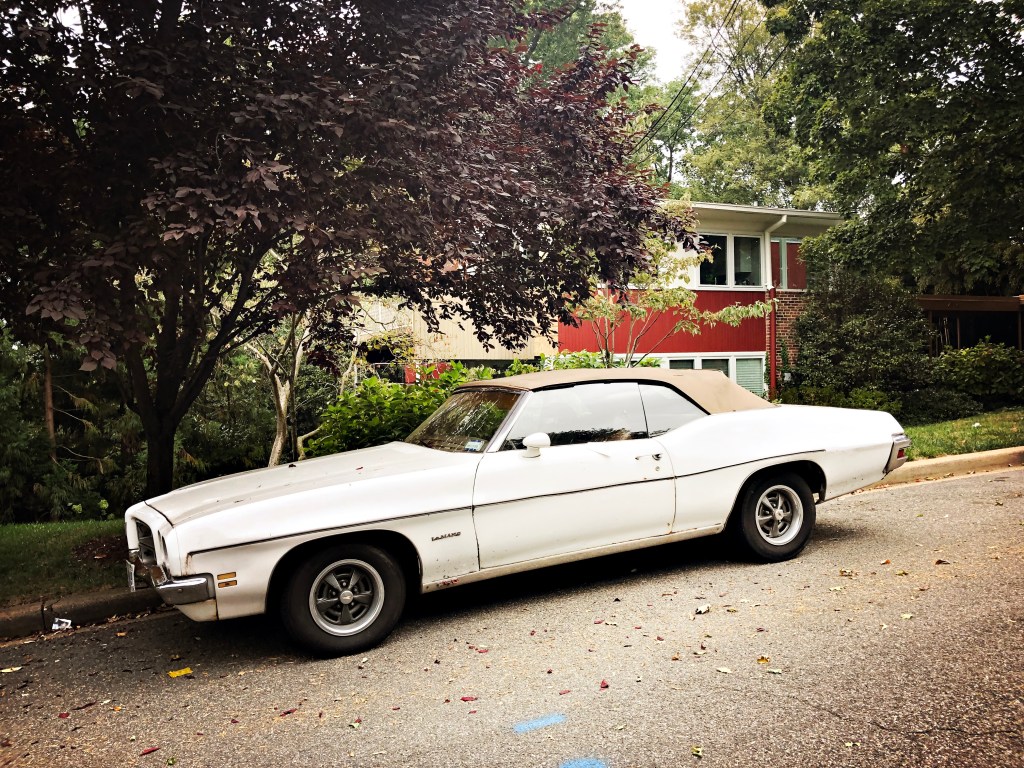
This old Pontiac seemed right at home in front of a mid-century modern house.
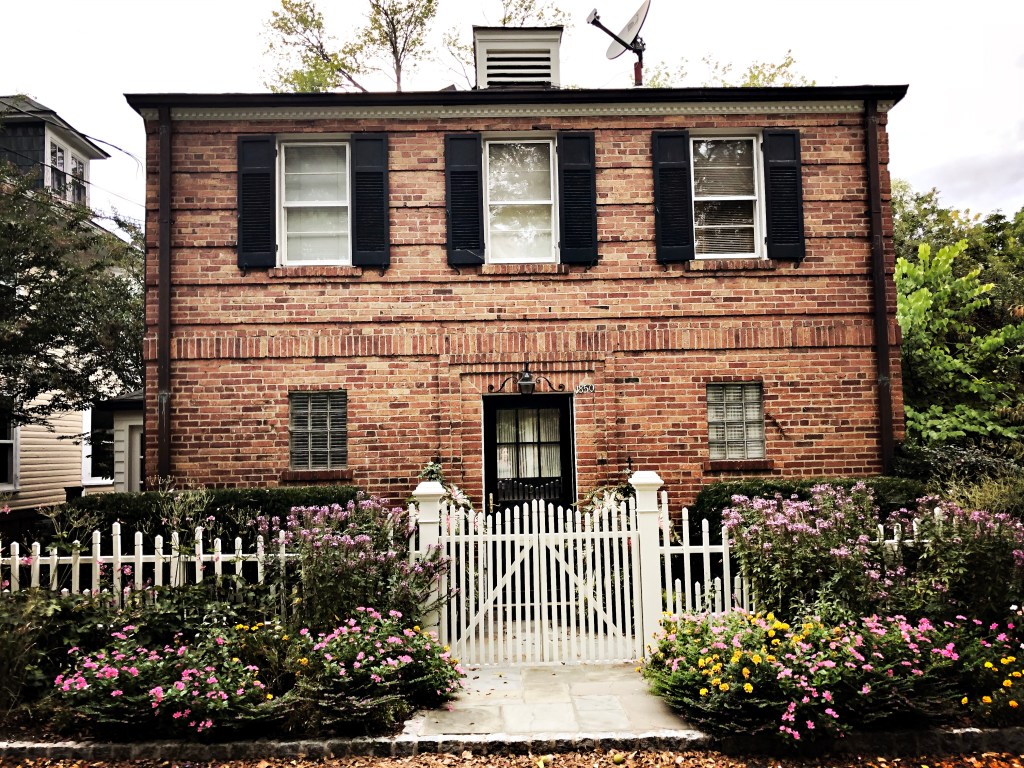
We liked this house with its charming picket fence and garden.
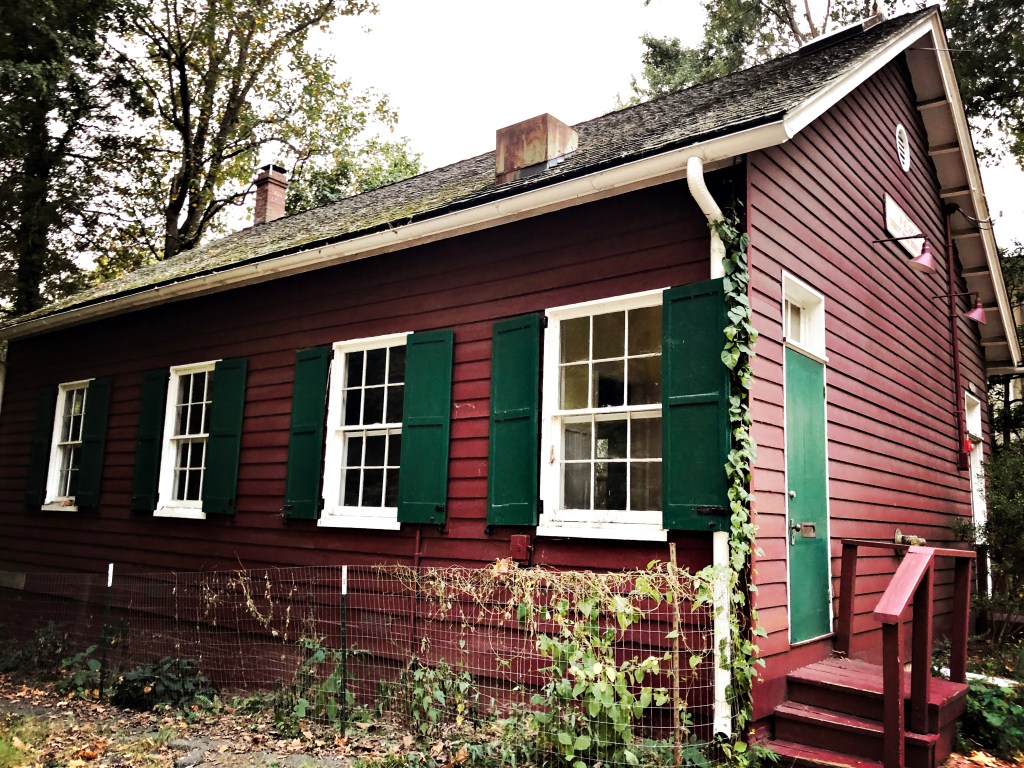
Walking along MacArthur Boulevard, we passed the Conduit Road Schoolhouse that dates back to 1874. The school closed in 1928 and the building became a public library until 1965 when a new library opened nearby. More recently it has been used as a Children’s Museum.
Back in the Palisades on a hot day that made it seem more like July than late September. The Palisades run along next to the Potomac river which also acts as an approach to National Airport, so planes are constantly overhead.
We sat for a while in a park overlooking the Potomac. In the distance, we could hear and see rowing crews going through their paces.
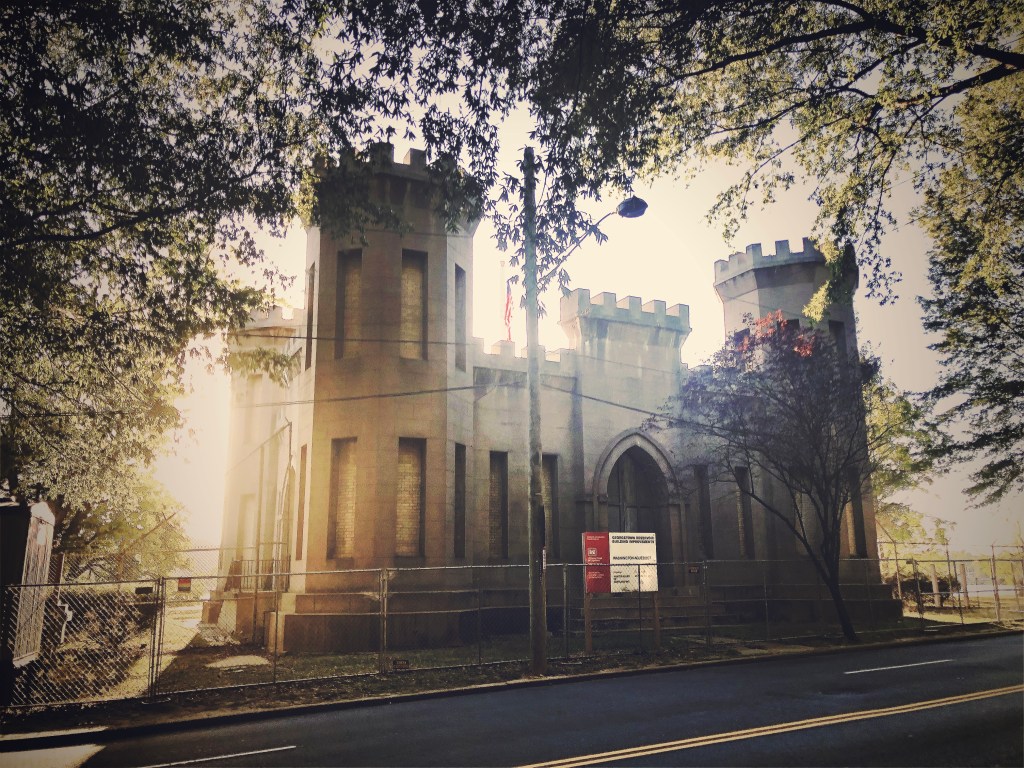
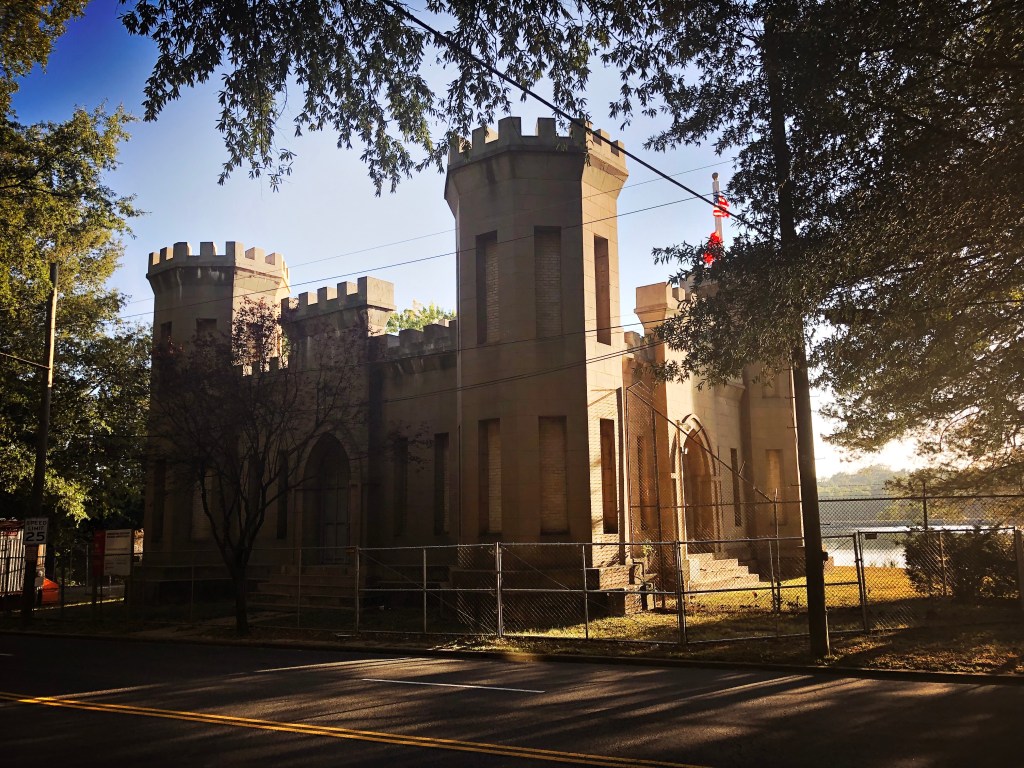
Once again, we found ourselves walking by the Georgetown reservoir and passed by the Castle Gatehouse. This castle is actually a pumping station built by the Army Corps of Engineers in 1899. The design was intended to replicate the Corps’ insignia.
Continuing along Reservoir Road, we passed by the extensive German embassy. Its Chancery building, designed by Egon Eiermann, opened in 1964. Eiermann was one of Germany’s most prominent architects of the 20th century. The building’s design evokes the Bauhaus school and was meant as a disavowal of the Nazi architecture of Albert Speer. In 2014, a $46.5 million renovation was completed. It is definitely one of or favorite embassy buildings.
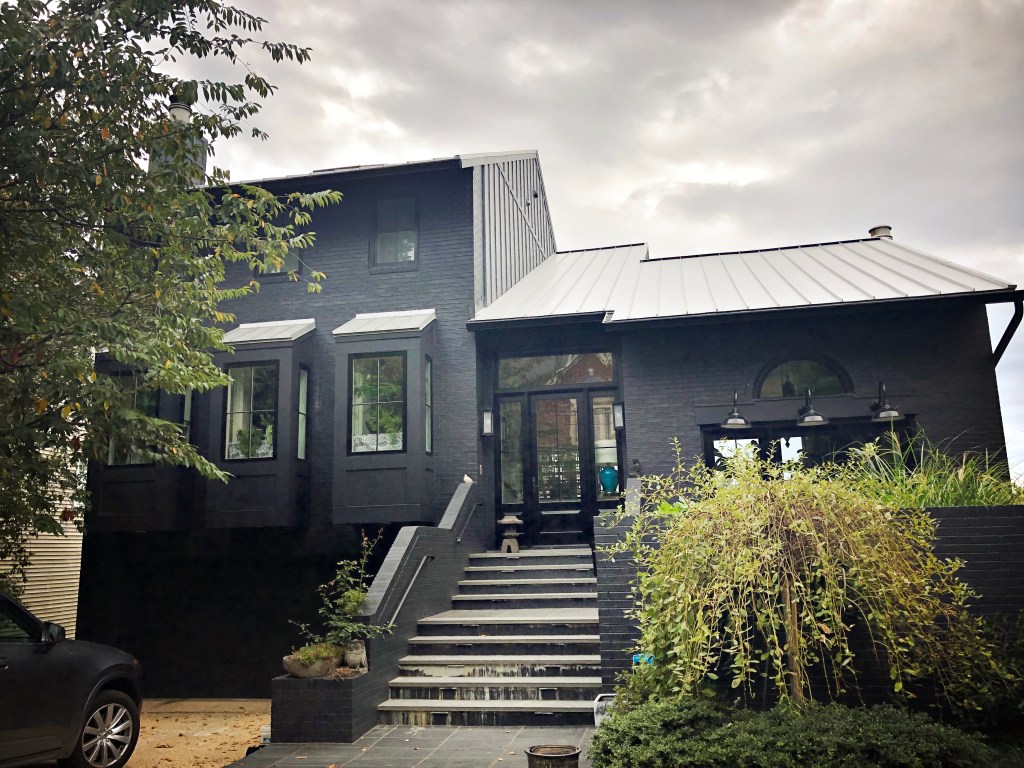
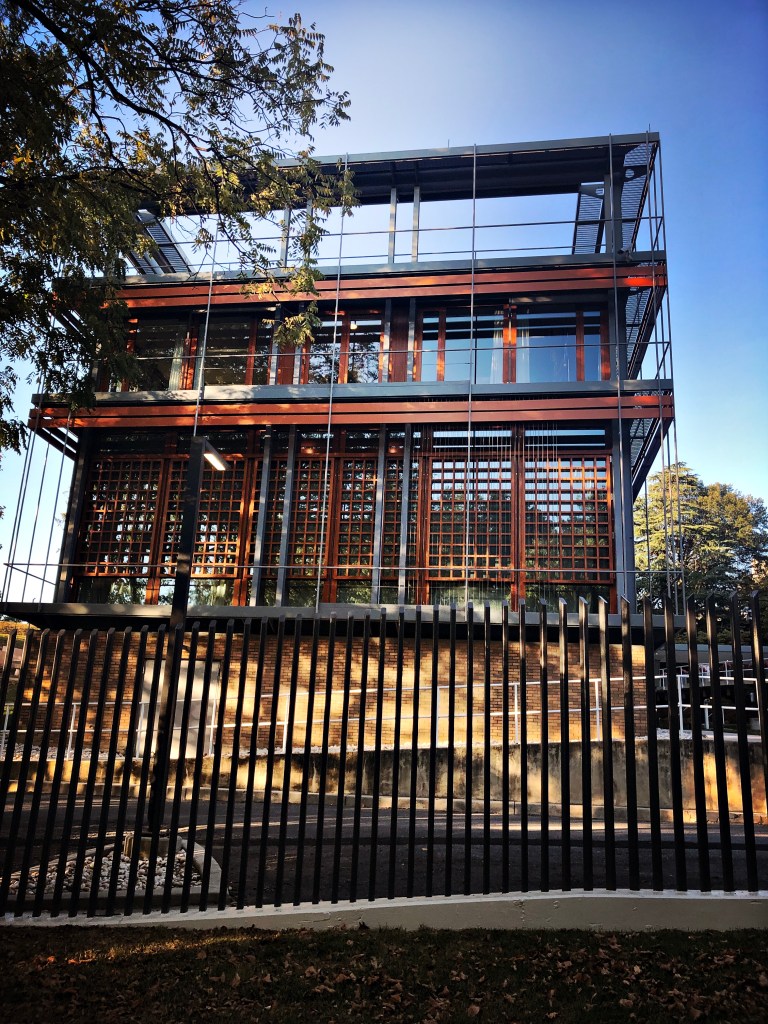
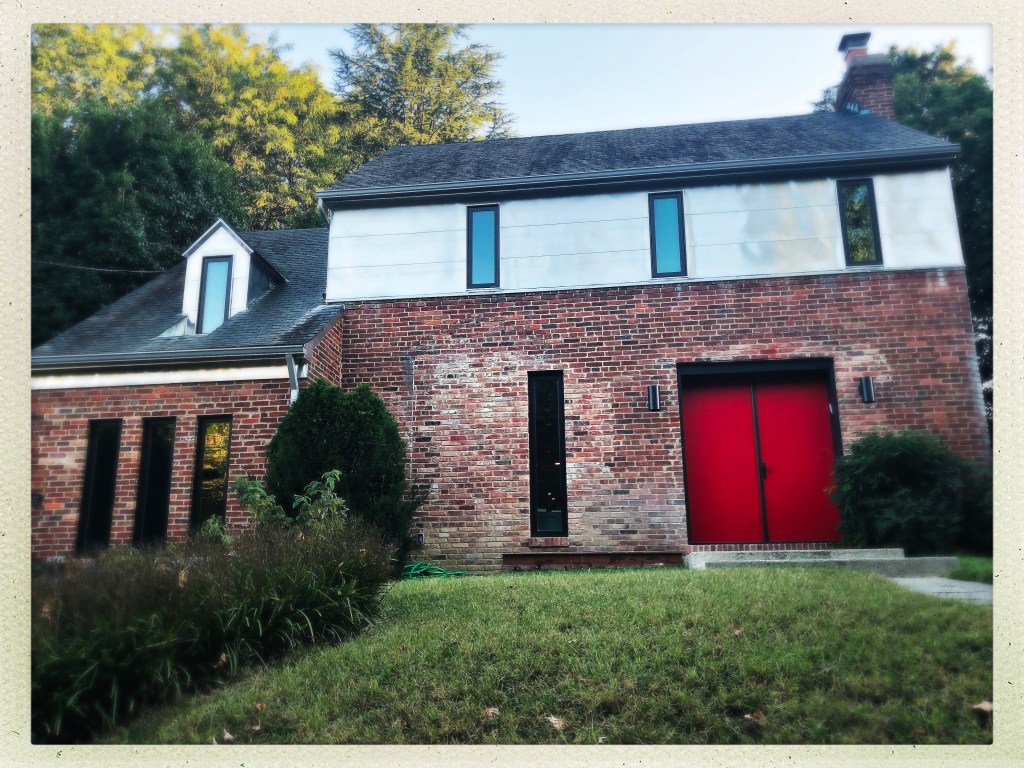
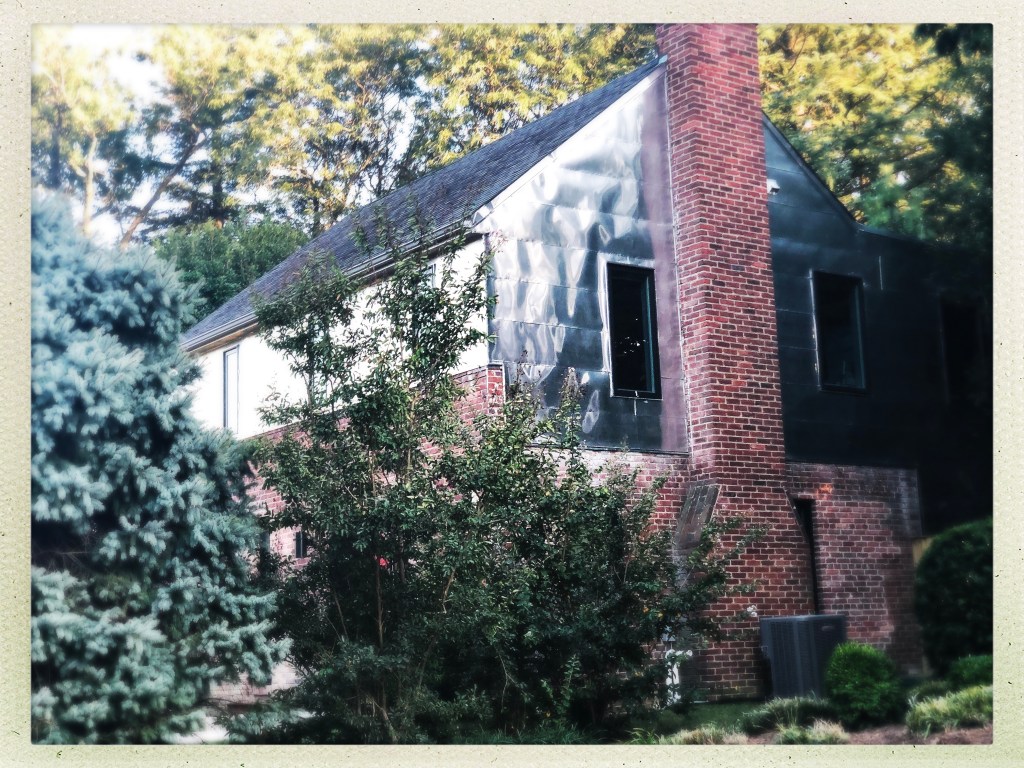
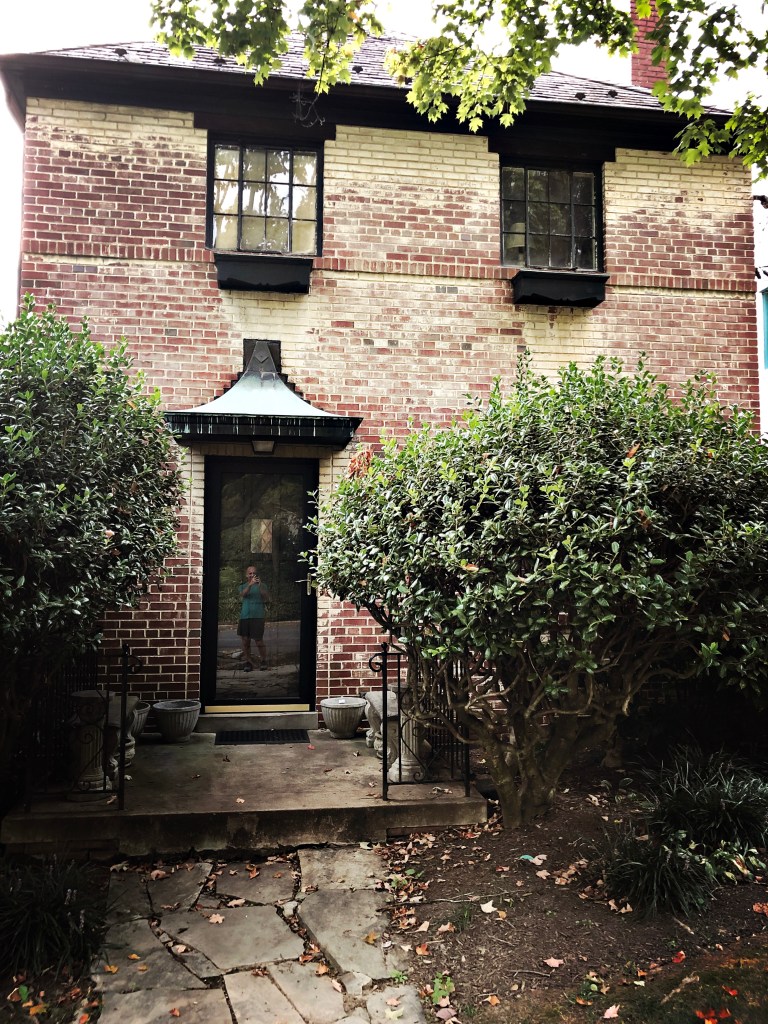
Every once in a while we come across a completely original house. This house fits into that category. It appears to have been a traditional brick colonial that had undergone a renovation and had its top floor clad in shiny steel.
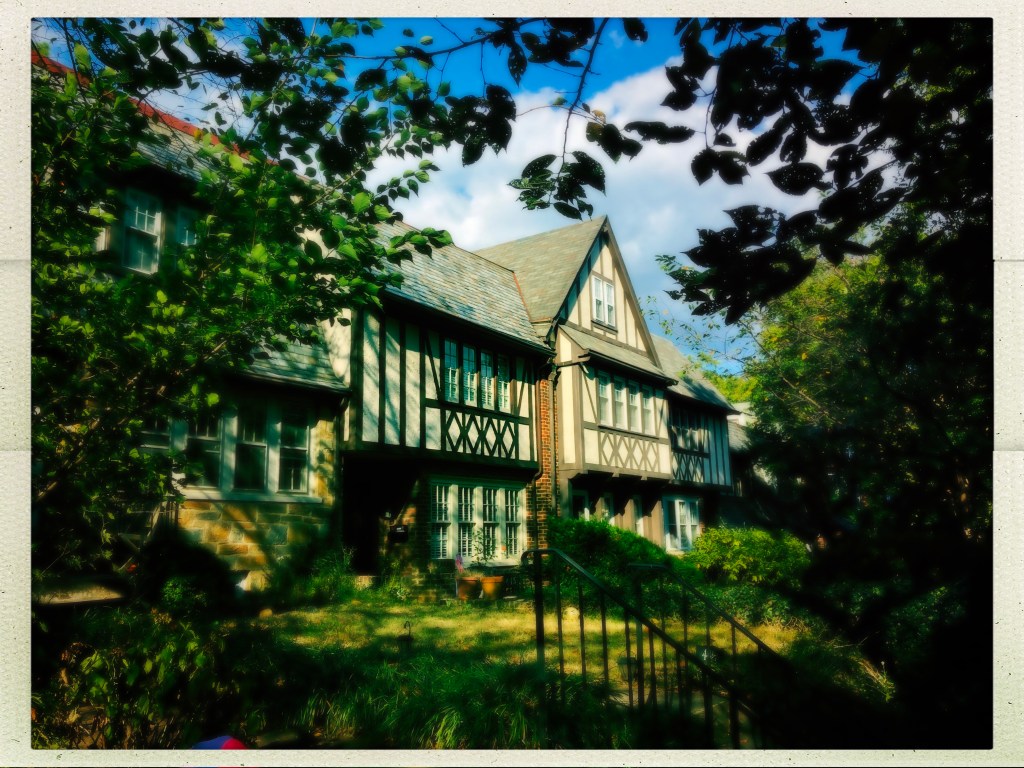
If you are an Anglophile and need your fix, we suggest you take a stroll through Historic Foxhall Village. It’s is a small neighborhood of Tudor style row houses built in the 1920s.
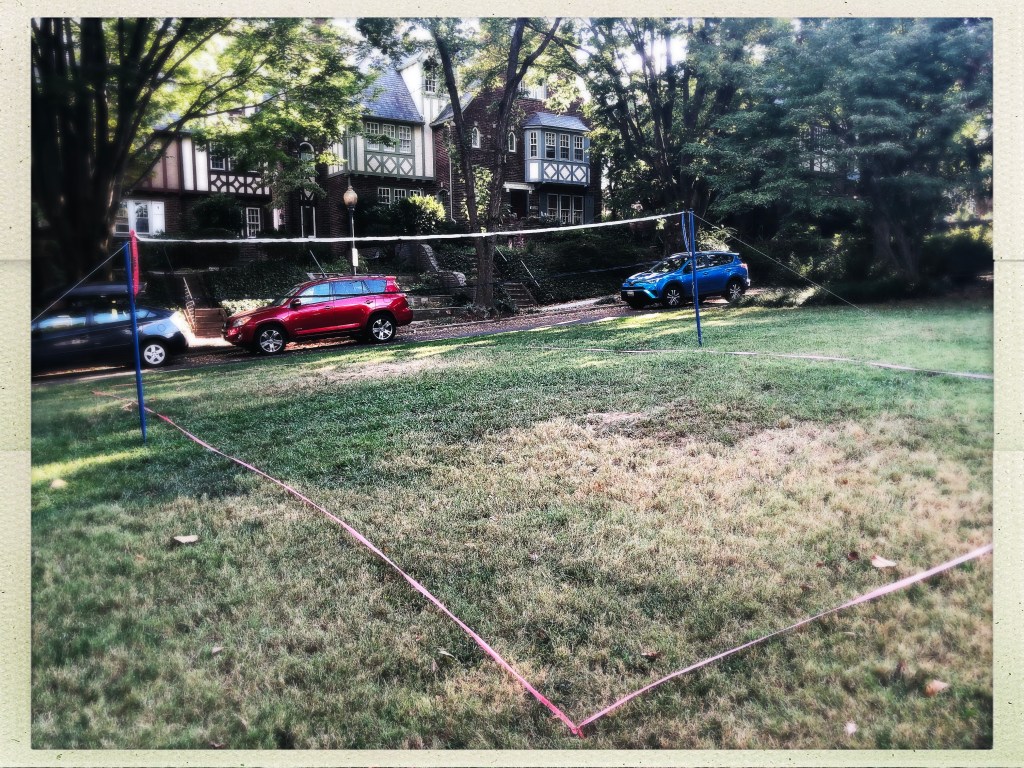
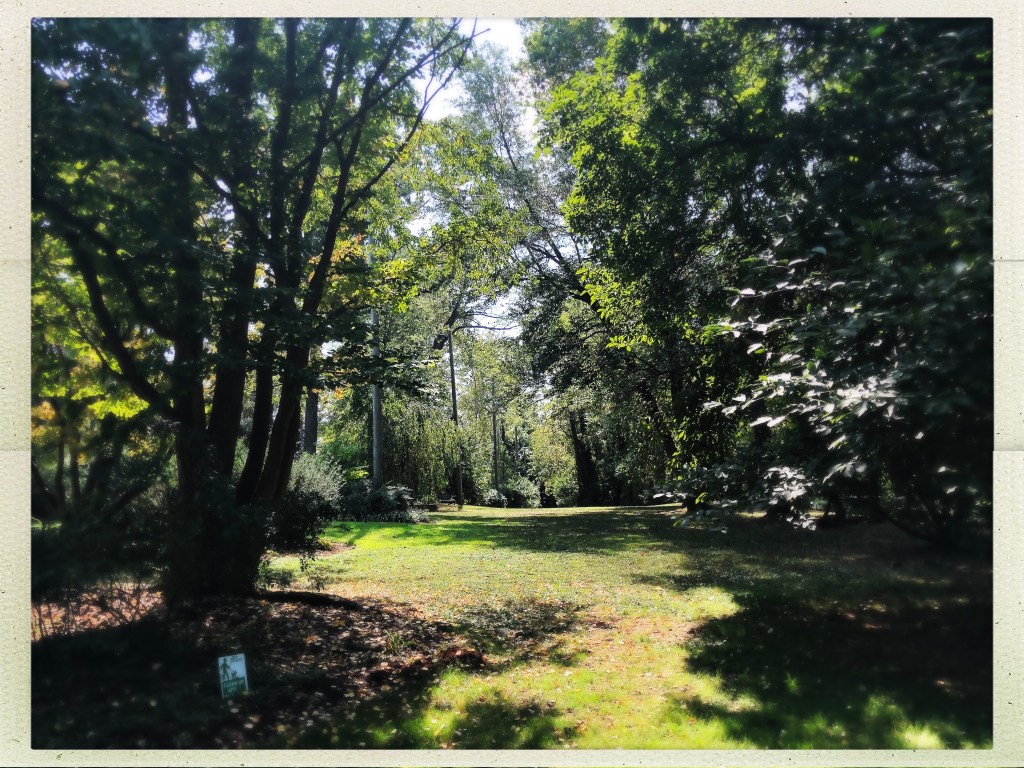
There are a number of small communal parks around which the houses congregate. Some have tables to sit at.
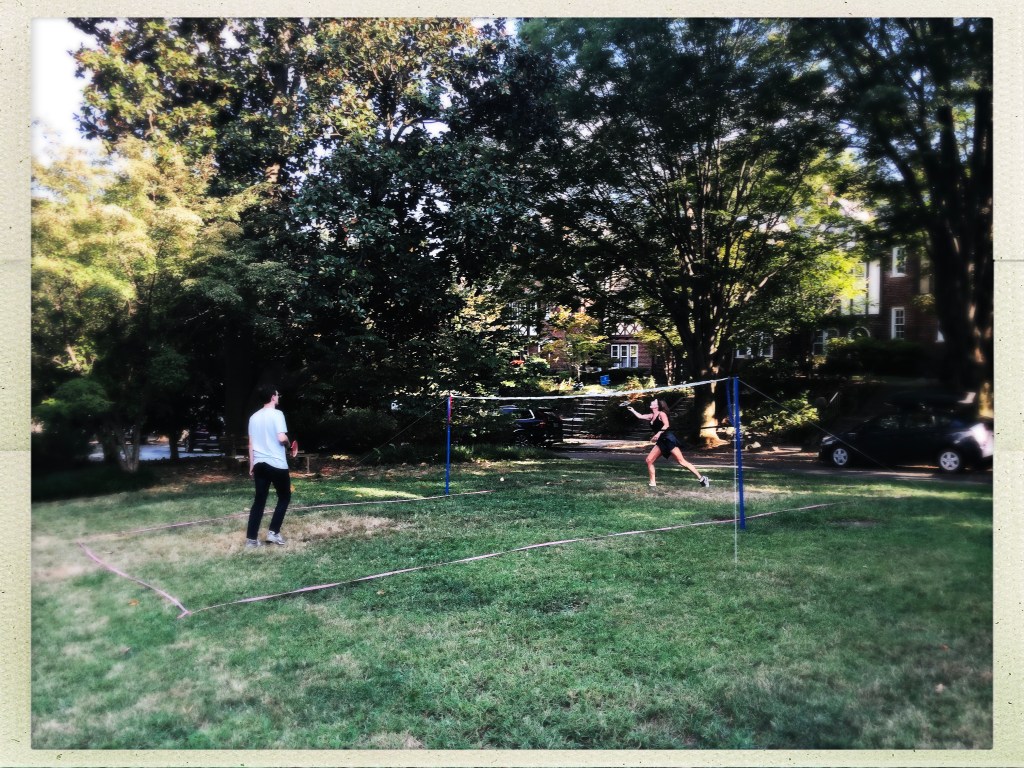
One even had a badminton court, complete with racquets and shuttlecocks, so we stopped for a few hits.
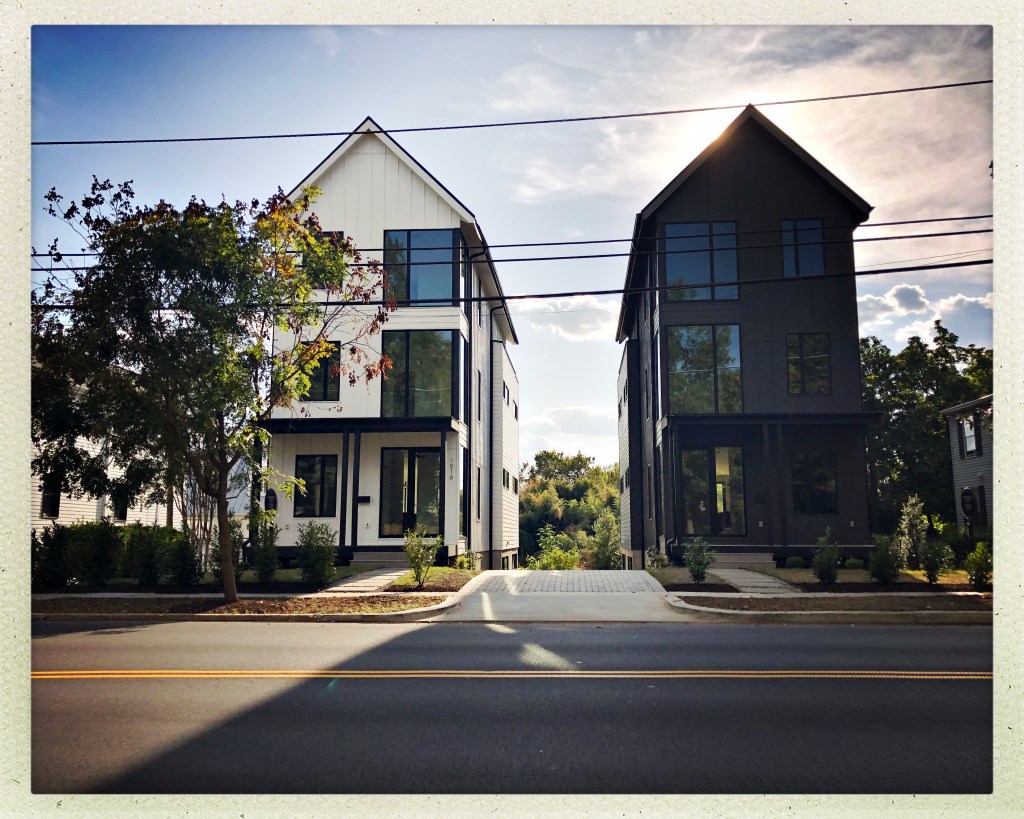
Back on Foxhall Road we came across this pair of matching ebony and ivory houses.
We completed our tour of our final Foxhall Crescent today. To be honest, we’re not too sad to be bidding it farewell. Everything about it from the single entry point to the community with its warning sign, to the crescent shaped streets, to the fortress looking houses seemed unwelcoming. It didn’t help that as we entered the development we were greeted by a dog barking, a siren blaring and a strange toxic smell in the air.
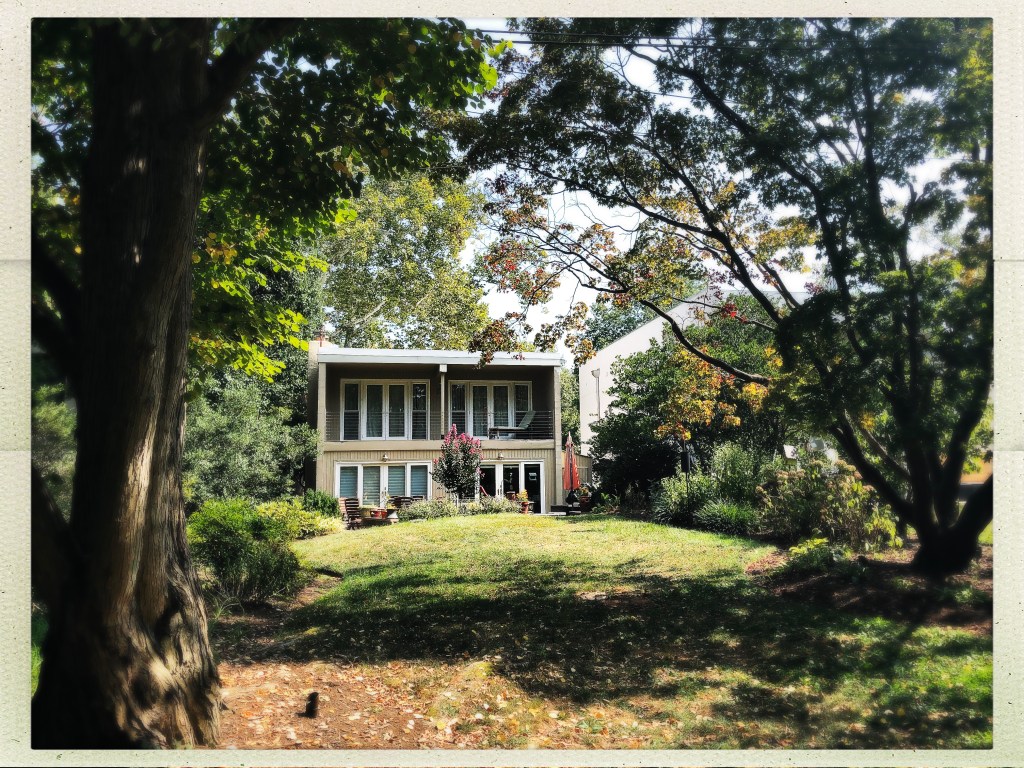
So we were happy to move on down to the Palisades where the houses on Bending Lane seemed to us to be almost the polar opposite to those in Foxhall Crescents. The houses were generally smaller with banks of windows opening onto a shared green space. The residents had placed garden chairs and tables dotted around and it was easy to imagine neighbors gathered on summer evenings on their communal back yard to share the local gossip.
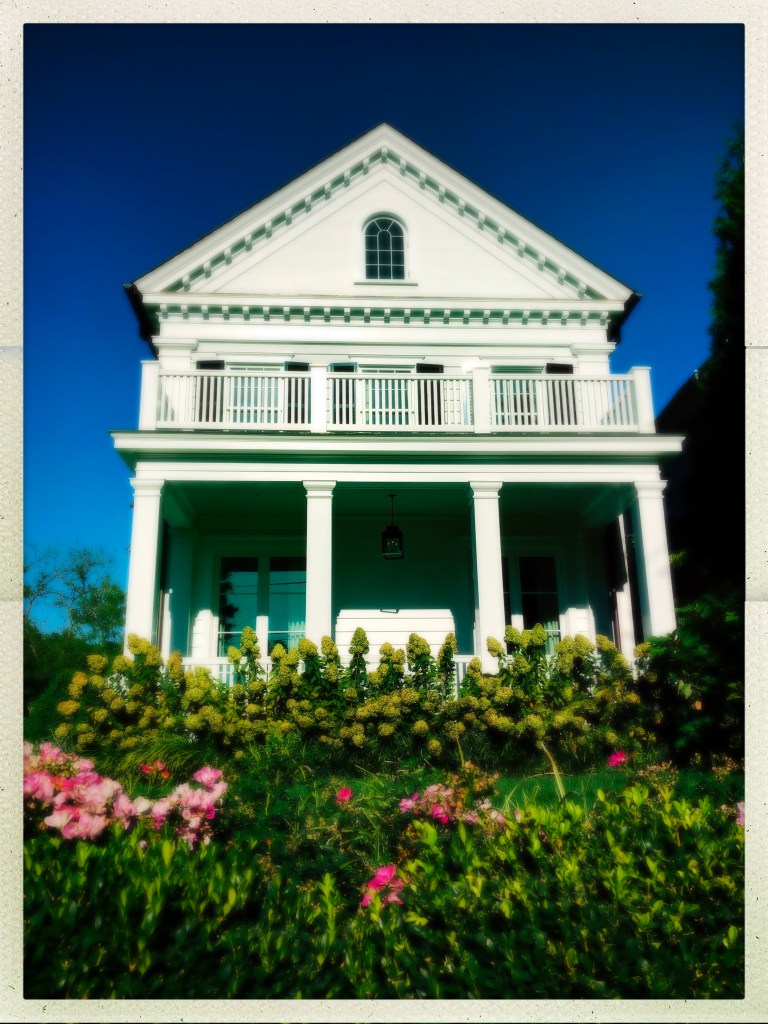
There is a diversity in the houses in Palisades that appealed to us.
These sunflowers against a brick wall also cheered us up.
We started this evening’s walk in a development on the east side of Foxhall Road. The 17 acres on which the development stands was once owned by Mrs. Eugene B. Casey. Mrs. Casey had proposed building and giving a $50 million mayoral mansion to the District on the land. However, in 2003, her Foundation surprised the District by instead ceding the land to the Salvation Army, who in turn sold it to a developer and used the money to build a community center in Anacostia. There was speculation at the time that Mrs. Casey had grown weary of residents’ objections to portions of the project, particularly the foundation’s bid to annex four acres of federal parkland. It’s hard to imagine that the complaining neighbors have found themselves better off with a development of what looked to be maybe fifty or so houses than they would have been with one mayoral mansion. On the other hand, it’s also difficult to argue that the City is not better served by a community center in Anacostia than another mansion in Foxhall.
We did like this development much more than some of the other upmarket developments that we have come across. The houses were diverse, there were footpaths, and trees had been planted along the streets.
We call these toe toes in New Zealand. Not sure what they are called here
We then crossed over Foxhall Road and down into the Berkley / Palisades neighborhoods that straddle MacArthur Boulevard.
These houses were generally smaller than the mansions on the other side of Foxhall but the neighborhood appeared a lot more welcoming and we noticed more people out strolling. Here are some of the houses.
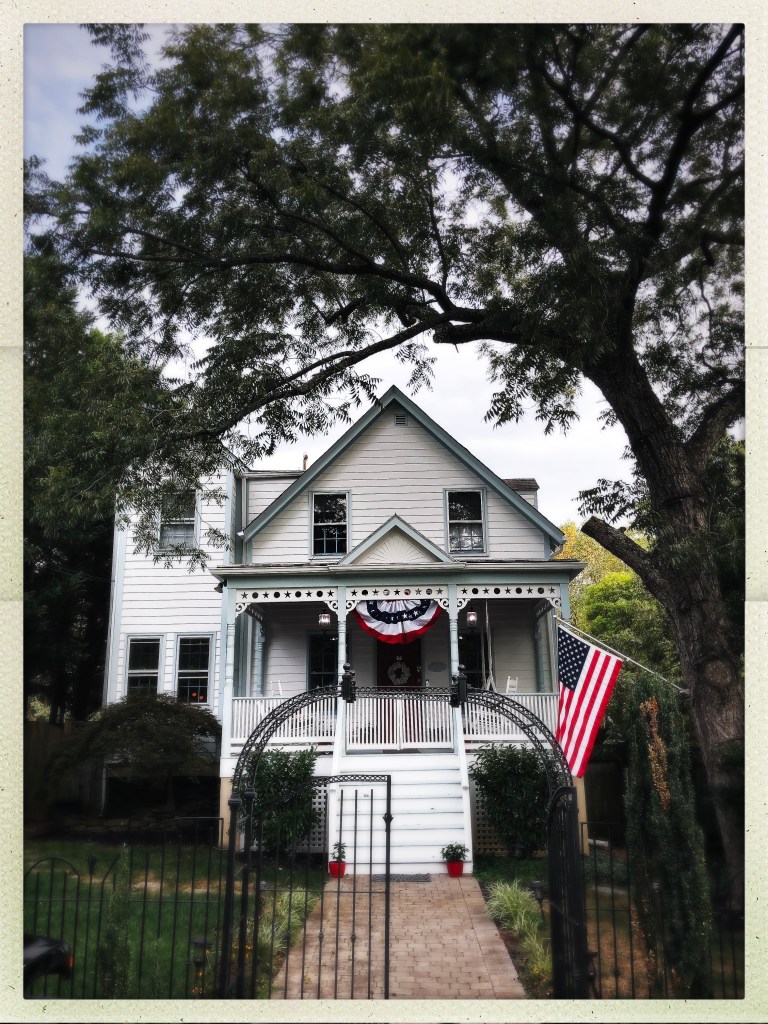
One of the more patriotic houses that we have come acrossThe tallest and narrowest house that we have passed
We also walked along MacArthur Boulevard with its nice collection of restaurants and stores. They include a CVS pharmacy, inhabiting what was once a 1000 seat theater built in 1946. In fact, the theater held the world premiere of “Star Trek: The Motion Picture” in 1979. It seems sad to see a theater now housing a pharmacy but on the plus side, at least the building has been preserved.
Also lining MacArthur Boulevard is the Georgetown Reservoir. The reservoir was built in the mid to late 1800s and is part of the District’s water supply and treatment infrastructure system.
On a humid evening we continued walking the hills of Wesley Heights and Foxhall. The days are definitely getting shorter, making it tough to get in a decent walk after dinner and hence the long shadows.
We did some exploring through the Foxhall Crescent neighborhoods. These are the closest we have come across to gated communities during our walks. They did not have gates and security at the entrance but they did have plenty of private road / no trespassing signs. We thought about skipping the neighborhoods but curiosity got the better of us. The neighborhoods did indeed live up to their name with many upmarket houses built around crescents.
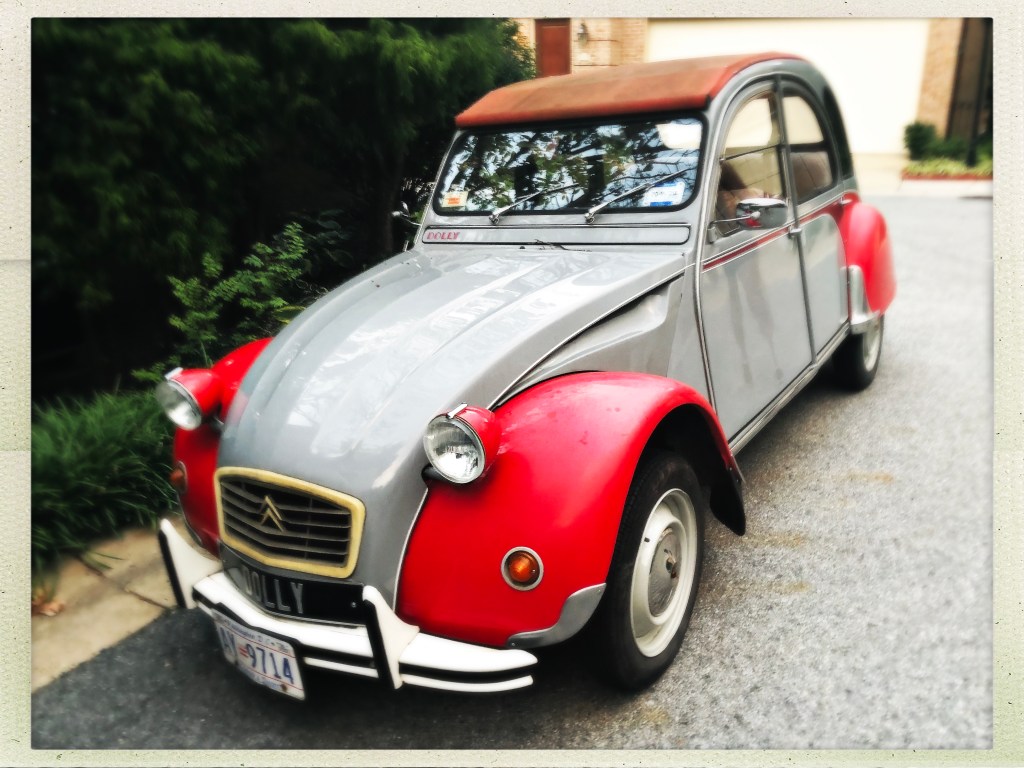
We came across this charming Citroen 2CV. It brought back fond memories of driving a rented 2CV around Devon and Cornwall many years ago.
Outside the Crescents we passed this house whose updating we greatly admired.
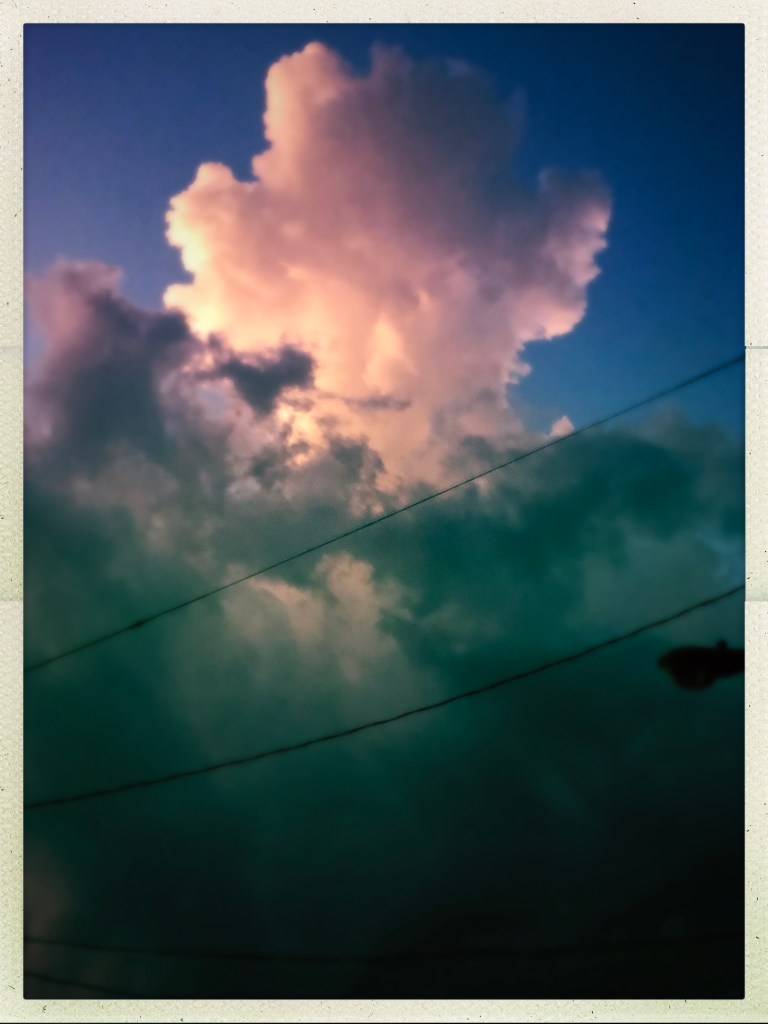
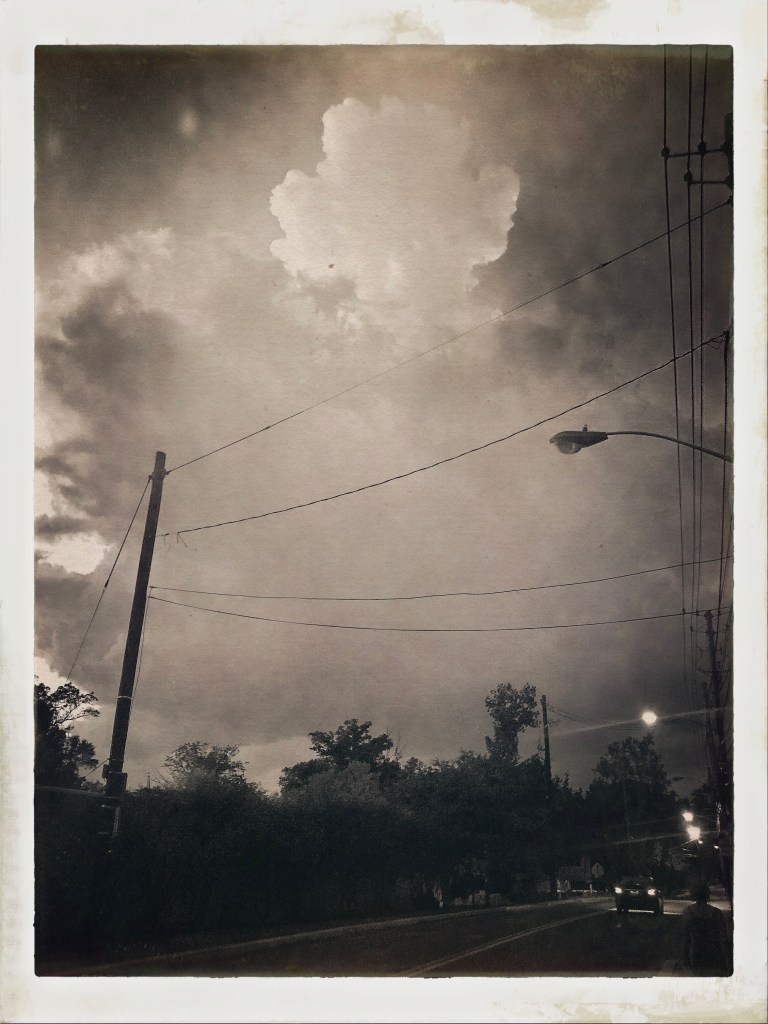
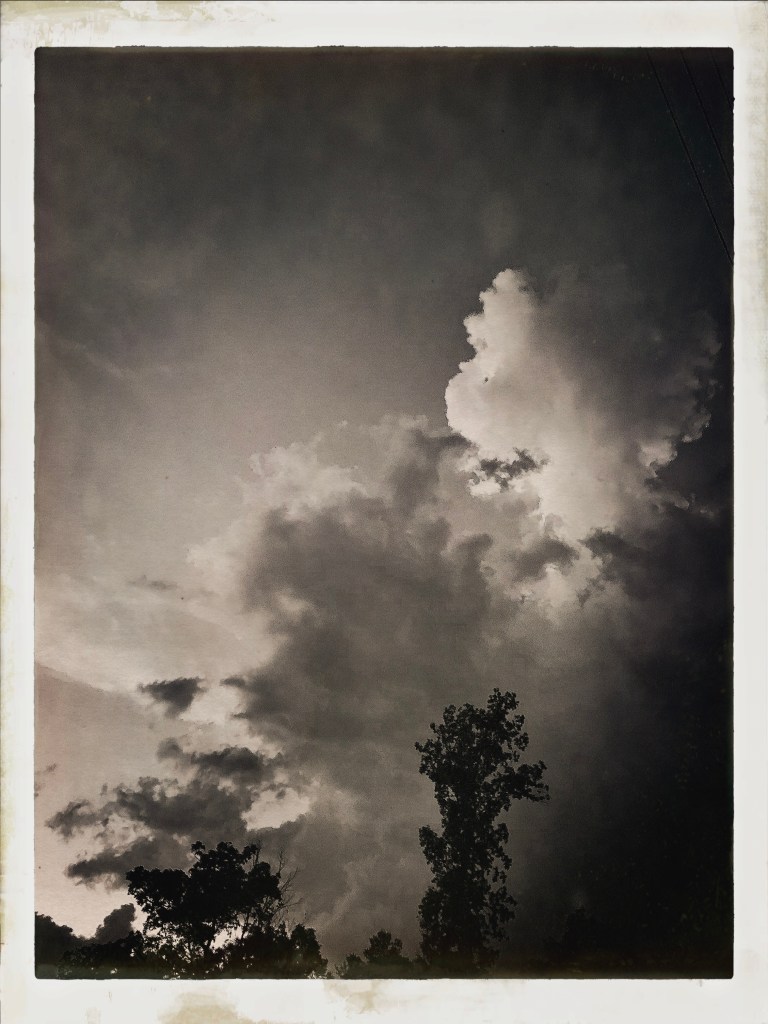
As the evening fell, we saw some dramatic cloud formations.
This was one of our longest and hilliest walks so far. Along the way we passed the Kreeger Museum on Foxhall Road.
Kreeger Museum
The Kreeger is the former residence of David and Carmen Kreeger. It was designed in 1963 by iconic architect Philip Johnson. The Kreegers amassed more than three hundred works of art. These include impressionist paintings by Monet, Sisley, Pissarro and Renoir and a number of works by other European artists, including Picasso, Munch, Beckmann, Dubuffet, Kadinsky and Miro.
The collection also includes works by a number of famous American artists, including Calder and Stella.
The museum is open Tuesday to Friday from 10:30 am to 1:30 pm and Saturdays from 10:30 am to 2:00 pm. http://www.kreegermuseum.org
Next door to the Kreeger is the Field School where our son, Jake, attended High School. Field is a private school with approximately 380 6-12 grade students. The school was founded in 1972 and moved to its current campus in 2002. The school includes the original Cafritz mansion and a number of other buildings. It being a Sunday, we took the opportunity to look around the school and check out a renovation that has been added since Jake left.
The Cafritz Mansion
“Dare To Be” stainless steel sculpture by Barton RubensteinThe Field bus fleet
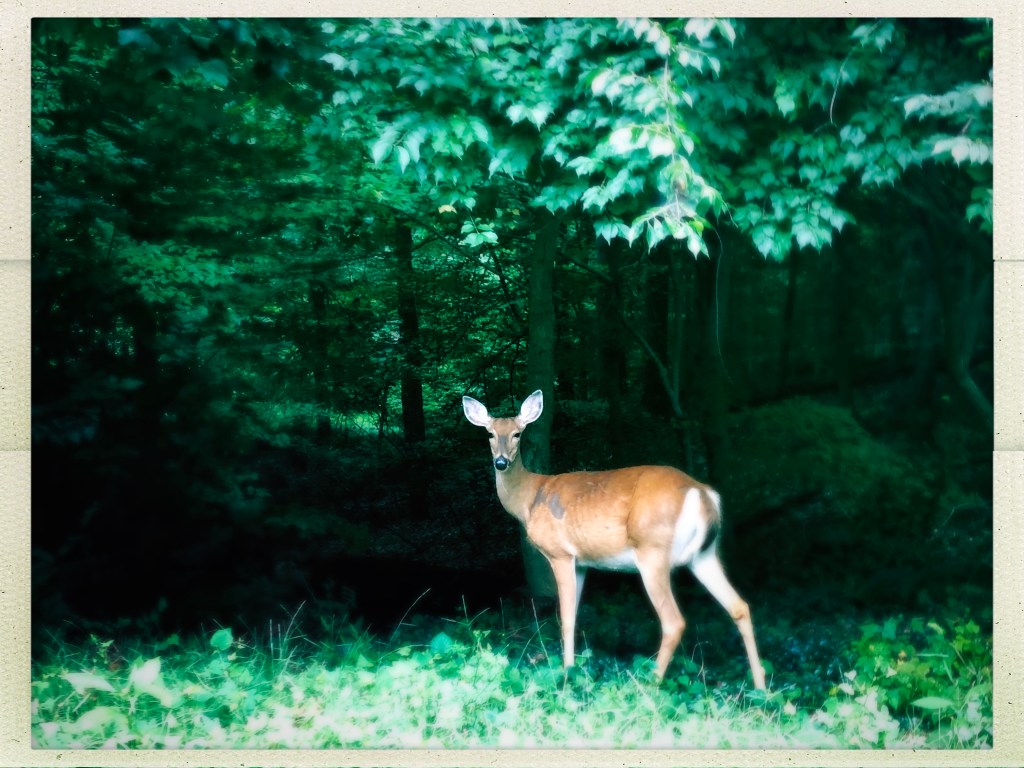
Wesley Heights is bound on three sides by woodlands. We passed this local resident.
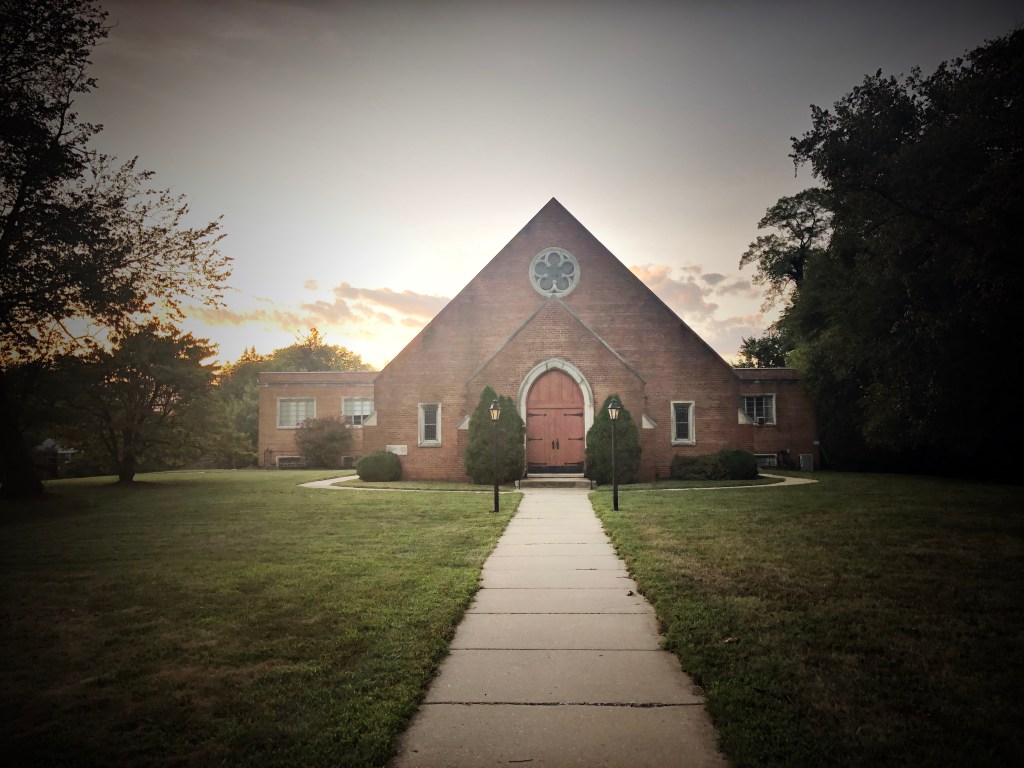
Tonight we walked along Nebraska Avenue between Tenley and Ward Circles. Along the way, we passed the Japanese Embassy and the Swedish Ambassador’s house. We also passed this small and rather symmetrical church.
Sitting on Ward Circle is the Katzen Arts Center. The Center, built in 2005, is home to all of American University’s visual and performing arts programs. It also houses an extensive modern art collection, including pieces by Picasso, Chagall, de Kooning, Dubuffet, Modigliani, Stella, Warhol and Lichtenstein.






























 Walking The District