Day 68

Kalorama / Dupont Circle (December 6, 2019)

Today we walked through Kalorama, neighborhood of embassies and stately residences.

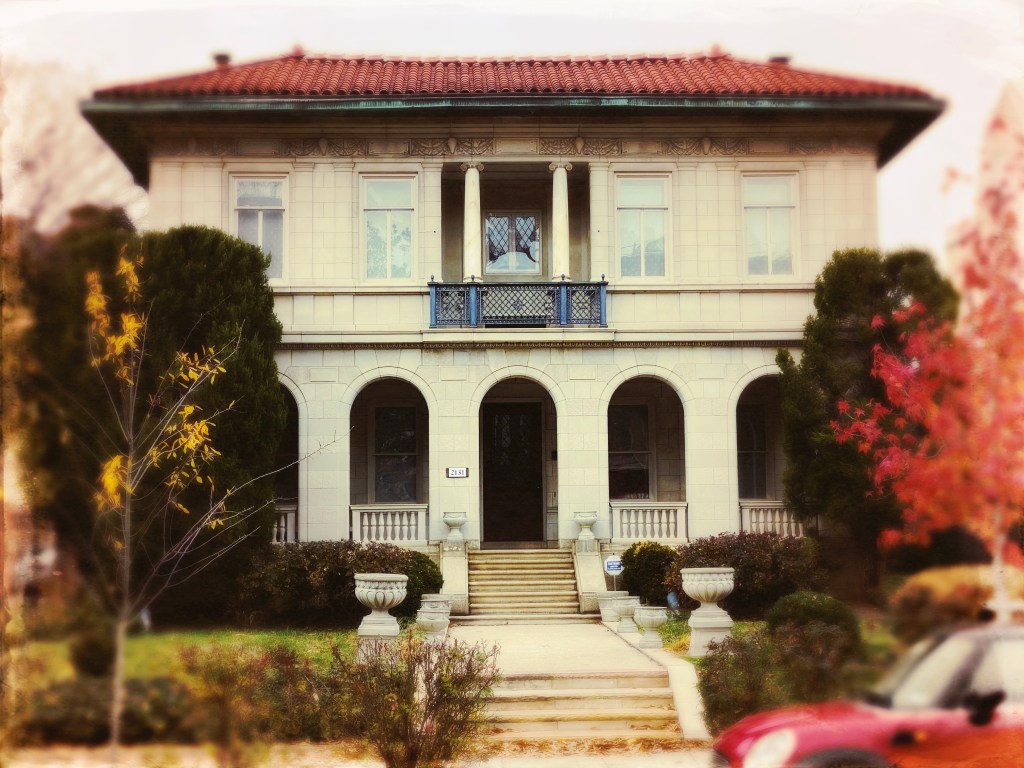
We particularly liked this villa that looked as if it would be more at home in the French countryside than in an inner suburb or Washington DC.

Kalorama was also home to Woodrow Wilson, the 28th president of the United States.
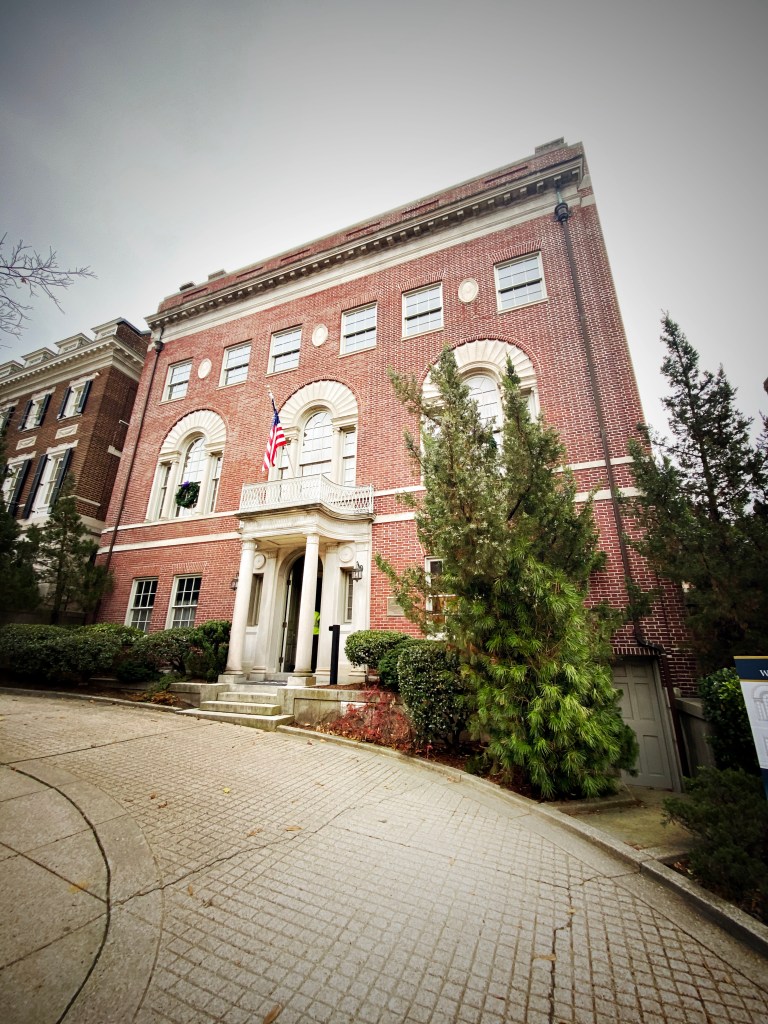
Woodrow Wilson House

Wilson bought the house in the last months of his second term and died there on February 3, 1924. The house now operates as a museum.

Speaking of presidents, we also walked by the Washington Hilton, site of the assassination attempt on President Ronald Reagan by John Hinckley, Jr. on March 30, 1981. The hotel, designed by William Tabler, was built in 1965. It is currently well known as the location of the annual White House Correspondents Association dinners.

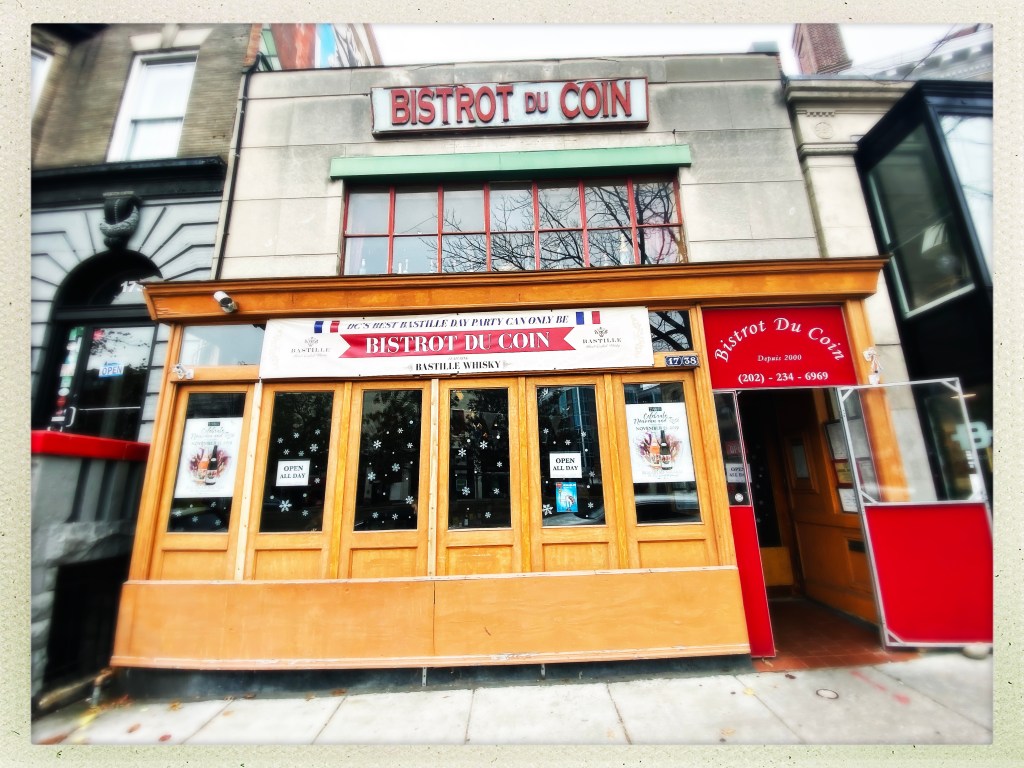
We stopped for lunch at Dupont Circle’s Bistro du Coin which has been serving classic French bistro food to the neighborhood since the turn of the century.
This place caught our eye, with its purple door and windows. It was originally built in 1902 as an art studio for the artist Edward Lind Morse. If you look at the large hinges on the front door, you can make out the monogram ELM. The house was converted into a residence in 1910 and was at one stage owned by James Roosevelt, the eldest son of Franklin and Eleanor, who lived next door.

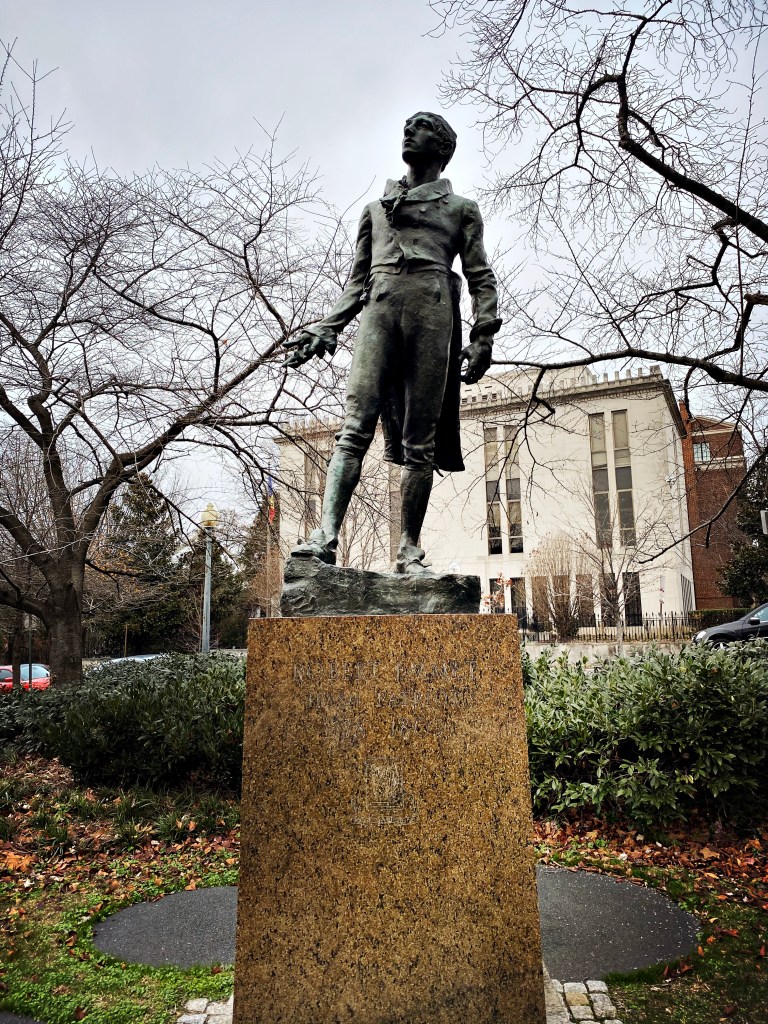
Along Massachusetts Avenue are statues of a number of famous revolutionaries (Nelson Mandela, Mahatma Gandhi, and Ataturk, among others). This one is of Robert Emmet (1778-1803), the Irish Republican, nationalist and rebel leader. After leading an abortive rebellion against British rule, Emmet was captured, tried and executed in 1803. The statue, by Jerome Connor, is said to serve as a tribute to how American democracy inspired the Irish independence movement.
Among the embassies and large residences is a grey stone cottage, that is home of Washington DC’s Quaker community. The cottage was designed and built in 1931 to accommodate the then President, Herbert Hoover, who worshiped there with his wife during his presidency.

Walking along Embassy Row on Massachusetts Avenue we passed the embassy of the Land of the Rising Sun (Japan) as the sun sank behind it.

Further up, we also passed the Turkish embassy. It was built in 1999 and was designed by Shalom Baranes Associates, reflecting aspects of Turkish vernacular architecture.

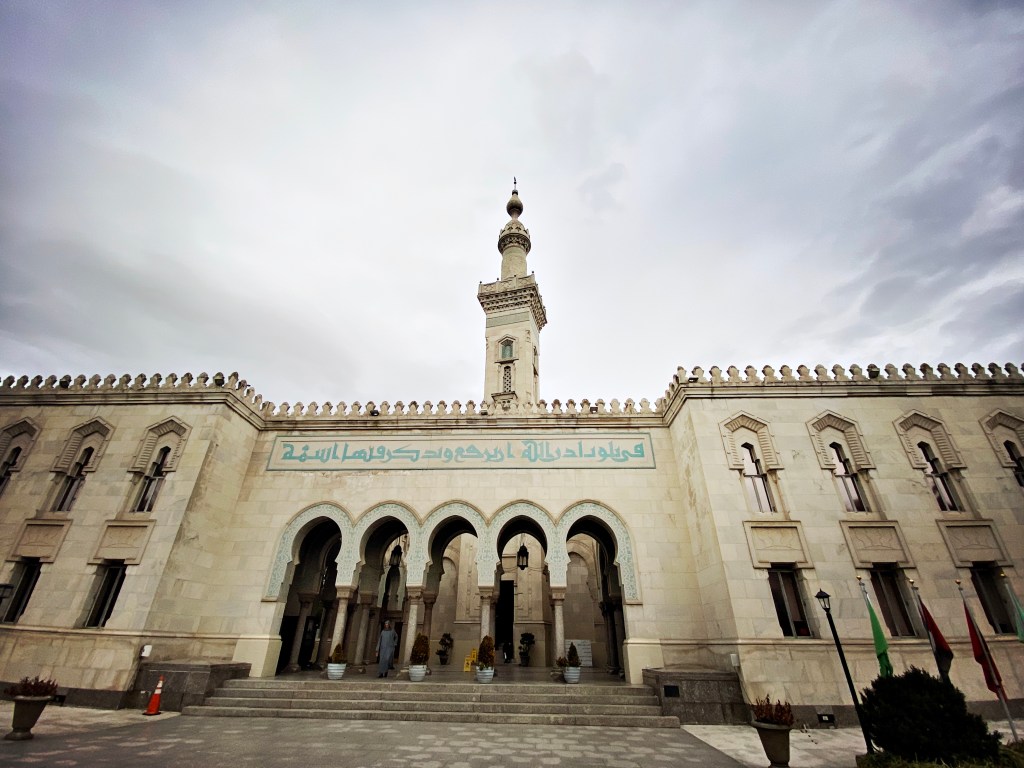
Finally, we walked by the Islamic Center of Washington. The mosque and cultural center, designed by Italian architect, Mario Rossi, were completed in 1954 and dedicated by President Dwight Eisenhower in 1957. At the time it was the largest mosque in the Western Hemisphere.
Day 67

Georgetown (December 4, 2019)

We passed by The Phillips School which was built in 1890 to serve east Georgetown’s large African-American population of the time. It is named after the abolitionist Wendell Phillips. The school closed in 1950 due to declining enrollment and was used as an administrative building for some years. In 1970 it was sold to the Washington International School for $500,000. When WIS moved its campus in 1998, it sold the school to a developer for $2.1 million who turned it into condos.

We dropped in on Temur Zamani, whose store is a treasure chest of beautiful things from Afghanistan.

The leaves are all falling and some leave (no pun intended) behind traces of their existence on the concrete sidewalks.

We liked this tree tucked into the end of a narrow alley.

Day 66

Georgetown (November 27, 2019)

On a blustery gray Thanksgiving Eve, we once again headed out to Georgetown.

This goofy looking Thanksgiving turkey brightened our day.

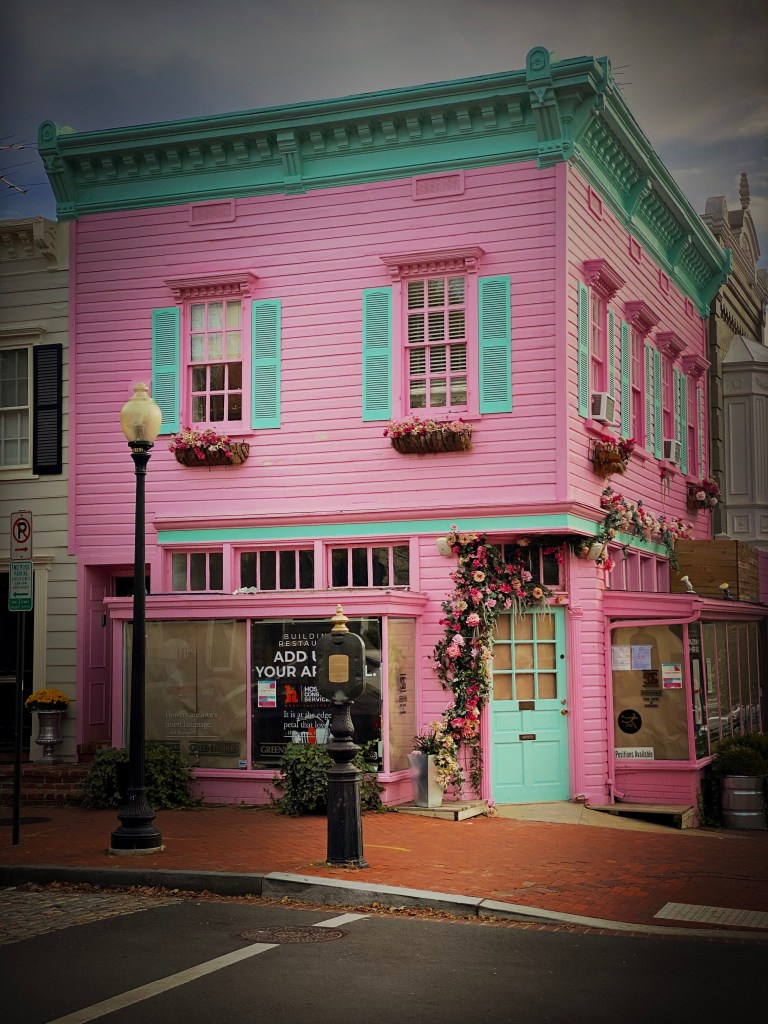
As did this pink deco house.

We also got a chuckle from this window full of pigs.

We liked this ornate duplex.

And this formidable bison, which guards the Q Street bridge that crosses Rock Creek Park between Georgetown and Dupont Circle.

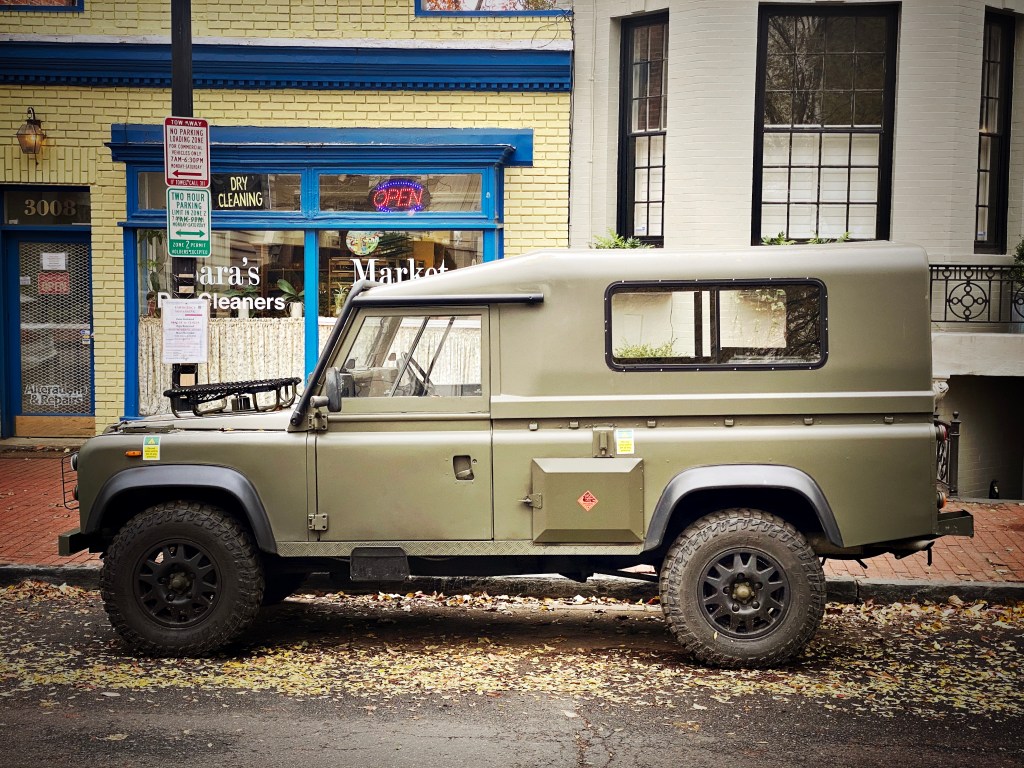
Almost as solid looking as the bison was this Land Rover.

Day 65

Georgetown (November 19, 2019)

We walked through Oak Hill Cemetery, located on a very pretty 22 acre hillside backing onto Rock Creek Park. It was founded in 1848 and is the burial site of many famous people.

The cemetery chapel was built in 1849 by noted architect, James Renwick who also designed St. Patrick’s Cathedral in New York City.

Next to the cemetery is Dumbarton Oaks. This historic estate was acquired by Mildred and Robert Bliss in 1920. They engaged Frederick Brooke to renovate and enlarge an original house, creating the current Colonial Revival residence.

The Bliss’s donated the property to Harvard University in 1940. They also established a research institute to support scholarship in the fields of Byzantine and Pre-Columbian studies, as well as garden design and landscape architecture. The estate, itself, contains stunning extensive gardens as well as a beautiful orangery attached to the main house.
Sometimes a day is so beautiful you just feel like jumping for joy.

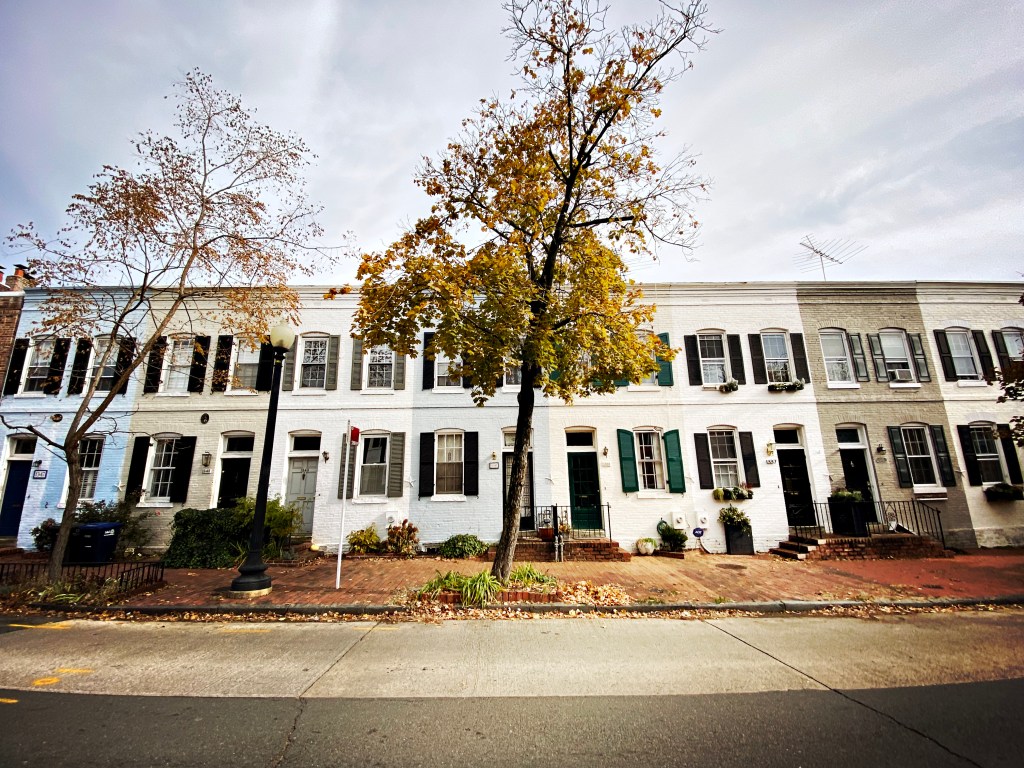
Along with the common colonial row houses

and quaint cottages

sometimes you come across something a little different, like this Asian style home.

We also liked this corner residence.

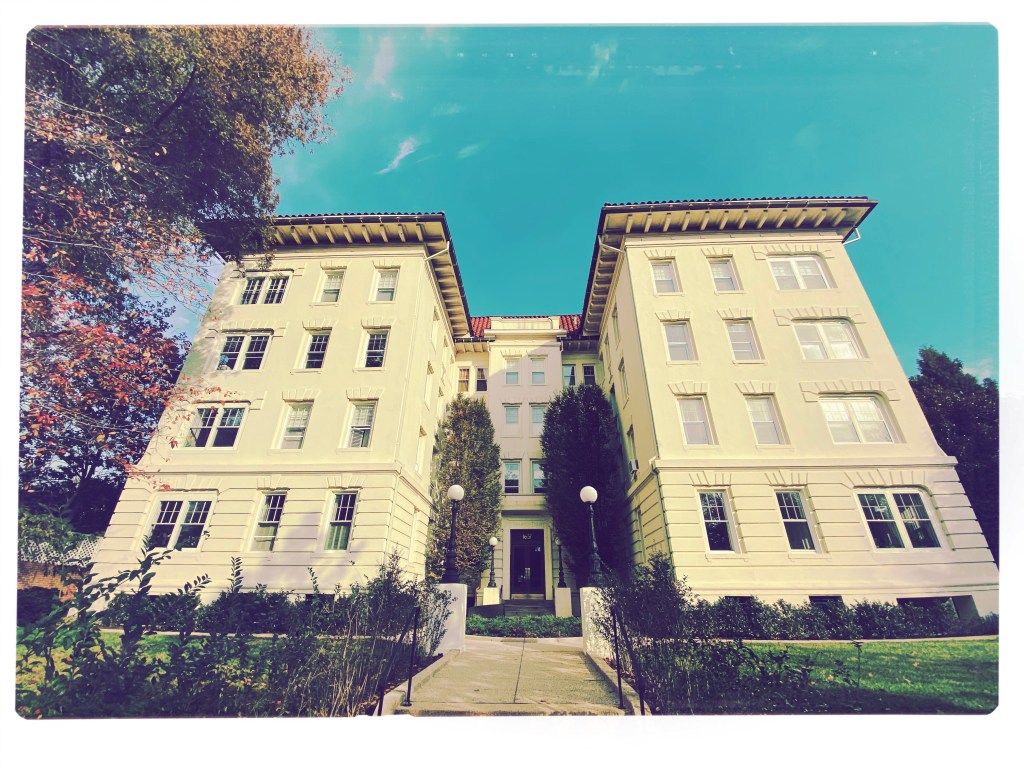
There are not many apartment buildings in the historic part of Georgetown but we liked these two.

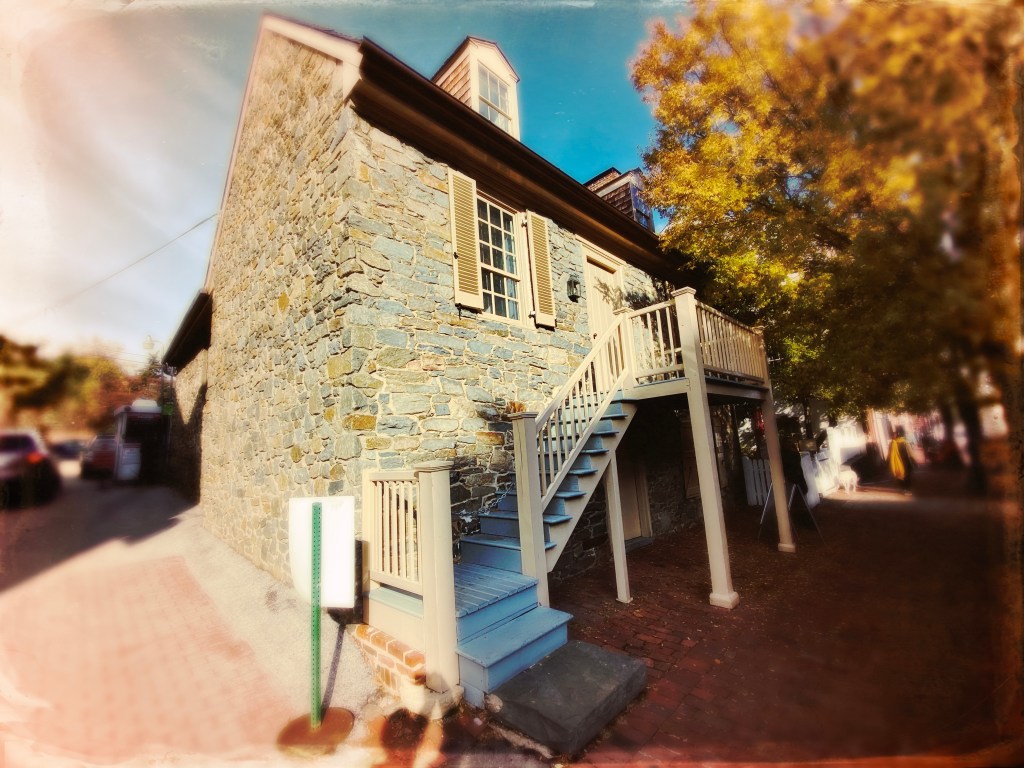
Sitting among the stores and restaurants of M Street is this old stone house.

Built in 1765, it is Washington’s last Pre-Revolutionary building on its original foundation.

Day 64

Georgetown (November 15, 2019)

We were admiring the front of this building when Christian Zapatka, whose architecture firm occupies the building, happened to come out on his way to an appointment. http://www.christianzapatka.com Christian told us that the front of the building had been designed and added in the Bauhaus style in 1940. Previously, it had the same traditional front of the adjacent buildings.

Another brick building we liked was this garage with its stable doors.

Pumpkins and squashes are everywhere at this time of the year.

They don’t provide the only color.

We loved this old fashioned bike

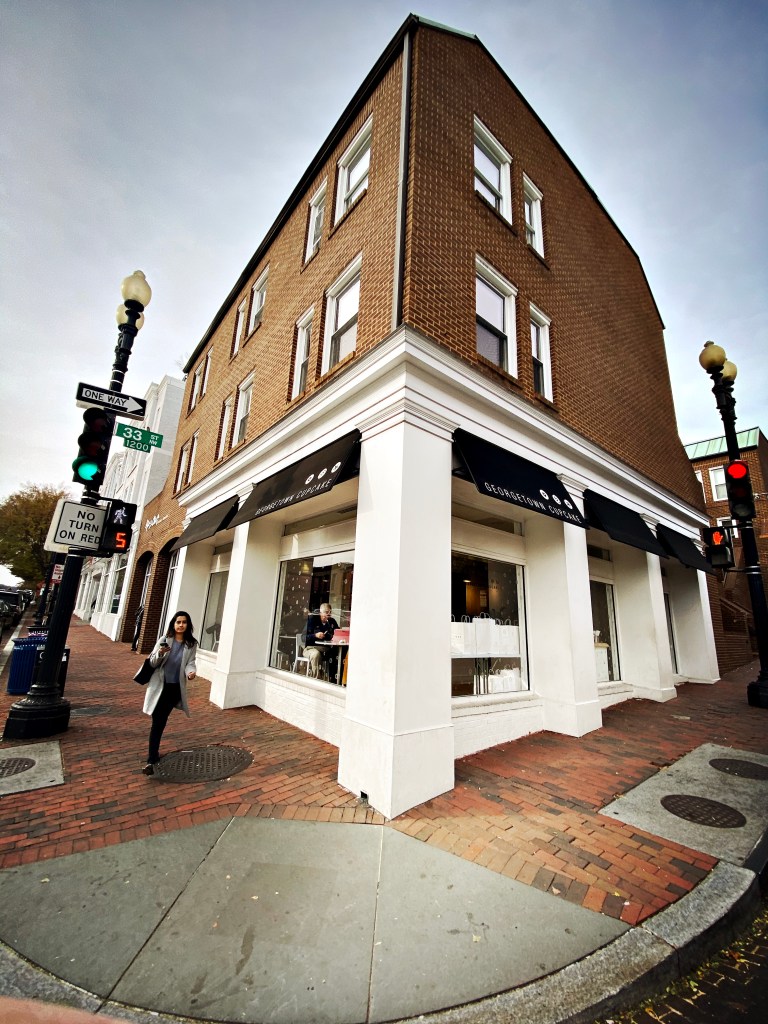
A popular Georgetown attraction is Georgetown Cupcakes. It was founded by two sisters and quickly became a sensation with its own reality television series. They have since expanded their business to a number of locations throughout the United States. When they first opened, it wasn’t uncommon to see lines out the door and up the street.

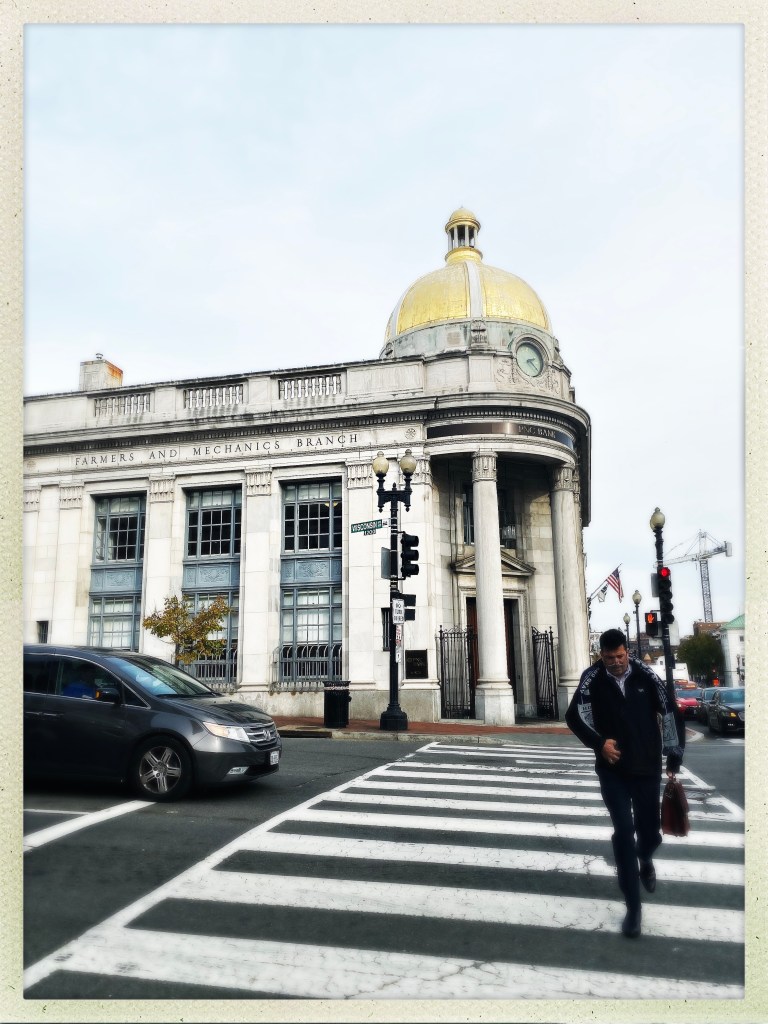
At the heart of Georgetown, on the corner of Wisconsin Avenue and M Street, is the historic Farmers and Mechanics Bank building. Built between 1921 and 1922, the building is distinguished by its gold leaf dome and neoclassical facade.

Another historic Georgetown building on M Street is this Italianate brick market. Built in 1865, it was recently occupied by Dean & Deluca, an upscale food market.

We loved this graceful archway

There’s a whole world out there, people. Look up from your phones!

Day 63

Chesapeake & Ohio Canal (November 10, 2019)

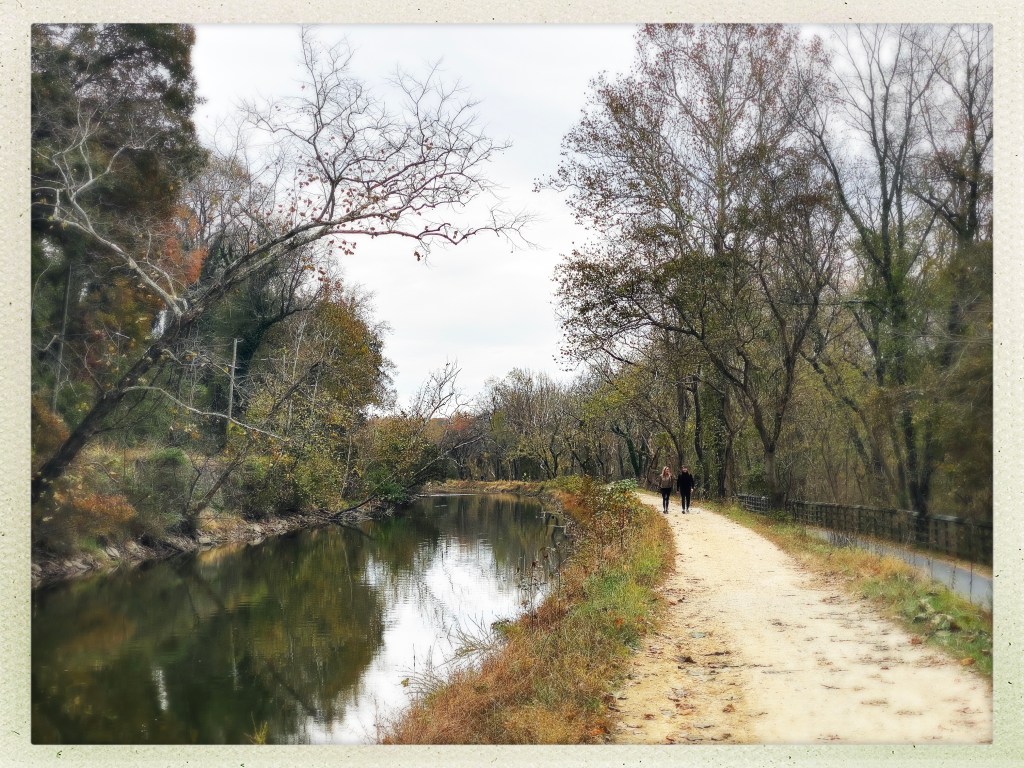
The last stretch of road we had not walked in Ward 3 was Canal road. Because Canal Road has no footpath we decided to walk along the towpath by the canal that runs alongside Canal Road from the Maryland border into Georgetown. The 184.5 mile long canal operated from 1831 until 1924 along the Potomac river from Washington, DC to Cumberland, Maryland. Its principal cargo was coal from the Allegheny mountains. Now it is a beautiful place to walk and ride bikes.

Along the way we passed the Abner Cloud House. Built in 1801, it is one of the oldest structures on the Canal.

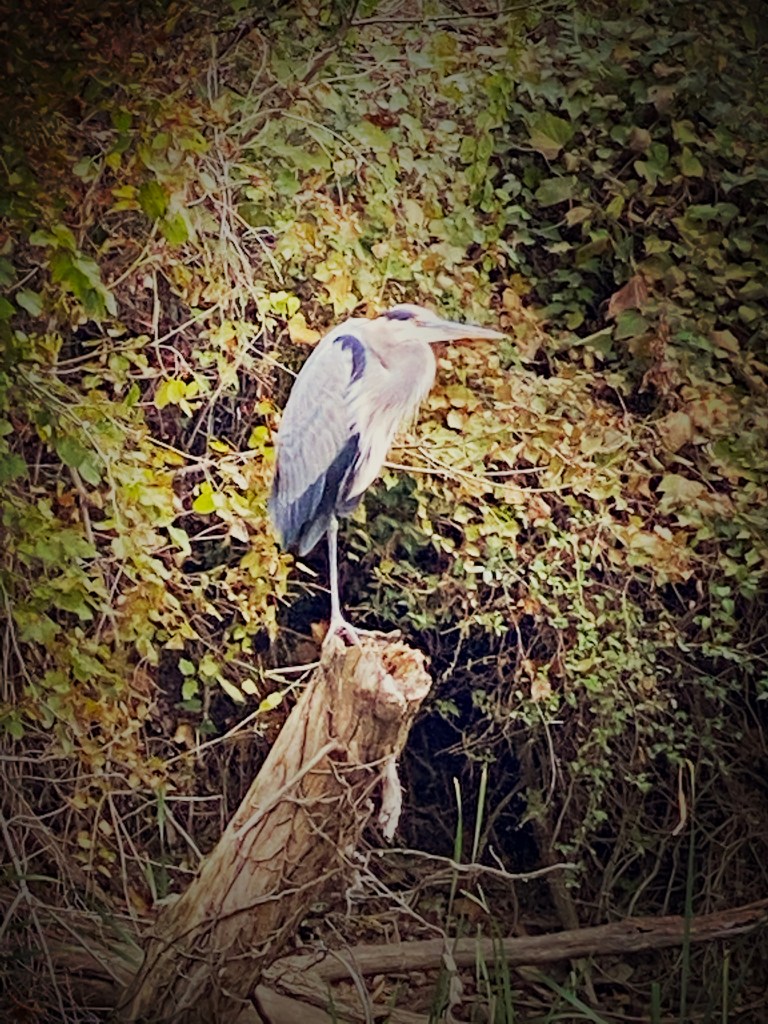
Here is some of local wildlife enjoying a lazy Sunday afternoon.

Along the canal there are beautiful views of the Potomac.

In Georgetown, the canal is virtually dry while repairs are ongoing.

Day 62

Georgetown (November 9, 2019)

On another beautiful Autumn afternoon, we strolled the beautiful tree lined streets of Georgetown.

We passed by the historic Volta Laboratory and Bureau.

Volta Laboratory and Bureau

This beautiful neoclassic yellow brick and sandstone building was constructed by Alexander Graham Bell in 1893 to serve as a center of information for deaf and hard of hearing persons. Bell, best known for inventing the telephone, was also also an important figure in fostering education for the deaf. His wife, Mabel, had been deaf from early childhood and his grandfather and father were both teachers of speech. Bell, himself, trained teachers of speech to the deaf and was a professor of vocal physiology and mechanics of speech at Boston University.

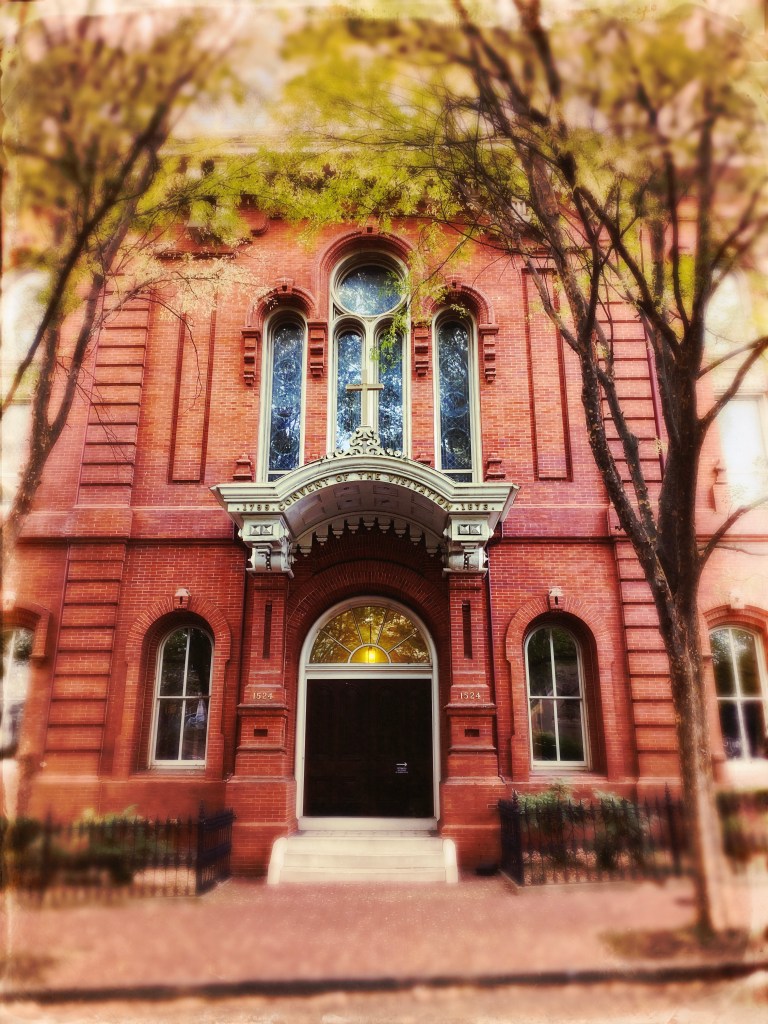
Across the street from the Volta building is Georgetown Visitation Preparatory School, a private Catholic college-preparatory school for girls.

Founded in 1779 by the Order of the Visitation of Holy Mary, it is one of the oldest continuously-operating school for girls in the country as well as the oldest Catholic school for girls in the original thirteen colonies. It has approximately 500 students.

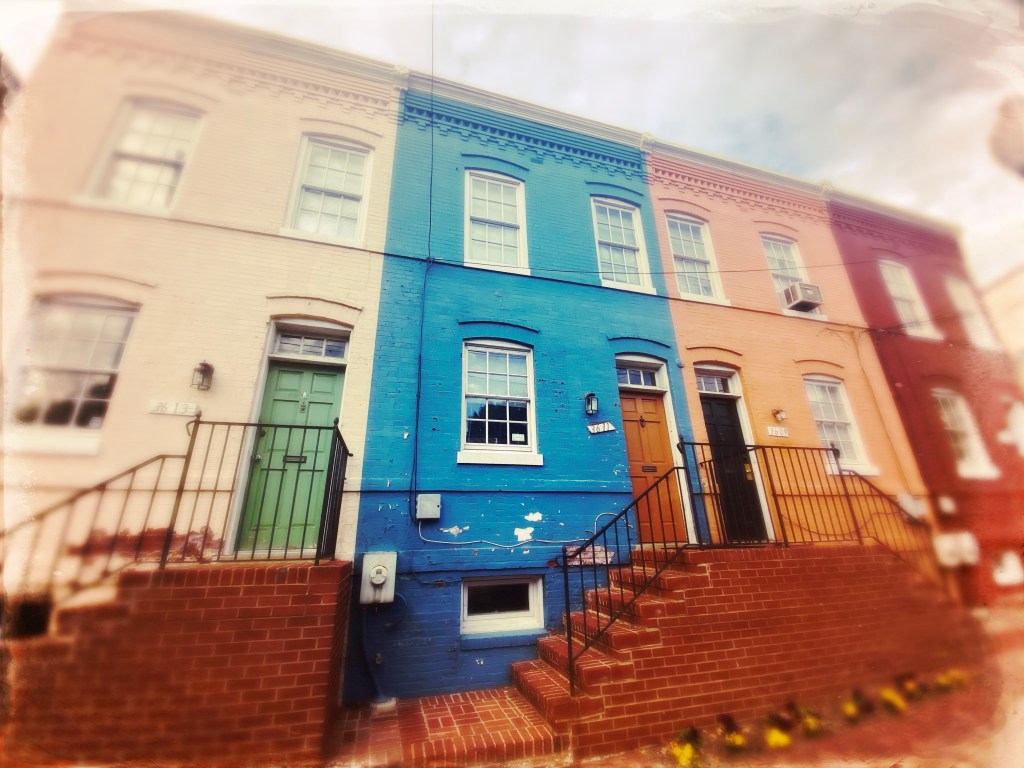
Like Burleith, Georgetown, has more than its share of colorful houses and stores.

We walked up the Exorcist steps, a popular tourist destination. The steps feature in the 1973 horror movie, The Exorcist, as the site of the climatic final showdown between a self-sacrificing priest and a demon possessing a twelve year old girl.

We wondered into the campus of Georgetown University. The University was founded in 1789 by Bishop John Carroll, the first bishop and archbishop in the United States. His statue sits at the main entrance of the University.

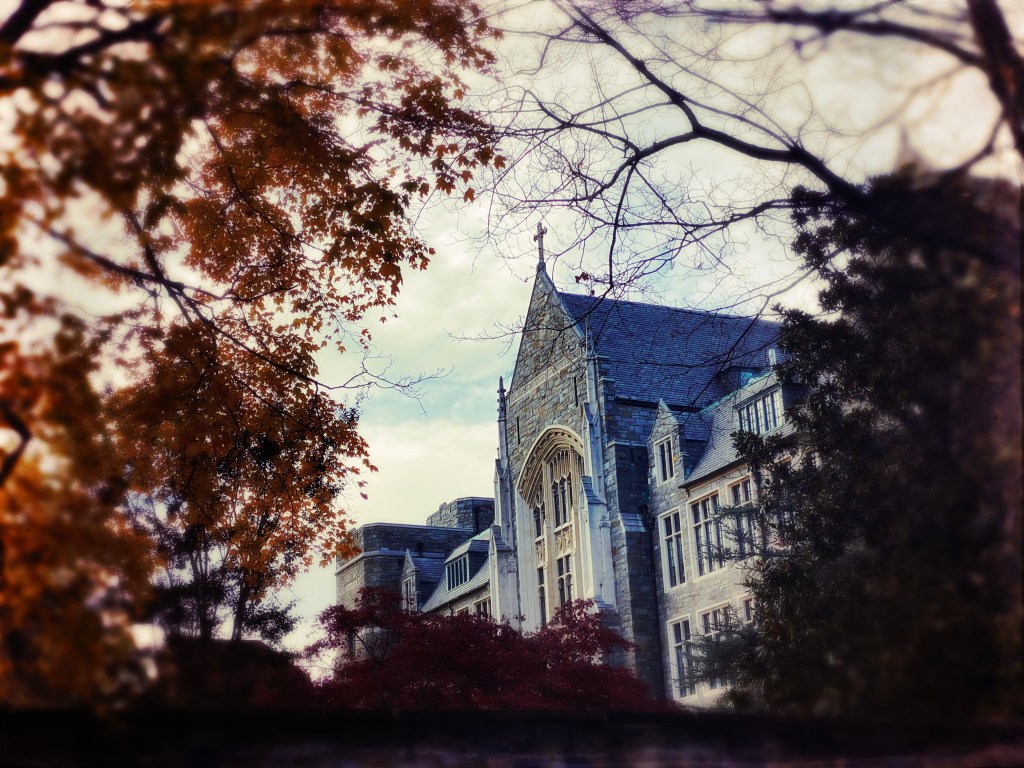
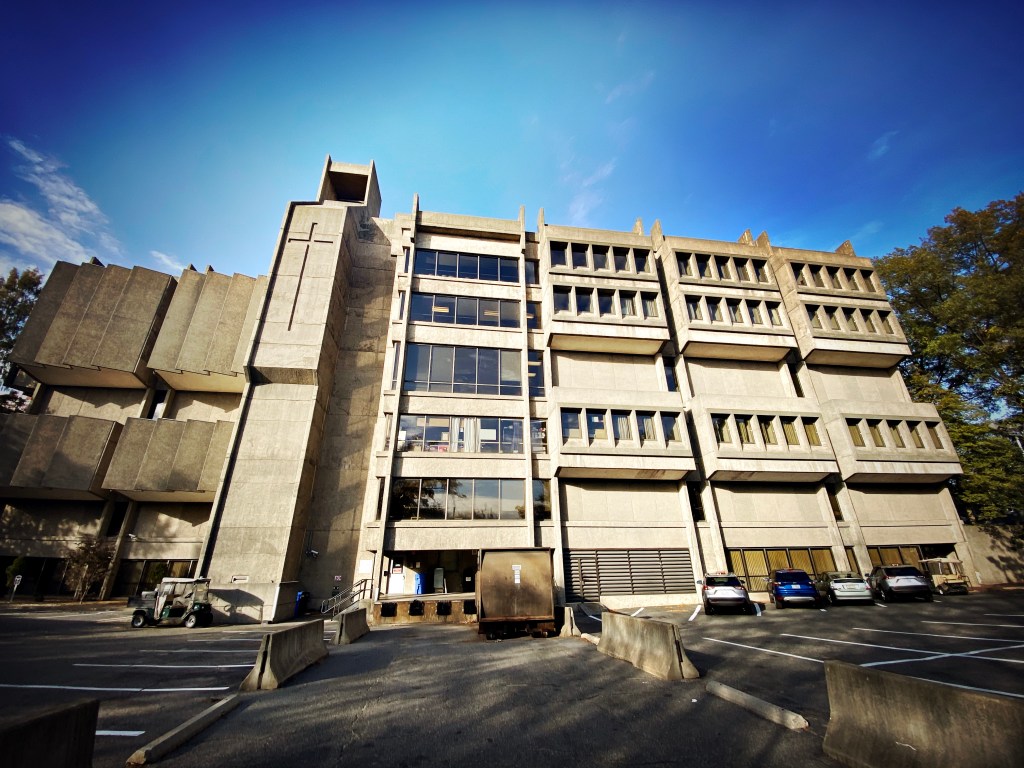
The University has an interesting blend of architecture, including everything from neo-gothic to brutalist buildings.

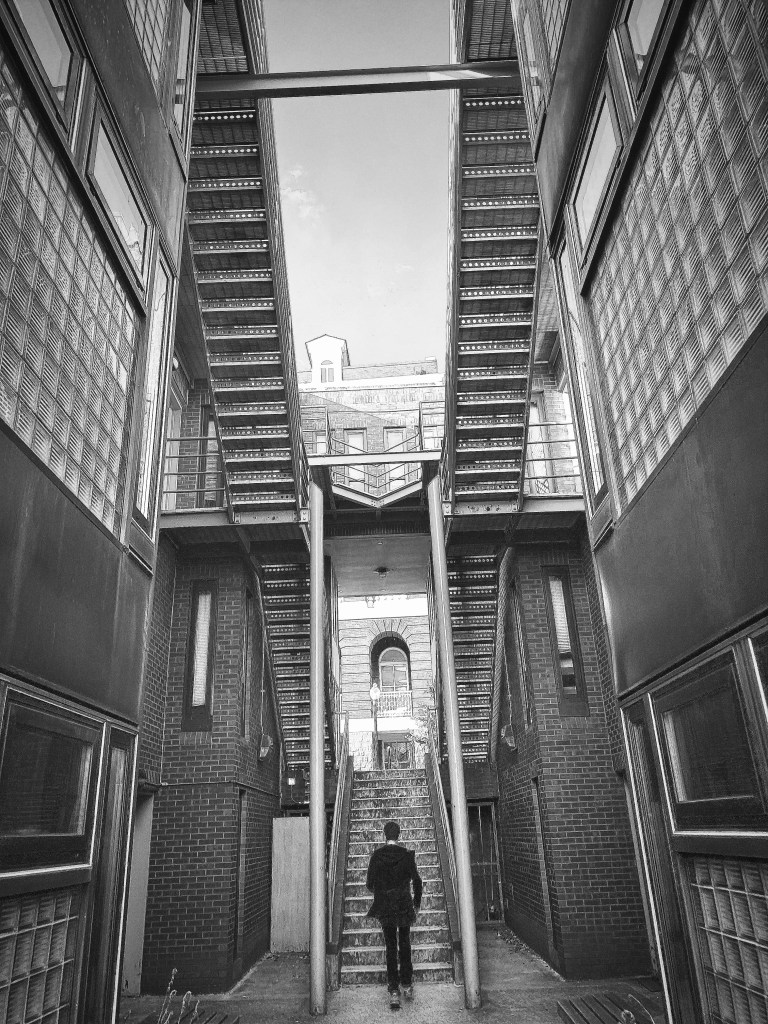
What we found most interesting, however, were the student residences which were gathered in what appeared to be some type of upmarket tenement, complete with narrow alleys, steel staircases and elevated pathways.

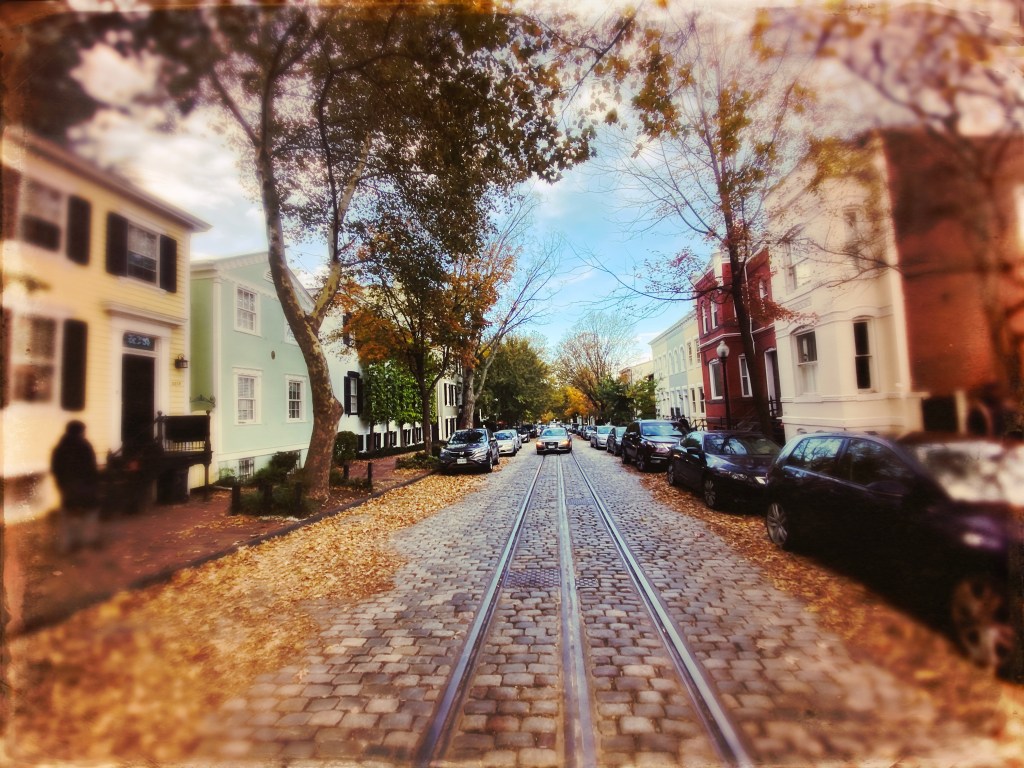
Some of the surrounding streets still have cobble stones and tram tracks.

And a number of the homes have beautiful entrances.

We walked for a while on Wisconsin Avenue, one of the two main shopping streets in Georgetown.

We noticed a number of empty storefronts. Georgetown does not appear to be the hub it once was, with more and more action centering around 14th street in Shaw.

However, one place that never goes out of style is Cafe Milano, which continues to attract the city’s rich and famous.

We also passed Hyde-Addison Elementary School. Part of the DC Public Schools system, the school teaches pre-K to fifth grade students. The school was founded in 1907 and is named after Anthony J. Hyde, a Georgetown businessman and schools advocate. Perhaps not surprisingly, based on the other schools we have passed, Hyde, recently, underwent a renovation.

Old Hyde
New Hyde to the left

Day 61

Burleith (November 7, 2019)

Burleith is a small neighborhood tucked in between Georgetown to the south and Glover Park to the north. We enjoyed walking its streets of colorful row houses.

Less colorful but just as beautiful, we liked this renovated duplex

and this stucco home

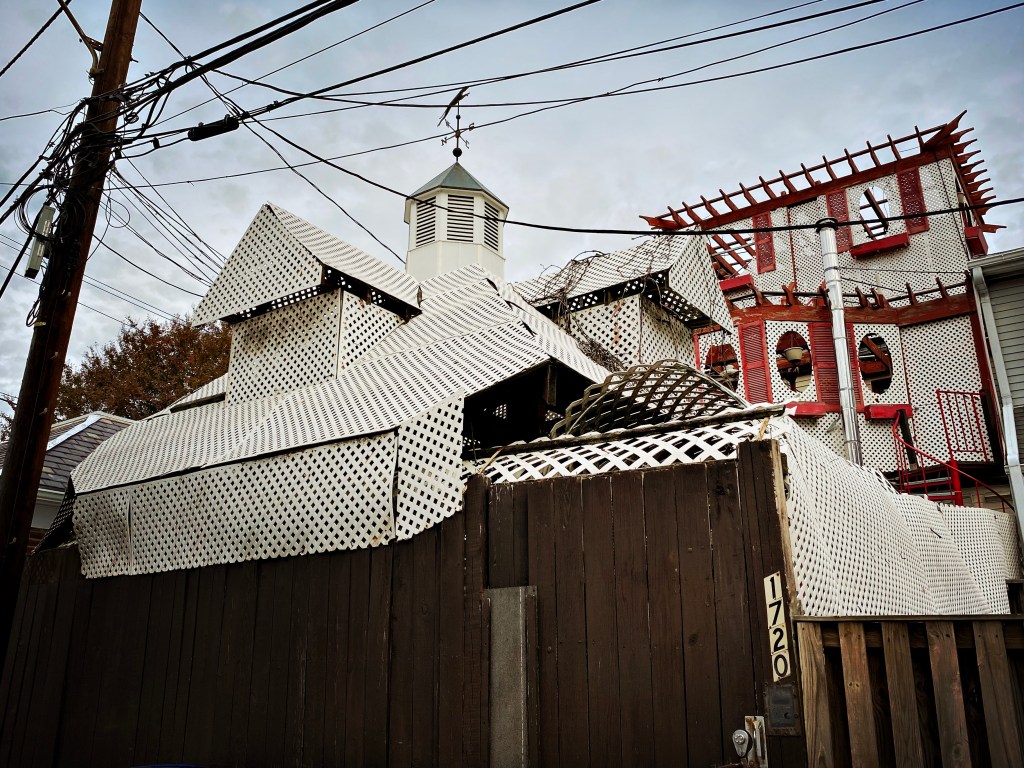
We came across this rather quirky place

Front view
Back view

And this tiny place

There were also a couple of vaguely scary homes

One house had a beautiful gourd vine

Burleith is also home to the Duke Ellington School of Arts, named after the legendary jazz bandleader and DC native. The school was established in 1974 and is dedicated to Arts education. It currently has approximately 500 high school students. Its academic disciplines include dance, literary media, museum studies, instrumental or vocal music, theater, technical design and production, and visual arts. It was recently completely renovated.

Old Ellington
New Ellington

Day 59

Chevy Chase (October 31, 2019)

On Halloween, we headed back to the leaf covered streets of Chevy Chase.

We ran into more than the usual number of fellow walkers, with children dressed in their costumes heading out to parties or door to door trick or treating, their parents tagging along behind. Our halloween decoration of the day was this rather intimidating life size dragon.

Buildings we enjoyed along the way included this Spanish style home.

And this quaint garden shed

This home was guarded by a rather formidable looking jack-o-lantern.

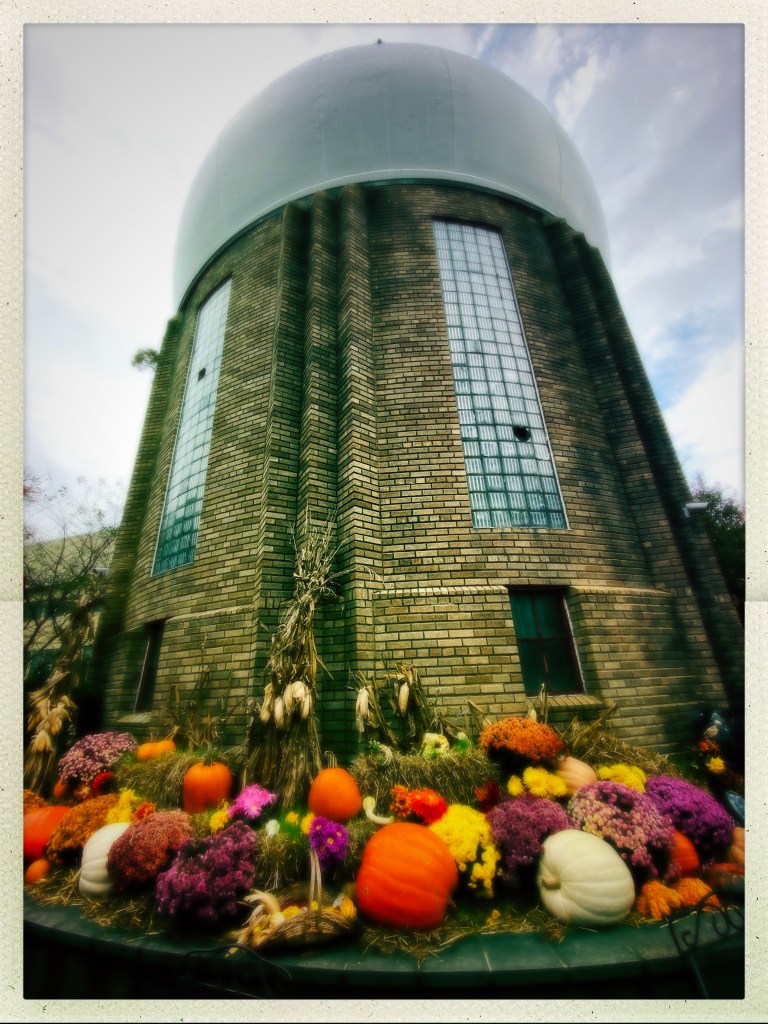
We passed by the Carnegie Institution for Science. The building pictured below sits on the grounds of the Institution. It may look like a planetary observatory, built to observe the stars but it is, in fact, an Atomic Physics Observatory, or “atom smasher”.

Built in 1938, it contained a Van de Graaff generator capable of producing three million volts – enough to split an atom. It had barely been in operation for a year when it was discovered that the Nazis had successfully split the nucleus of uranium by bombarding it with neutrons, releasing energy. On January 28, 1939, the Carnegie team fired up the atom smasher to see if they could get the same result and succeeded. It was an important step toward the building of the atomic bomb. Advances in technology eventually rendered the atom smasher obsolete and it last ran in 1975. Now it is mainly used for storage.